
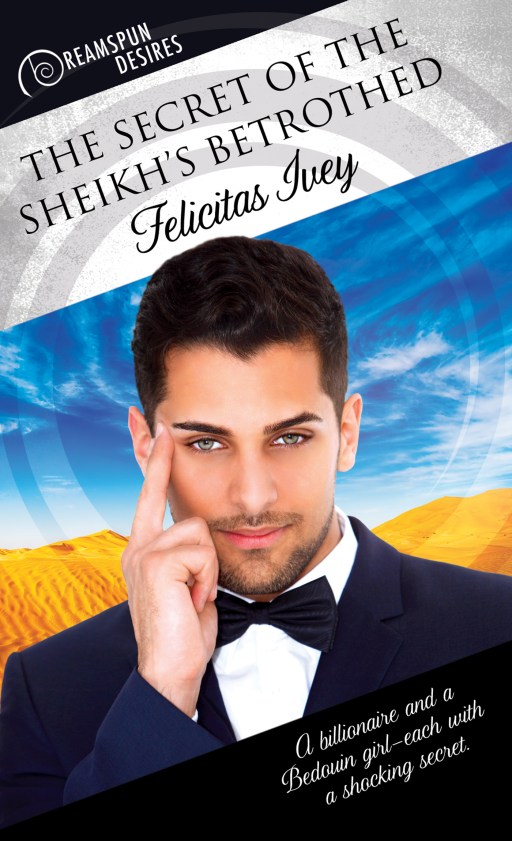
The Secret of the Sheikh’s Betrothed by Felicitas Ivey
Dreamspinner Press
Cover Artist: Bree Archer
Available for Purchase at Dreamspinner Press
Scattered Thoughts and Rogue Words is happy to host Felicitas Ivey on tour for her novel The Secret of the Sheikh’s Betrothed. Welcome, Felicitas.
🐫
On Plotting Versus Pantzing by Felicitas Ivey
A lot of people, mostly my family and co-workers, ask me how I get my ideas for my novels and short stories. I do refrain from telling them I get a once a month delivery of ideas from super secret source, and just tell them ideas come from everywhere around you. I’ve written a couple of novels just to have my characters run around odd sections of Boston. Most of time I write a novel or a story, it’s because I have one idea I was able to get a short story or a novel from that idea.
I have a novel I’m working on, one plotted and I start working on the next one when an idea strikes me. The novel I’m working on is a gothic romance. The novel I’m plotting out right now is a romantic horror/suspense one. I don’t know if it’s going to go anywhere, but plotting is half the fun of writing. I have a friend and we bounce ideas off of each other all the time, in person or over a chat program if we’re at work. Sometimes I get shower or driving ideas and I try to write them down before I forget them.
I used to be a pantser, and now I’m slowly trying to plot out things, so if I get ‘stuck’ I can go on to something else in the novel. Aside from plotting, I try to work on only one novel at a time. The best advice I ever heard was to ‘Not cheat on your novel with another one’. Or only concentrate on one thing at a time and don’t multitask several stories at once, writing-wise. I have edited novels while writing other things, and it was a little disorienting.
With plotting a novel or a short story, I use two methods so not be a pantser. The Marshall Plan by Evan Marshall has a system of X number of sheets per book, depending on the length of the book, is it a romance, how many viewpoint characters and things like that. I’ve figured out one sheet is about 12-1500 words, depending on what’s happening in the novel or short story then. And the sheets have helpful labels about whose the viewpoint character at the time and how many sheets they get. It’s fairly easy if you follow the plot you’ve laid out. I still wander take a left turn at Albuquerque sometimes and wander away from the plot.
What I don’t like is his character sheets. They’re interesting, but not my cuppa. What I use is Karen Wiesner’s ‘First Draft in 30 Days’ character sheets. They’re in a format I’m more comfortable with, more like writing a draft then filling out the small boxes the Marshall Plan uses. You can write out several paragraphs of back history, likes and dislikes very easily.
My next novel, I’m treating it like a roleplaying game, filling out character sheets for the main characters. It should be an interesting experiment. It’s a romantic horror novel, set in rural New England. New England is a great place to set horror.
I set most of my work in New England, since that’s where I grew up and lived all my life. And you can tell I’m a Boston girl as soon as I open my mouth, since I have the accent wicked bad. I’ve spent a lot of vacations in Northern Vermont also, so I’m familiar with the area and like to set some of my work there.
I’m trying to be more productive writer, but there is only so many hours in the day. Plotting and prep work do make the process faster, so I’m trying to lose my pantsers ways.
Blurb
Billionaire Fathi al-Murzim is a workaholic businessman, too busy running the family’s companies to even think about marriage. Too bad he never told his grandfather he’s gay, because Grandfather just announced a childhood betrothal—to a Bedouin girl Fathi never heard about before…
Ikraam din Abdel was raised as a woman by his avaricious and abusive older sister, who didn’t want him to be their father’s heir. He’d never thought to be married either, and is surprised when his sister informs him of his betrothal.
When Fathi and Ikraam meet, they are drawn to each other in a manner neither of them expected. As the plans for their wedding progress, they both realize they need to tell the other the truth. But can they, with both cultural taboos and family pressures to deal with.
About the Author
Felicitas is a frazzled help-desk tech at a university in Boston who wishes people wouldn’t argue with her when she’s troubleshooting what’s wrong with their computer. She lives with three cats who wish she would pay more attention to them, and not sit at a computer pounding on the keyboard. They get back at her by hogging most of the bed at night and demanding her attention during the rare times she watches TV or movies. She’s protected by her guardian stuffed Minotaur, Angenor, who was given to her by her husband, Mark. Angenor travels everywhere with her, because Felicitas’s family doesn’t think she should travel by her lonesome. They worry she gets distracted and lost too easily. Felicitas doesn’t think of it a getting lost, more like having an adventure with a frustrated GPS.
Felicitas knits and hoards yarn, firmly believing the one with the most yarn wins. She also is sitting on hordes of books, which still threaten to take over her house, even with e-books. Between writing and knitting, she brews beer, wine, mead, and flavored liqueurs. Felicitas also bakes, making cakes whenever she needs to work out an issue in her novels. Sometimes this leads to a lot of cakes. Her coworkers appreciate them though, with the student workers buzzing about on a sugar high most of the time.
Felicitas writes urban fantasy, steampunk, and horror of a Lovecraftian nature, with monsters beyond space and time that think that humans are the tastiest things in the multiverse. Occasionally there’s a romance or two involved in her writing, with a happily-ever-after.
Website: www.Felicitasivey.com
Facebook: felicitasivey
Twitter: @felicitasivey
Email: felicitas.ivey@gmail.com
 Scattered Thoughts and Rogue Words