A Caryn Review: Rise (Dancing with the Lion #2) by Jeanne Reames

Rating: 3 out of 5 stars

I am a huge fan of historical fiction, but I recognize that it is inherently much more difficult to write a historical biography, and especially when the character written about is almost mythical.  As Dr. Reames mentions in her postscript, the information about Alexander is nebulous, contradictory, overlaid with myth and altered by centuries of political changes – there is no way to know the full truth.  Add to that the fact that the society he lived in is also poorly understood and completely foreign to the world we live in today, and writing a book of this scope becomes hugely difficult.  What sources are to be believed?  Which facts or theories will work best with the narrative the author wants to present?

The differences between this book and the first are stark.  Book I was about learning who Alexandros was, how he thought, how his experiences formed his adult character.  There was significantly more attention paid to the relationships he had with his friends, his family, and, of course, Hephaistion.  His military training and its importance to him as a prince was described, as were the wars Phillipos was waging, but the focus was not political at all.  I found it much more character and relationship-driven, which is, of course, what draws me to a book and is my personal preference.

Book II is more about the external factors in Alexandros’ life, and how he reacts to them.  His father presented him with a command during one of the campaigns shortly after the book started when he came of age, and from there Alexandros embarked upon what was to be his career and his life.  Military campaigns, political machinations, conquered territories…  the pace was much faster, allies and enemies were introduced in confusing array, and old friends and acquaintances from the first book changed in how they interacted with the Pellan court.  I have to admit, I got a little overwhelmed and confused, especially because I (sadly) know almost nothing about ancient Greece and Macedonia and their history, and I did not stop to look at the background information the author supplied in separate websites.  I admit to being a little shallow with my books – most of the time I just like to read and let the story soak in, rather than to study it.  I feel that to truly appreciate this book, you would need to either have some knowledge of the era going in, or to commit to studying.

That being said, I did enjoy watching Alexandros grow into his own.  For good or bad, it seemed that his focus on being Phillopos’ heir, and anticipating becoming king, led to increased distance between him and Hephaistion.  They became soldiers and officers primarily, and their relationship, though still close, seemed less romantic.  Less about love, and more about loyalty and reliance.  Which was absolutely necessary, but still a little disappointing to me as a romance reader.

Finally, <SPOILER ALERT>, I was not really prepared for the book to end where it did.  Although I knew this book was “The story of Alexander before he became ‘the Great”” I was surprised that the book ends when Alexandros becomes king at the exact moment of Phillipos’ violent death.  It was more than abrupt, and if another book was in the making, it would have been an excellent stopping place, but I understand this to be the final book in the series.

For those readers who are more knowledgeable about the ancient world, for those that are more interested in the historical facts (as much as they can be known) of the era, and for those that enjoy empire building and intrigue over relationship development, this will be a great read.  For me, it was good, but not great.  The 3 star rating has more to do with what I like personally than it does with the quality of the writing in the book, so I hope those reading this review will take that into account!

Cover art by LC Chase matches the first, but I found it interesting that Hephaistion is the man on the cover rather than Alexander…

Sales Links:  Riptide Publishing | Amazon

Book Details:

ebook, 350 pages
Published October 21st 2019 by Riptide Publishing
Original Title Dancing with the Lion: Rise
ISBN139781626499003
Edition LanguageEnglish
URL https://riptidepublishing.com/products/dancing-with-the-lion-rise
SeriesDancing with the Lion #2

Jeanne Reames on Writing Kleopatra and the Sisters and the new release Rise (Dancing with the Lion #2) (guest blog and giveaway)

Rise (Dancing with the Lion #2)  by Jeanne Reames
Riptide Publishing

Cover Art: LC Chase

Sales Links:  Riptide Publishing | Amazon


Writing Kleopatra and the Sisters

In the guest blogs for Becoming, I talked about Alexander and Women, and Alexander’s Mum, but I wanted to save his sisters for the release of Rise, as all three have more important roles in the second half.

In my first drafts of Dancing with the Lion, Kleopatra—Alexander’s only full sister—played a role, even a significant one near the end, but not as a point-of-view character. Yet I’d developed a real love for the character, and it finally occurred to me, “Hey, why don’t you just let her speak for herself?”

So I did.

For a variety of reasons, I stayed out of Myrtalē’s head (Alexander’s mother, better known to posterity as Olympias). But Kleopatra was another matter, and it seemed useful to provide her view not only on her brother, but also on their mother and father.

Yet she added so much more. Kleopatra opens a window onto the women’s quarters. Some of that is shown in Becoming, but we get a better view in Rise with Kleopatra’s undermining of her father’s last wife, also a Kleopatra. (The Macedonians had popular names too, so think of “Kleopatra” as the ancient Macedonian version of Taylor, Madison, or Elizabeth.)

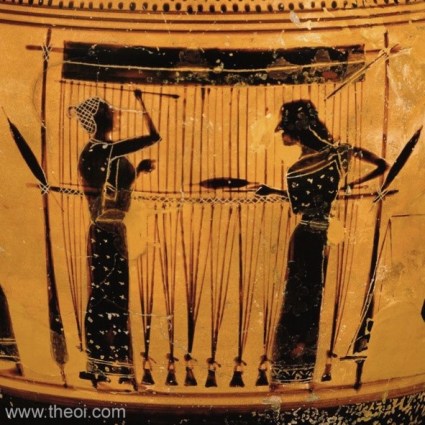
It’d be a spoiler to tell what happens, but suffice to say the three sisters (really half-sisters) gang up on the interloper. Kynnane wields a spear (yes, she really could; her father took her to war), but Kleopatra? She wields an abacus and a loom. And she’s the chess master behind it all. Or perhaps we should say, the math mind behind it, three steps ahead of everybody else.

Kleopatra would go on to become the Queen of Epiros where, after her husband’s death, she took over as regent for her son. She and her brother would remain close, and reportedly, when he was told that she’d taken a lover, instead of expressing the expected outrage, replied, “Well, she ought to be allowed to enjoy herself.”

Dancing with the Lion is a coming-of-age story for Alexander and Hephaistion, but also for Kleopatra. Although a secondary character, she has her own journey to maturity across both books. I hope readers enjoy reading about her as much as I enjoyed writing about her. And if/when I continue the series, she’ll remain a significant secondary character, providing an important view on what’s happening back in Greece, as her brother wends his way across Asia.


About Dancing with the Lion: Rise

The story of Alexander before he became “the Great.”

Finished with schooling, Alexandros is appointed regent of Makedon while his father is away on campaign. He thrives with his new authority—this is the role he was born for—yet it creates conflict with his mother and Hephaistion. And when his soldiers, whom he leads with unexpected skill, start to call him “The Little King,” his father is less than delighted.

Tensions escalate between Alexandros and his father, and between Makedon and the city-states of southern Greece. As the drums of war sound, king and crown prince quarrel during their march to meet the Greeks in combat. Among other things, his father wants to know he can produce heirs, and thinks he should take a mistress, an idea Alexandros resists.

After the south is pacified, friction remains between Alexandros and the king. Hostilities explode at festivities for his father’s latest wedding, forcing Alexandros to flee in the middle of the night with his mother and Hephaistion. The rigors of exile strain his relationships, but the path to the throne will be his biggest challenge yet: a face-off for power between the talented young cub and the seasoned old lion.

Available now from Riptide Publishing!

About the Series

Alexandros is expected to command, not to crave the warmth of friendship with an equal. In a kingdom where his shrewd mother and sister are deemed inferior for their sex, and his love for Hephaistion could be seen as submission to an older boy, Alexandros longs to be a human being when everyone but Hephaistion just wants him to be a king.

Check out the series today!


About Jeanne Reames

Jeanne Reames has been scribbling fiction since 6th grade, when her “write a sentence with this vocabulary word” turned into paragraphs, then into stories…and her teacher let her get away with it—even encouraged her! But she wears a few other hats, too, including history professor, graduate program chair, and director of the Ancient Mediterranean Studies Program at her university. She’s written academic articles about Alexander and ancient Macedonia, and does her best to interest undergrads in Greek history by teaching them (et al.) to swear in ancient Greek.

Her Website: https://jeannereames.net/Dancing_with_the_Lion/DwtL.html

On Facebook: facebook.com/jeanne.reames.3

On Instagram: instagram.com/jeannereames

On Twitter: twitter.com/DrReames


Giveaway

To celebrate this release, one lucky person will win a $10 gift card to Riptide. Leave a comment with your contact info to enter the contest. Entries close at midnight, Eastern time, on October 26, 2019. Contest is NOT restricted to U.S. entries. Thanks for following along, and don’t forget to leave your contact info! 

A Caryn Review: Dancing with the Lion: Becoming (Dancing with the Lion #1) by Jeanne Reames

Rating 4.5 out of 5 stars

Focusing on homosexual relationships in historical fiction in the ancient Greek world is not new – The Song of Achilles by Madeline Miller and The Persian Boy by Mary Renault have done so and reached wide audiences – but I am still thrilled to see another entry into this particular area, especially when that relationship is deep, abiding, and meaningful.  There have been centuries of writing and thinking that served to ignore and whitewash what was an important, and beautiful, part of the history of that era.  While there are certainly many parts of the culture that I am glad are no longer accepted – the treatment of women, slavery, constant wars, to name a few – the general acceptance of sexual love between two men (or women) deserves to be remembered and celebrated.

I also have a weak spot for epic stories, and the life of Alexander the Great is certainly a compelling subject.  Dr. Reames added to this book what is a new twist for me – using Hellenic (Greek) nomenclature for names, places, and concepts.  Thus we have Alexandros, Aristoteles, Philippos, etc, instead of the usual westernization of the names, which lends it an additional air of authenticity and interest.  There is a wonderful section where Hephaistion tries to puzzle out whether eros – sexual passion – can exist with true philia – brotherly love  – in his relationship with Alexandros, and the use of the Hellenic terms made me really look at the debate in a deeper way.

The book begins when Alexandros was 13, and newly entering the ranks of the Pages, or the servants of the king, Philoppos of Makedon (Philip of Macedonia).  Even at this young age, Alexandros had to find a balance between being set apart as a prince, and Philoppos’ heir, and yet still one of the youth of Makedonian aristocracy training to become a soldier and officer.  Hephaistion was 17, the youngest and only surviving son of Amyntor, who ran away from his home to Pella against his father’s wishes, and Philippos was more than willing to add him to the ranks of Pages.  Partly because both young men were outsiders in a way, and partly because of their natural intelligence and curiosity, Alexandros  and Hephaistion struck up an unlikely friendship, that deepened over the next few years in the time they spent as part of a select group of young men tutored by Aristoteles.

The coming of age of a prince must necessarily be different from that of other boys, no matter how much Alexandros might want to be like them.  The court of Philippos was full of political machinations, and Philippos himself was a master manipulator.  Alexandros’ mother had her own ambitions for him, and she also used Alexandros as a pawn in the power games she played with her husband.  Surrounded by people who wanted to use him, Alexandros found his friendship with Hephaistion one of the few things he could fully trust and depend upon.  Although their culture was accepting of same sex relationships, these relationships were typically defined with a very particular power dynamic – the older “erastes” was the lover and dominant partner, the younger “eromenos” was the beloved, and submissive.  Alexandros and Hephaistion loved one another, but how could they have that type of relationship when Alexandros was the future king?  (NOTE – by keeping the ages of Alexandros and Hephaistion relatively close together, the author was able to introduce this idea without giving it the creepy connotations of the modern day practice of pederasty, which is pretty much flat out pedophilia from what I’ve read about it.  I have to give the author props for that – even if I don’t know if their relationship was consistent with how the custom was truly practiced)

This book sets up what I expect will continue to be an amazing story.  I know how it ends of course – sometimes isn’t that the worst part of a fictionalized biography? – but I can’t wait to see the rest of the journey between here and there.  There is a large cast of characters, which can be confusing at times, but they are all nuanced, multifaceted people.  Warrior king Philippos; philosopher Aristoteles; priestess/witch/mother Myrtale; as well as the young men tutored by Aristoteles along with Alexandros, all interact in complex ways that seem to drive towards some inevitable destination.  This is definitely a character-driven plot, which is my favorite!  The book ends as Alexandros participates in a venerable ritual that fully initiates him into manhood, a logical completion of Becoming, which makes me truly anticipate the next chapter of Alexandros’ life in Book II:  Rise.

I can’t wait to read the next book!

Cover art by LC Chase captures the ancient setting well, but does not reflect the grand, heroic nature of the characters.

Sales Links:  Riptide Publishing | Amazon

Book Details:

ebook, 282 pages
Published July 1st 2019 by Riptide Publishing
Original Title Dancing with the Lion: Becoming
ISBN139781626498969
Edition Language English
Series Dancing with the Lion #1
setting ancient Greece