Review: The Unwanted – The Complete Collection by Westbrooke Jameson

Rating: 2.5 stars out of 5
The Unwanted Complete CollectionThe unwanteds, that’s what society calls the people who make up the lowest of society.  The prostitutes, the drug users, the poor, the discarded and the dying.  Shots, Derek, Ambrosia, Renzo, and Sara are all young prostitutes.   In addition, they picked up Joel, a gay teenager thrown out of his house because of his sexuality. Together they form a family, willing to do any to keep each other safe and fed.  Unfortunately, Derek is sick.  He contracted the deadly VIS virus and is moving into the final stages of the disease.    The group is barely scraping by when an encounter with an alien john changes everything for all of them.

Recently a race of aliens called Narsoreal made contact and landed on Earth.  In three years time, several major diseases were cured and human technology advanced because of Narsoreal information and assistance.  In return, the alien race asked to collect and bond with humans who are genetically predisposed towards symbiosis with the Narsoreal.  For the governments of the world, only the unwanted were viewed as available for collection and bonding.

When Shots picks up a john called Alimund a Norsoreal, Shots changes not only his life but the lives of everyone in his small family of unwanteds.  Because for each one of them, there is a Narsoreal who is their bondmate, if only they will accept them.

There is so much promise buried within The Unwanted that I wanted to rate it much higher than it deserves.  Originally, each Unwanted had their own story released separately, then a collection of all the stories was published.  And it is much easier to read as a collection than they would have been as individual stories if for no other reason than the flow of the narrative works better.  Unfortunately, whether it is as a collection or separate short stories, there are just so many issues and missed opportunities that I have to give The Unwanted a fail.

Let’s start with some of the most basic issues, the world building.  It just doesn’t make any sense nor does it feel “alien” in any manner.  Jameson makes the aliens and their planet pretty much just like us, only with a few alterations that are so unbelievable that they further disconnect the reader from the Narsoreal and these stories.  The aliens land because they are looking for love.  They bring advance technology, enough to cure some diseases but not VIS or at least that’s the accepted knowledge.   There’s some nonsense about not having the right materials for them to help us build space ships ( a throw away line that makes no sense either) but really the author makes no attempt to give us anything authentically alien.  Not the people, not their abilities (more on that later), not even their technology.  And when we do find out what elements make them “different” from us, its laughable. Really the Narsoreal are so dubious a creation that its screams worst alien ever. They are poorly thought out and mindbogglying lame brained unless you are a prepubescent boy.   If you are going to create aliens, complete with alien physiology and culture, then make it believable.  Don’t make them a reflection of juvenile wants and desires, a cardboard alien worthy of  a Space Hooters or sex doll.

That brings us to characterization or the lack of it.  The only members of the Unwanted that come close to being a layered personality are Shots and Ambrosia, with Ambrosia being my pick of the litter.  The rest of the small group of prostitutes and discarded never rise above a character outline.  They certainly have no credibility as young people who have been abused, abandoned and made to prostitute themselves as the only means to survive. As a described by the author, this group has seen it all from their lowly position on the streets but the reader never gets any sort of desperation or emotions that would reflect this status.  Its more what they say they are then what actually comes across, and that’s a huge fault when it comes to characterization.

But if they are bad, then the aliens are so much worse.  The really only alien thing about them is that they physically morph or their body changes (permanently) according to the wishes of their bondmate.  Of course, they don’t tell their human bondmates that fact.  So  one ends up looking like Legolas with long white hair and elf ears.  Another ends up with wings, and another with a penis and a vagina.  *shakes head*  If you are going this heartstoppingly stupid and young, why stop there?  Where is the woman with three breasts?  Of course, there is no continuity here.  So the one alien is another species, a worker bee, who doesn’t change. Which is a good thing because his human bondmate thinks he looks like a bulldog.  Awkward. But if there were any logic to this, then it would be the worker class who would change their physiology, to better help them shoulder the load so to speak.  Another thing is that these aliens are rich.  So you have rich aliens who change their physical state according to their lovers wishes?  And the upper echelon of the world’s societies doesn’t want them to bond with?  That makes no sense either.  Who among the rich wouldn’t want a mate who is rich, changes according to your desires and cures diseases by their bond.  Oops, did I forget that exchanging fluids with these aliens cures every disease you could humanly have?  The Narsoreal are a kind of one stop shopping for any of your sexual, emotional, financial and pharmaceutical needs. Do they have personalities too?  Not really because how could they?  They aren’t real in any respect, merely objects that reflect the needs and desires of their human companions.

And that’s both my problem with these stories and the promise I see as well.  Had these stories been a treatise of the objectification of others, or a humorous take on loving yourself, or some sort of allegory about making love to one’s dreams, that would have been one thing.  All the elements are there for any of those takes on the human condition or maybe just an alien comedy.  All but one human changes the alien into the lover of their dreams and that one can’t because that alien’s different? It’s all instant love and instant bonding.  But how is that believable is that love if you change them almost immediately without getting to know them?  These humans don’t love the aliens, they love what the alien becomes. What a great subject for these stories!  But was that ever addressed any where? No, I mean even their cum changes from purple grape flavor to black licorice, a sort of Skittles of choices. Oh look, he shoots purple jism, If that’s not a juvenile giggle fest in the making I don’t know what is.  If you were the alien, wouldn’t you be a teensy bit upset over wings, a purple penis,  purple nipples and purple cum, a purple grape tasting cum?  That other alien has it worse, his human loves the color pink. But as written, the Narsoreal are both intergalactic doormats and any teenagers sexual wet dream mashed up together.

Add to that just awful dialog.  The aiiens say things like  “Yes, my treasure, I will change for you. I will become whatever pleases you most, my prince, my darling.” or to Joel Flowers . “I will be your giant if you will be my flower.”  The group explains it away as the aliens speak “formally”.  No, that’s bad romance talking, not Downton Abbey.

Add all of that up from the terrible world building, poor characterization, cheesy dialog and a plot with promise that misses on every level, and you have a collection of stories I can’t  recommend to anyone other than a friend of the author’s.   I think thats one of the problems when you self publish, not enough eyes and assistance (read that as editing) for the author and their writing.  I hope that the next stories from Westbrooke Jameson achieve the promise I saw here.

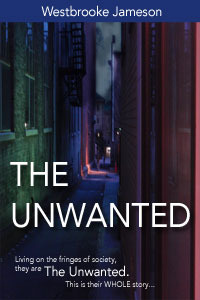
Cover Design by Morris Duncan. Cover Photo Credit to Joel Kramer via Flickr Creative Commons License.  The cover makes no sense either.  No aliens, nothing other than an alley?  Consider the cover a missed opportunity too.

Book Details:

ebook
Published August 2013 by Westbrooke Jameson
edition language English
series The Unwanted

Review: The Crimson Outlaw by Alex Beecroft

Rating: 4 stars out of 5

The Crimson Outlaw coverVali Florescu, heir to a powerful local boyar, is determined that his beloved sister will not have to marry the much older, scarred man their father has betrothed her to.  So he hatches a plan to upset the wedding, but everything goes awry, leaving Vali imprisoned by an enraged father.  Escaping, Vali flees instead of his sister, hoping to see the world.  But that plan too fails when he is captured by Mihai Roscat, the fearsome Crimson Outlaw.

Vali finds his captivity surprisingly wonderful, falling quickly for the outlaw.  But Vali also finds that his father is far more cruel than he ever expected.  The villages and their inhabitants on his father’s land have been subjected to raids from his father’s soldiers, raids that saw villages burned to the  ground, women and children killed over something so small as an imagined slight.  Soon Vali is feeling ashamed to be a prince and his father’s son, vowing to changed his peoples lives for the better.

Mihai Roscat came from highly regarded, wealthy family himself.  But that family came up against the power and evil of Wadim Florescu, Vali’s father.  Almost all were slaughtered, leaving only 3 sons alive.  Mihal has vowed vengeance upon the Florescus and thought to punish the son for the  father’s deeds.  But Vali is nothing like Mihai expected, and when Vali helps Mihai defend a village against his father’s soldiers, Mihai’s affection turns into love. Together, Vali and Mihai vow to overthrow Wadim Floriescu once and for all.  Will they succeed or lose everything in trying?

Hard to believe that Alex Beecroft jammed such a sweeping tale into 131 pages.  Set in Carpathian forests of Romania, Beecroft’s story conjuers up visions of boyers, and Vlad the Impaler.  Specifically it is 1720 – Harghita County, Transylvania when the story opens up and the Florescu family preparations for the wedding of Stela Florescu to Ionescu, a war-hardened old warrior and important ally of Wadin Florescu.  From the vivid descriptions of the wedding finery to the dialog of the soldiers closest to Vali, Beecroft brings this time and place alive before us.  This is the start of the wedding procession:

It was the grimmest of weddings. Even the weather agreed, rain lashing down from a glowering sky, turning the red tiles of the turrets the colour of blood, gushing over all the balconies, and churning the moat to a froth.

Vali, with a sodden sheepskin clutched around his silken hat, escaped his father’s scrutiny long enough to dash through the puddles of the courtyard and catch up with his sister and her maidens before she entered the castle church. The girls gave him sour looks for stopping them outside in this downpour, but he didn’t care overmuch that the spun-sugar delicacy of their headdresses were drooping and darkening with the wet, and that their heavy gold-and-silver-laced bodices, their globes of shimmering skirts were sopping up water with every second.

They were uncomfortable. Well, so they should be, since his sister’s face was anguished and her eyes red with weeping. She had met her husband-to-be for the very first time yesterday, at a feast thrown for that purpose, and although she had concealed her horror fairly successfully at the time, it was clear to see she had not spent a peaceful night. Even encased as she was in so many layers of cloth-of-gold she might be a martyr’s mummy, he could see her shaking, and he was furious to know she was as frightened as she was miserable. Her voice was as raw as her eyes. “You shouldn’t be here. If Father sees you . . . Go back to the men’s side before you’re missed.”

Beecroft sets the scene beautifully for all that is to follow.  Laid upon these vibrant primal setting are characters that are perfect for the time period. Vali, the young impetuous prince, comes across as the thoughtless, yet well meaning young man that he is.  His is also a character who grows up as the story progresses.  I really liked Vali.   Stela, Wadim and other members of the court are harder to pin down and perhaps that is as the author intended.  Because the other characters that really come to life are the villagers that Vali meets once he is away from the castle.  They are more vibrant then the gray denizens we met at the wedding.  Again, I felt as though that was intentional.  The villages and the inhabitants need to be lifelike if we are to believe in Vali’s transformation from spoiled, naive child to realistic young warrior ready to overthrow his father.

The only issue I had with this story is the instant love that sprang up between the outlaw and the prince.  It was such a short time between capture and enrapture, and the prince’s sexual kinks aside, their romance needed much longer to percolate in order for it to be believable.  Vali’s affection for his horse seemed far more realistic than his love for  Mihai.   The reader must accept this instantaneous love affair for the book to really work.  Some of the readers will, others won’t.  That will affect how much enjoyment and satisfaction they will get from reading The Crimson Outlaw.

For myself, I loved Beecroft’s settings and descriptions.  Romania is steeped in tradition and legends.  Beecroft makes the most of both with descriptions as lush and layered as the land itself.  That alone made this story for me.  I love Alex Beecroft’s stories and look forward with anticipation to each new one that is released.  Add this to your to be read pile and enjoy your journey to the Carpathian Mountains of Transylvania and romance.

Cover Art by Simoné, http://www.dreamarian.com.  This is the most amazing cover.  It is as gorgeous and vibrant as Alex Beecroft’s descriptions of the land and people.  One of the best covers of 2013.  Just outstanding in every way.

Book Details:

ebook, 131 pages
Published August 12th 2013 by Riptide Publishing
ISBN13 9781626490536
edition language English

Review: Coliseum Square by Lynn Lorenz

Rating: 3.75 stars out of 5

Coliseum Square coverMark Madison is running away from his past as fast as he can.  Leaving behind him death and the threat of incarceration, Mark finds himself in New Orleans, circa 1886.  It is the start of a new life under a new name.  Mark has arrived to take the job of tutor to the son of a local wealthy widower, Royal Du Cote.  But the situation Mark finds himself in is anything but normal.

The boy, Luc, is mute and frightened of his father.  He hasn’t spoken since the death of his mother two years ago.  And his father, Royal Du Cote?  Handsome, wealthy,seemingly haunted by his wife’s death while giving Mark looks that make him shake with desire.  Mark comes to care for Luc and promises himself that he will find a way to free Luc of his terrors so he can speak once more.  But what part does Royal play in Luc’s affliction?  Could Royal be part of the problem? The house and household is full of secrets and Mark needs to find the keys.  But will the truth free all involved or will Mark and Royal see the demise of all their hopes and dreams once and for all.

The words New Orleans and Lynn Lorenz go together like chocolate and caramel, a perfect blend.  It is clear from her stories, located in that fabled city, that she loves and understands the peculiar nature of the place and its magnetic pull on people world wide.  Say the name New Orleans and it immediately conjures up romance, and lust , sultry nights full of indolence and the pervasive aroma of the lake itself.  A place where all races and backgrounds combine, independent of laws and sometimes morality.  I love the way she writes about New Orleans, her love and knowledge clearly showing in all her descriptions. That is equally true whether we are taking about the present or New Orleans of 1886, the time of Coliseum Square.

Here is Mark pulling into the New Orleans harbor on one of  the river’s paddleboat:

The boat veered toward the levee, as another string of port buildings appeared just past the Place d’Arms, the old square. The paddlewheel slowed, the slapping of the boards against the water became fewer and then it stopped.

We floated. Silent.

We all held our breaths as the great boat edged closer. On the wharf, men ran back and forth, shadows darting in and out of the gaslights. The steam engines bellowed, the paddle started again, this time in the opposite direction, and the boat shifted closer to the dock.

Below us, on the bottom level, our own men rushed, gathering and untying huge ropes, shouting commands and aye-ayes.

“Hold on!” one of them shouted.

I grabbed for the railing and braced myself. The boat shivered, halted, and with a final shift, hit the wharf, jerking us all nearly off our feet. A few of the ladies screamed, the children hooted, the men remained stoic, as if they did this every day of their lives.

Above us, another blast from the horn, signaled our arrival.

I leaned over the edge and watched the men below toss the ropes across the narrow gap to the men on the dock, watched them tie us off, backs and arms and leg muscles straining as they wrapped the ropes around huge mooring posts, securing the paddle wheeler to the dock.

The wheel stopped. We had arrived.

You can almost feel the boat “shiver” as it floats into place against the pier and the excitement of the people on board.  From there, she takes Mark through the streets on horse drawn carriages, smells of the water and manure rising up to mix in the already heady aroma of the city.  Lynn Lorenz clearly has also done her homework as her descriptions bring the New Orleans of old vividly to life before our eyes.

The streets’ names, set in blue-and-white tiles on the corners, were of the muses–Erato, Melpomene, Terpsichore–but when we reached Euterpe, we turned the corner and headed away from the river. A few blocks down, a modest park appeared, green lawn and stately oak trees, and we turned the corner.

“Where’s the house?” I asked.

“On the other side of the park.”

Straining to see across the expanse, through the trees and manicured shrubbery, to the collection of houses on the far side, I could only wonder which would be my new home. Each looked grander than the next, each stately, with black iron fences standing guard, lush plantings, and brick walkways.

The author beautifully draws the reader into the wealthy neighborhood and deposits us at the front door.  Up until then the book is magic itself. Then the door opens and the best and the most problematic aspects of Coliseum Square are revealed.

Lorenz has always rendered her characters in loving yet realistic detail.  They always have depth as well as a certain charm to them.  In Coliseum Square, we have not only two adults to engage our affections but a young traumatized child as well.  I adored and absolutely related to the young boy in this story.  Lynn Lorenz  makes this mute, emotionally scarred five year old so compelling, so vulnerable that his problems and recovery command most of our feelings and regard.  In addition, the author portrays the tenuous, growing relationship between Luc and Mark in authentic and revealing scenes that capture our heart each time these two appear in the story.   I think I loved this section of the book most of all.  It feels real, and it is certainly moving.

Mark Madison and Royal De Cote are believable characters too.  Mark especially as a young man fleeing the consequences of his sexuality, and hoping to find sanctuary and perhaps even a home in New Orleans.  His fears as well as his youth translate well here.  Considering the fact that you could be jailed if not hung for being a sodomite in the 1880’s, then Mark’s fear for his safety and tendency to flee at the first sign of discord is understandable. Royal De Cote is probably less realistic in my eyes.  But then, a wealthy man of stature in New Orleans could and most likely did behave as they wished as long as appearances were kept up. Lorenz made his anguish over his son’s behavior and situation worthy of our compassion and understanding. So, where’s the problem?

That would be the romance factor.  In a relatively short amount of time, these two men gaze longingly at each other, fall into bed and love. And they do this without really talking to each other or physically spending time with each other except at dinner.  True, two handsome gay men under the same roof during that time period might have taken advantage of the situation.  That I can see, especially if one is older and more experienced.  Put that together with proximity, and yes, I can see the instant attraction leading to a sexual encounter.  But instant love and family?  That is a much harder sell and I am not sure that Lynn Lorenz accomplished it here.  I think that had the story been extended past the 84 pages and the time the men had together lengthened into a reasonable amount of time, then I think I could have bought into their gothic romance more readily than I did.

That aside, I still loved so many aspects of this story that it almost  garnered a 4 star rating, from the historical descriptions that vividly brought 1886 New Orleans to life to the traumatized little boy who captured my affections.  For those elements alone, I recommend this story to you.

Cover Art © 2013 Trace Edward Zaber unfortunately makes use of a model who has been used to excess.  He has been on so many covers that Chris at Stumbling Over Chaos featured him in her Misadventures in Stock Photography.  With New Orleans as a backdrop, surely the design could have been more pertinent in detail.

Book Details:

ebook, 84 pages
Published July 21st 2013 by Amber Allure
ISBN13 9781611244571
edition language English
other editions

Review: Burden by Annmarie McKenna

Rating: 3.5 stars out of 5

Burden coverIt’s Detective Keegan Monroe’s first day off after a long undercover assignment and all he wants to do is relax and enjoy his coffee.  But his day is shattered when a  man dives in front of him throwing them both to the ground.  Then a gunshot goes past them as a murder attempt fails.  The man laying on top of him is stuttering that he couldn’t let him kill Keegan.  Suspicious of his savior, Keegan takes the man into custody for questioning.  But at the precinct some astonishing facts are revealed. The suspect is a former I.A . police detective.

Detective Brennan McGuire has been struggling to adjust to the brain damage he incurred when his car went over a cliff during an investigation.  Along with stuttering and the massive physical scarring caused by the accident, Brennan also has long and short term memory problems which make it almost impossible to cope with the requirements of every day life.  Brennan can’t remember the accident or much else about his life as a police officer.  But something sparked in the depths of his traumatized memory when he saw someone aiming a gun at the man at the table and he reacted.

During the investigation into the shooting, Keegan and Brennan find themselves falling first into bed and then into a relationship.  But their romance triggers Brennan’s repressed memories of his accident with startling results.  Now Keegan and Brennan find themselves with not one mystery but two to solve and some very determined people who want to make sure that Brennan never remember.  Can Keegan and Brennan find love while keeping each other alive?

I think Annmarie McKenna has the makings of a terrific story here but several issues, including the ending, leave it at that – just the ingredients and nothing more.  I loved the idea of a brain injured detective whose traumatized brain holds the key to his injury and much more.  It’s a great plot tactic because it pulls in those readers who love the hurt/comfort element while upping the tension and anticipation in the story for the moment when the character remembers the past and pulls it all together in a satisfying denouement.   And it works for most of the story. Right up until the author throws it all away.

Detective Brennan McGuire’s life’s a mess.  He can barely remember the social niceties that get people through the day, let alone  pay for a cup of coffee. As created by McKenna, he is an object of sympathy and engages our affections immediately.  I liked her treatment of his brain trauma.  He is still touchy and snarky even if he can’t remember the simplest thing like a pepperoni pizza or to shake the hand offered to him.   His is a beautifully layered portrait of a man coping with brain trauma and not always succeeding.

Keegan Monroe is a somewhat less effective character.  As a detective who immediately gets sexually involved with a suspect, and a brain damaged suspect at that, Keegan appears to have a less than solid grasp on police ethics, not to mention the appearances of taking advantage of someone in recovery.  I got that the sparks flew between them.  McKenna does a more than credible job making us believe the men can’t keep their hands off each other.  But the facts about their relationship and Brennan’s physical and mental state kept me from throughly investing myself in their affair.

The author does a good job in plotting out the mystery for the readers.  She slowly gears up the anxiety over the safety of the men as more and more facts about  Brennan are revealed. But all the suspense and anticipation is demolished in an ending that is rushed and incomplete in terms of motives and facts.  I was, in fact, astonished when I came to the end.  All that build up and the reader gets nothing for their time and effort spent on this story.  It pretty much just stops with no real explanation, no satisfactory reveal of  all the criminals, and certainly no resolution to the relationship of a detective and a still brain damaged individual.

And that is a shame because this book could have been so much more.  With a longer, more fully developed ending and perhaps even an epilogue, this could have been one of my “must read” recommendations.  But as it is, I will say that if you are a fan of Annmarie McKenna, then pick this up.  But if you are looking for romance, a terrific mystery and an ending that will leave you satisfied, then head elsewhere.

Cover by Angela Waters.  This is just a generic cover that has nothing really to do with the story.  Grade C for effort.

Book Details:

ebook, 117 pages
Published July 30th 2013 by Samhain Publishing, Ltd.
ISBN 1619218291 (ISBN13: 9781619218291)
edition language English

Review: Aching For It (Dominican Heat, Book 1) by Stanley Bennett Clay

Rating: 1 star out of 5

Aching For ItHollywood photographer Jesse Lee Templeton III needs to put his ex boyfriend’s betrayal behind him.  So a  “sexcursion” to the Dominican Republic with a friend is just what Jesse feels he needs.  But a chance meeting at a bodega with worker Étienne Saldano changes their lives forever.  Etie is Jesse’s forever love just as Jesse is the person Etienne has always dreamed of.  When Jesse’s vacation comes to an end, neither man wants to part from the other.  With immigration laws standing in their way, can Jesse and Etie find their way to happiness and a life together?

Where to start, where to start?  Never has such a short book flummoxed me on so many areas.  This includes a schizophrenic writing style that alternates between Bulwer-Lytton Fiction Contest florid and common man/broken spanglish style.  Add to that unflattering and unappealing characters,  confused plot, immigration fraud, and a story that just stops cold.  The whole things just overwhelms me.

But let’s just start with the writing.  Here is a sample of one style found within the narrative:

Back in our room we attempted to wean ourselves from the blistering and bliss-filled heat of our passion in the shower, but even the tepid-to-cool water that rained upon us couldn’t put out the fire we ignited over and over with our kissing and soaping and sucking and cleansing and licking and f*&^g. We grew dangerously close to the scorch of unbearable pleasure, but our hearts gave us no choice. Our carnal expressions of love new and immortal were commands from our rapture we gladly obeyed.

Each night we fell asleep in each other’s arms. Each morning we awoke, still embraced. That all too brief time together couldn’t quench the thirst we had for each other. Our moments on the beach; during candlelight dinners when knowing mariachi underscored our telling glances; in each other’s arms, minds, bodies, souls and hearts created a pact of eternalness that we knew not even death could tear apart, though time loomed as a too strict overseer.

And there are pages containing  even more florid expressions of love.  Then as if someone flicked a switch, we get this:

“She come to my room, baby,” Étie tried to explain as calmly as possible, but he was obviously very upset. “And she drunk. I invite her in. We talk. I go to pee. Come back and she naked! I say to her, ‘What you doing, Francesca?’

I don’t know about Francesca, but I am giggling away.  And back and forth we go, from the supposedly profound and florid to the profane and in your face dialog.  From run on sentences that last a paragraph to short bursts of  “I am so sorry, Junie,” she boohooed softly.”  Boohooed?

Here is a more typical example:

Still, the paper-cut battles that lay ahead, the fight against the subtle tyranny of the heterosexual majority, and the trudging through the maze of that pejorative ignorance and polite dispassion, wearied me.

Rare black butterflies are we, our exoticness admired under glass, on the carnival stage, for the love we share. Our love is a love that speaks its name in tongues too foreign to be understood by those well-meaning, condescending heterosexist admirers, yet with a lilt that intrigues them enough to indulge in things they wouldn’t dare try within the civilized civility of their pristine opposite-sex existences. The very thought of a man lusting after his brother’s wife is a universal abhorrence. Fucking your gay brother’s partner? No problem.

Disturbing writing style aside, there is also the fact that Jesse is down in the Dominican Republic visiting The House of John, a brothel specializing in “young male sex workers, known as bugarrones, were readily available for as little as twenty American dollars” The younger the better.  Even the author has Jesse acknowledging that

“I was just another john at House of John, the notorious whorehouse gay Americanos frequented for the purpose of sexually exploiting Étie’s fellow countrymen.”

So the problem here is not exploitation of the poor young Dominican men but that it almost cost him Etie? I think you can see why Jesse is not the most endearing of characters.  There is a sex addicted, alcoholic sister involved, plus an acquaintance/friend turned enemy who acts as a foil for, well, everything.  We also have an occasional changing of POV from first person to third and back again.  And after plodding through 74 pages, the story just ends.  The author has indicated that Aching For It is just the first in a series, another fact that has me dumbfounded.

Still,  flip flops in the narrative such as these did make this story memorable, although not in a good way. From

Our carnal expressions of love new and immortal were commands from our rapture we gladly obeyed.

to

 “Ahhh!” Étie shrieked, “Ahhh! Ahhh! Ahhh! Papi, Ahhh!”

Well, finish it I did, further no more I go.  Even Yoda would not have the patience for this story, let alone a series.  I could keep quoting.  I could even keep mentioning further issues I had with plot and characterization.  But I won’t bother.  I won’t be recommending this book to anyone other than as an example of how not to write a story. Or even a sentence.  Just give Aching For It the pass it deserves.

 The  cover is lush and gorgeous, so undeserving of the story within. Cover design by Dar Albert Cover photography by Simedrol68, Allen Penton, Lunamarina/Fotolia.com

Book Details:
ebook, 74 pages
Published April 19th 2013 by Ellora’s Cave Publishers Inc.
ISBN1419942867 (ISBN13: 9781419942860)
edition language

Review: Nischal (Leopard’s Spots #9) by Bailey Bradford

Rating:          3.75 stars out of 5

Nischal Leopards Spots 9Preston Hardy’s brother, Paul,  went missing over a year ago and is presumed dead.  But Preston hasn’t given up hope of finding his twin.  Preston knew his brother’s fascination with snow leopards and has found his way to Texas , the last place Paul was seen, and a side show with two snow leopards on display.  The people  exhibiting them seem suspicious and the snow leopards themselves are in bad shape.  As Preston investigates further into the show’s owners and his brother’s disappearance, he falls into a perilous trap and a situation that will change his life  and his perception of the world forever.

Nischal and his brother Sabin are snow leopard shifters.  Trapped and taken away from their mother in their leopard form, the two young men have been drugged and starved while in captivity, their poor mental and physical condition keeping them from shifting back to their human form.  Years of being caged have deprived them of hope but the appearance of Preston outside their cage changes everything.  From the moment Nischal sees Preston, he knows his mate has arrived.  But their captors will do everything in their power to keep the snow leopards as theirs and prevent Preston from the truth about his brother.

Nischal is the ninth book in the Leopard’s Spots series and a return finally to the story basics that made this such a fascinating series.  Nischal starts at a seemingly random point with two captive Snow Leopards caged in a side show in Texas.  A reader familiar with this series will search their memories for some prior mention of these brothers to no avail.  This is the first we have heard of them.  They are unaware of other Snow Leopards, including our foundation family, the Traveses, in Colorado, existing in a bubble created out of their mother’s isolation of them as cubs and their continued existence in captivity.  Preston Hardy too has not the slightest connection to the previous books.  He, like the shifter brothers, arrives outside of the previous narratives.  It is not until mid-story that a character from the other books arrives and heralds the beginning of a connection to the series plotlines and universe.  From there on out, this story’s twists and turns will surprise the most jaded of Bradford’s readers, especially a bombshell close to the end.  I never saw it coming, and loved that surprising turn of events.

Really, Nischal exemplifies what is most frustrating and wondrous about this series.  Bradford’s ideas are startlingly original, pinging off here and there but always eventually finding their way back to the pattern she is weaving in this series.  Just as the reader is getting frustrated that she has left her original premise with the leopard shifters far behind with her wolf shifters and cougar shifters and shaman, she manages to bring all these disparate elements together in a wide ranging plot that continues to exasperate and involve us deeply in the futures of the leopard shifters and their mates.  I loved all the different aspects of Nischal’s story.  There is several mysteries, including that of Paul’s disappearance and the origin of the shifter brothers.  A wolf faction from a previous book makes a reappearance here.  And always there is the mate sex.  Tons and tons of mate sex.

That is always my biggest issue with Bradford’s stories, that she sacrifices almost half her books story to over the top sex scenes involving various mated pairs.  It usually starts right before or after the men realize they are mates.  They leap into  bed and spend the next five or ten pages staying there.   Now I love a good sex scene and this book has many.  But there are so many that the plot suffers under the weight of all that sex.  When they finally stop you have to try and remember where you are in the storyline because its been that long since she has made reference to it.  And that is a shame because she is giving you glimpses of a much larger picture here, one that will encompass all the story lines of the previous books.  The possibilities I see within this story are intriguing and addicting.  It is the reason I have stayed with this series even when certain books in it have almost caused me to abandon the series.

I came very close to giving this story a four, but the numerous sex scenes once more worked to the detriment of the story and pulled it down.  I know that I must sound like a broken record with the same issues at book nine, but I keep hoping the author will surprise me with a change in writing style in much the same manner she surprised me with the plot twist at the end.  Like Nischal and Sabin, there is always hope.  And in this case, there is hope and a darn fine story to go along with it.

Cover art by Posh Gosh is gorgeous as always.  Models are on target and perfectly represent the characters involved.  Just beautiful.

Here are the books in the Leopard’s Spots series in the order they were written and should be read (mostly)

Levi (Leopard’s Spots, #1)
Oscar (Leopard’s Spots, #2)
Timothy (Leopard’s Spots, #3)
Isaiah (Leopard’s Spots #4)
Gilbert (Leopard’s Spots #5)
Esau (Leopard’s Spots #6)
Sullivan (Leopard’s Spots, #7)
Wesley (Leopard’s Spots, #8)
Nischal (Leopard’s Spots, #9)

:


Book Details:

ebook
Expected publication: August 9th 2013 by Total-E-Bound Publishing

Review: Changing Planes by Karenna Colcroft

Rating 2  stars out of 5

Changing PlanesOliver Sheehan is on his way from Boston to California to marry his long time fiance.  Theirs has been a bicoastal relationship but neither is getting any younger and both feel its time to marry and settle in one place.  Oliver is giving up everything to relocate, his beloved Boston, his friends and his job because of his fiance’s desire to remain in California with her family. Oliver is feeling  more than a little resentful and not as sure of this marriage as he ought to be.  Then he meets Colin Traynor, the flight attendant in his section and the sparks fly.

When Oliver tells his fiance of his doubts, Sophia responds with hers, plus the fact that she has fallen in love with her female coworker, all two days before the wedding. Oliver is angry, relieved and ready to return to Boston, but not without hooking up with Colin first.  A date leads to the men texting and then meeting in Boston.  But is Oliver really ready for a new committed relationship?  Colin doesn’t think so.  It’s up to Oliver to convince the man he wants that he is ready to commit to Colin for the rest of their lives.  Now is only Colin will believe him.

Sigh.  It’s a bad sign when I tell a reader that if they want to read a book, just read the blurb instead and leave it at that.  Such a disappointing story at just about every level.  Giving it a 2 star rating was actually kind and a stretch.  First you have the characters which are oddly unformed and weirdly dislikable.  Oliver is already dithering about the relationship on the plane, saying he loves Sophia in one breath and making declaimer statements about her and their relationship in the next.  Here he is on the plane:

They hadn’t agreed on much of it. She wanted a big wedding with all her family and friends. He had no family— at least none who spoke to him— and none of his so-called friends were willing to travel, so he wanted a small ceremony with only Sophia’s parents and siblings in attendance. She wanted a church wedding. He hadn’t set foot in a church since his parents’ church turned its collective back on him right after his parents threw him out.

Sophia had won all the arguments, including the one about which of them should have to relocate. Her entire family lived in either Sacramento or the Bay Area, and she refused to leave them. As far as she was concerned, the fact that Oliver had no relationship with his family meant he had no reason to stay in Boston. When he’d protested that his job was there, she’d reminded him there were more software technician opportunities in California than in Massachusetts. He’d finally caved, partly because he’d seen no way to win the argument, and partly because love meant giving things up for the other person’s benefit. And he loved Sophia. At least he thought he did.

He just wished he could be sure.

And it goes downhill from there.  Oliver starts flirting with Colin on the plane, not telling him that he’s getting married, then goes to meet his fiance, Sophia, another oddly flat character whose personality never arises above one dimension.  Interestingly enough, both of these characters are supposed to be bisexual, but neither shows any real feeling towards each other or the other gender.  They “say” the sex was hot and the author gives us an extended m/f sex scene to prove it.  However, it falls as flat and unsexy, and quite frankly unbelievable as is their statements.  I am not sure the author really understands what bisexuality means, because it comes across more like the mistaken “one step to gayness” that haunts so many other characterizations of this ilk instead of true bisexuality.  And between these wobbly characters and their treatment of the situation they are in, the reader finds themselves separated from any emotional connection to these people other than a mild disgust and disbelief.

After deciding to call things off two days before the wedding, this is how Sophia decides to tell Oliver she is in love with a women (and tell her conservative family and friends as well):

“What about the reception?” That was one of the most expensive parts of the wedding, judging by the bills and receipts Sophia had shown him. He’d cringed when he’d seen those, but she hadn’t seemed to think they were at all out of line.

“We could still do it.” Her face lit up. “We can have a cancellation party. Or better.” She hesitated again but didn’t appear as nervous. “A coming-out party.”

Oliver’s heart stopped for a second. She knew he didn’t want anyone to know about his encounters with guys in the past. How could she even suggest such a thing?

And her next words were:

“I didn’t mean you.”

That was a bigger bomb than her previous statement. Now Oliver didn’t try to come up with a response. He understood exactly what she meant, and it was too much of a mind-screw for him to think coherently.

“Say something,” she pleaded. “I didn’t mean to hide it from you. I should have told you when you told me about your past. I didn’t want to admit it to you. I didn’t want to admit it to anyone, but I should have. I haven’t been fair to either of us.”

By now, these characterizations are changing by the minute, think of a new personality trait and they assume it.  What they both come off as is closeted individuals, not realistic bisexuals.  In addition, both Sophia and Oliver are over 30 but it surely doesn’t show in their actions, all of which are colored by a layer of immaturity.   They both decide to invite Colin (after a chance meeting and phone call) and Sophia’s coworker to the reception/coming out party which leads to a disastrous scene with Colin jumping up and lecturing the families on tolerance.  Really?  A stranger jumps up and yells at the families who have been broadsided at a party to celebrate a wedding?   Just one mess after another.  I kept wondering what the author thinks a reader is going to do with all this?  Because the characters I felt compassion for were the friends and families, not any of the MCs blithely running roughshod over feelings and honest expectations.  *shakes head*

Colin is just as unformed and unappealing at Oliver.  Out and proud, he goes along with Oliver to the party knowing what’s coming.  Jumps into a relationship with him, while saying he won’t jump into a relationship with him, etc.  No, Colin is not believable either.  Here he is after Sophia has made her grand announcement to all:

This time, there were fewer insults, but the ones that occurred were still directed at Oliver, as he’d suspected. Somehow it was his fault his fiancée had become interested in a woman. “Excuse me.” Colin’s voice rose above the clamor, and everyone shut up and stared at him. He stood, and Oliver wished he could slide under the table. He had no idea what Colin was doing, and Colin had no idea what he was getting into by standing up to Sophia’s family. “I don’t know any of you, and you don’t know me, and it’s probably a good thing. You can’t turn someone gay. Or bisexual, depending on what Sophia considers herself. Those of you who are sitting here ranting about Oliver have no idea what you’re talking about.”

Oliver cringed. Sophia’s family didn’t take well to “outsiders” as it was, and Colin had probably just made enemies out of all of them. Even Sophia looked appalled.

The insults were along the lines of Oliver being a jerk.  Hmmmm.  Now play that scene over in your head (and that’s pretty much how it plays out in the story).   What would your reaction be?  I suspect that your sympathies will lie everywhere but with Sophia and Oliver as do mine.  Why does the author not see this?  This odd outlook permeates the story, furthering the disconnect with the reader from the plot, the characters, heck all of it.

Towards the end of the book, after a month of texting, Oliver decides he is in love and wants Colin to move in.  Keep in mind they really only had a day together in California, a month of texting, then a day in Boston.

Colin hadn’t said he would give up everything. They hadn’t even said they were going to move in together. His mind was jumping all around the conversation and not waiting for anything definite to be determined.

“You know, we keep saying we aren’t sure about this, but we’re talking as if we are.” Colin took a drink of coffee. “Let’s just say it, okay? We’re good together. I’ve felt it for a while now, and being here with you has proved it. Seeing you last thing last night and first thing this morning seemed more right than anything else in my life lately. We can change our minds if things do fall apart this week, but I want to be with you, Oliver.”

The elderly couple at the next table shot them sharp glances. Oliver glared at them until they went back to their eggs and bacon. This was Massachusetts. Same-sex marriage was legal, same-sex couples existed, and he didn’t care about the opinions of some random old folks he would never see again.

By this time, I am surprised I made it almost through all 196 pages, only to find Oliver still dithering around along with Colin.  I will let you all extrapolate the rest of the story from the bits I gave you and the blurb from the publisher.  The story does mercifully end and we get to leave these characters on the  pages of this book, soon to slip forever out of mind.

I have read at least two other stories by Karenna Colcroft, including Sensei.  That book had some promising ideas as well as intriguing characters in it whereas Changing Planes has neither.  If you wish to read a Karenna Colcroft story I would suggest you pick up that one and leave this where it belongs….on the shelf gathering dust bunnies.

Cover art by Mina Carter.  That cover is just adorable.  So unfortunate that the story inside doesn’t live up to it.

Book Details:

ebook, 196 pages
Published June 4th 2013 by Loose Id
ISBN139781623003142
edition languageEn

Review of Summer Sizzle by Berengaria Brown

Rating: 3 stars

Craig, a history teacher is on break at Two Waters Beach, enjoying his month rental cabin when he spies Seth on a beach towel nearby.  Seth is exactly Craig’s type and immediately Craig tries to figure out the best way to approach him.  Seth has the exact same reaction to Craig, and runs up to introduce himself.  After an afternoon of hot sex, Craig and Seth find out they have much in common. Both teach at the high school level and never has the sex been as right as it is with each other.

Just as they are getting to know each other better, Seth gets a call from home from a fellow teacher to return home for a school meeting.  At the meeting, the school administrators inform the teachers that the private school is closing and they are all fired. Shattered by the loss of his job, Seth wonders what the future will hold for him and Craig.

Summer Sizzle is a very quick read at 69 pages but to be honest, it often felt much longer.  Brown’s descriptions of Two Waters beach contain more feeling and heart than her descriptions of Craig and Seth who come across a cardboard cutouts of each other.  Both teachers at the high school level, one teaches History, the other English.  Brown does a nice job of bringing in bits of information about Beowulf and ninth grade reading lists to make their discussion of crossover subjects in teaching both realistic and knowledgeable.  This and the section with Seth’s job interviews struck me as authentic and made me wish she had used the same amount of skill throughout the story.  Unfortunately that was not the case.

As I said the men never came across as fleshed out human beings, and the same goes for their sexual encounters.  Given the large amount of time Craig and Seth spend having sex, I would have hoped for some real sizzle with descriptions that raised their scenes together above the “insert tab A into Slot B” activity.  But Brown’s descriptions and word choices for her “dirty talk” never engaged me as a reader.  Some authors can turn up the heat with a simple “pull on the hair”.  To make the scenes heat up the pages, I need to feel the men are emotionally invested in each other’s pleasure…I need to “feel’ the sizzle between them.  Instead it felt like reading a “How To” manual on sexual positions.

And finally we come to relationship timing.  Like that overused lesbian joke (What does a lesbian bring to a second date? A U Haul), this is Craig and Seth’s relationship two week plus time line.

They met, had lots of sex (including blowjobs without condoms but have sex with condoms?), they talk, Seth loses job, Craig helps Seth get job, they declare their love for each other and move in together.

If you are going to go that route, at least make me believe in that instant love.  That these two men were so passionately drawn together that being separated was unbearable.  Did anything here make me believe that about Craig and Seth? No.  I came very close to giving this 2.75 stars but Brown’s feelings about Two Waters beach where she spent time growing up and that lovely bit about teaching history and english pushed it up to 3.  I haven’t read anything else by Brown so I am left wondering if this is typical of her stories or just an off day at the keyboard.  Let us know what you think if you have read other books by this author.

Summer Sizzle previously published by Elloras Cave in 2010, now available at Torquere Press.

Cover:  I think I actually prefer the first edition cover to the latest version. Both sizzle.  What do you think?

Review of Priceless by M. A. Church

Rating: 2.75 stars

Billionaire Garrett Shiffler glances up from the craps table to see good looking young man watching him as he played.  The young stranger brings Garrett luck at the tables as well as turns him on. Garrett is determined to take him to bed, and what Garrett wants, Garrett gets.

Randal Jones of Memphis, Tennessee is in Las Vegas for the weekend when he spies a gorgeous and obviously wealthy man at the craps table.  Their eyes meet and Randy is unable to move from his spot, frozen by  instant desire.  When hunger causes his stomach to rumble, the man laughs, introduces himself as Garrett and hauls him off for food and sex. After a weekend of intense sex, both men start to wonder at the deeper feelings they have for one another.  Randy can’t believe someone like Garrett could fall for an average guy like him and runs home to Memphis without so much as a note or goodbye. Garrett believes Randy is the one for him but where does Randy live and what is his full name?  Is it true love that binds them both?  Between Cupid and romance lies the answer for Randy and Garrett.

Priceless is the first book for author M. A. Church and has some lovely qualities that make it a nice read at 99 pages.  However, that said, Priceless contains quite a few problems that I would contribute to an author just beginning their craft.  The plot is one that anyone familiar with generic love stories will recognize.  The very rich man, scornful of those who would love him for his money and status, meets someone who argues with him. The younger person/man/girl of lower status doesn’t care about money, and runs from him.  Then the rich man has to chase the person down, woo them and live happily ever after.  It takes an author of skill to elevate this common plot line, but Church needs more experience to deliver it here.

The characters of Garrett and Randy are pretty generic and the author has not given them her own twist to make them more interesting. Randy seems to spend an inordinate amount of time weeping over a lost weekend after he has left Las Vegas.  Garrett is too much the stock arrogant persona. We never get a real basis for their actions in the story because we lack a foundation upon which we can build a belief in these characters.  We are told they fall in love but only get an abundance of sex scenes, not ordinarily a bad thing but when used in place of plot and depth, then it is no substitute. Garrett tells us everyone wants him for his money and yes, he can act like an arrogant ass (that we do  believe) but why does Randy see anything different in him?

Instantaneous love rears its head here, although Church uses poor Cupid as the supposed basis for Garrett and Randy’s “instalove”. The author has Cupid appearing throughout the story and then promptly dispels his participation as the cause of the love at first sight.  Cupid and his arrow is one of those “deus ex machina” that tells me the story is in trouble from the beginning.  It’s too “cute” and not needed if you have a good plot to begin with.

The dialog between the men becomes an issue too.  One character tells Garrett to “cool your jets”, an older phrase that seemed out of place. Then Randy tells Garrett to “I can’t wait to have your dick stretching my channel”, more than once.  Such odd terminology in the heat of passion was just perplexing. Try shouting it out like you mean it and you will understand my reaction. The author seemed to be trying too hard in searching for terms and descriptions.  This sentence is the perfect example. “Their shirts hit the floor like discarded scratch tickets.”  Scratch tickets?  In another scene perhaps, but not when conveying clothes flying off due to crazed lust.

The first book can be a hard book for an author in many ways.  Inexperience, lack of critique partners, structure and editing issues are often apparent. When they  do pop up, I always hope that the author’s love of writing shines through as well. It does here. M. A. Church has talent so I will be looking forward to her next book.  And as for Priceless?  Not a bad way to spend some time if you happen upon it as a free read but I wouldn’t recommend it otherwise.

Cover: Catt Ford has done a great job with the hot Las Vegas cover.