Review: The General and the Elephant Clock of Al-Jazari (The General #2) by Sarah Black

Rating: 5 stars out of 5

The General and the Elephant Clock coverGeneral John Mitchel and Gabriel Sanchez have finally begun to settle into their new lives as an couple and outwardly gay men when an old colleague calls with a request for help.  General David Painter, now CEO of a private security outfit, has two of his men, former Rangers, who have been captured and imprisoned in Tunisia. And they are being held in one of the most notorious prisons in the Middle East.  Painter wants John and Gabriel to get them out and safely home.

With problems on the home front with Kim, Abdullah, and Billy all involved in their own personal challenges, John and Gabriel knows its a tough time to leave but the alternative, leaving those boys to rot in prison or worse, is unthinkable.  The Arab Uprising has left the government unstable and the political climate rife for rebellion in Tunisia.  But liberating the men in only part of the mission, the other is to leave the country with every one involved safe and alive. An old enemy thwarts their every move, puting John and Gabriel in a dangerous position.  As the obstacles mount against them, John finds that one of the men’s obsession with the Elephant Clock of Al-Jazari might not only be their ticket home but a way to heal some deep wounds as they go.

The General and the Elephant Clock of Al-Jazari is just spectacular!  I think it is the best book Sarah Black has written to date, a great book among many wonderful ones.  This book, the second in The General series, marks a departure from the original in so many ways. While that book, The General and the Horse-Lord, looked inward and focused on John and Gabriel as former Army officers now adjusting to civilian life and their status as out gay men and partners, this book takes all those elements (their  extended family, career adjustments, love for the Army and country,etc) and expands that view while placing the men back in their comfort zone of military action,hostiles, and hostage negotiations.  Its a brilliant move on the author’s part because now we get to see General John Mitchel (and Gabriel) in their element,. It is  here that we see their personalities, thoughts and actions shine and the depth of their partnership and love emerge to support their actions and the group they assemble.

This book is remarkable in that every aspect of this story is well constructed and beautifully implemented.  It has action scenes that will make you hold your breath in white knuckle anxiety yet scream in fear for those involved.  It has pathos and angst, especially in the form of Eli, the young, brilliant ex Ranger captured and abused.  It has the breadth of knowledge and admiration for a ancient rich culture and society now on the brink of meltdown while showing a sorrow for a people caught in the religious crossfires of zealotry and hatred. Black comments on the Arab uprising while bringing its reality to the reader in the scared visages and chaos that is every day life in Carthage and Tunisia.  There is scholarly references to Ibn Battuta’s Rihla, Al-Jazari’s book, The Book of Knowledge of Ingenious Mechanical Devices”as well as contemporary references to Star Wars, Spongebob Squarepants, and the lyrics of “Take It Easy” by the Eagles and Jackson Browne.   This book is bursting at the seams in an explosion of history, culture, pop society milestones and great characterizations that will cement themselves in your heart never to leave.

Existing on the same superior level as the action and plot are the characters created for this series.  Starting with John Mitchel, Gabriel Sanchez, Kim, Abdullah, Billy and even Juan, Gabriel’s confused and angry son, each and every one is a solid, believable, and often endearing personality that the reader will connect to easily.  John Mitchel, the warrior philosopher, is easily the strongest and probably most magnetic, along with Gabriel.  John is having the hardest time adjusting to civilian life, finding it boring and lacking the mental stimulation that he is used to.  He is also finding it hard to relinquish his role as the commander who sees to everyones safety and directing their safe passage through life.  Gabriel is also finding his new life harder than he thought it would be, with different demands as an ex husband and divorced family man whose kids are unhappy and angry over the destruction of their family unit to a law firm disintegrating under the load of needy cases and lack of revenue.  The pain and confusion of divorce and its effects upon a family are not glossed over but folded in as a matter of fact part of life that the men and Gabriel’s children and ex-wife must deal with.  It’s realistic, and recognizable in this day and age of multiple connected families.  I love these men and their relationship, a work still in progress throughout the story although their love is never to be doubted.

Swimming in the sea of John and Gabriel’s love and support is their wonderful extended family of Kim, John’s brilliant Korean nephew, Abdullah, his godson, and Billy, a young man recovering from a brutal attack on campus.  Now added to the fray are the men  and woman who make up the rescue unit in Carthage.  Eli and Daniel, Jen Painter, Sam Brightman, Wylie and Jackson, all memorable, each a living, breathing human being that will bring you to laughter and tears.  Eli and Jen have to be two of my favorites, Eli one of the young men captured and Jen, the resilient and courageous young woman fighting to empower the embattled women of Tunisia.  And then there is  the director of the Bardo Museum, Ibrahim ibn Saeed ibn Ahmad al-Aziz, old and wise, encapsulating the best combination of humanity, learning and wisdom.  There is a large cast here but each is necessary to the plot and to the group dynamic. You will fall in love with each and every one.  Here is an excerpt.  John is calling  home from Carthage and is met with the usual chaos of multiple voices before talking to Billy:

So how are you, son? I was craving some of your tea today, that one with the blood oranges and rose hips and hibiscus. I can’t believe I’m starting to like it.”

“That’s my favorite, too. I was thinking we could plant some blackberry and raspberry vines in the back yard, make some fresh teas. You think they would grow here?”

“Maybe. If we built them a deep planter that we sunk in the ground. I’ve heard there were some traditional ways to plant up in northern New Mexico where they dug shallow pits, lined them with rocks, and planted trees in them.”

“I read something about the Hopi, how they planted—I was thinking about waffles, or a grid? I can’t remember. I’ll have to look it up.”

“Billy, do you know anything about the museums in Carthage?”

“Not really. Want me to look them up?”

“I would. Just write me a brief and send it to me, okay? That would be a big help.”

“I looked up some pictures of Carthage. It looks so beautiful, with the Mediterranean right there, and the sky so blue. Sad, though. Like that poem, how does it go? Two vast and trunkless legs of stone….”

John concentrated hard, trying to remember. “Ozymandias, and it was Shelley, I think, or Keats. I used to know it. “I met a traveller from an antique land who said: Two vast and trunkless legs of stone stand in the desart. Near them, on the sand, half sunk, a shattered visage lies, whose frown, and wrinkled lip, and sneer of cold command, tell that its sculptor well those passions read…. I can’t remember the rest. But you’re right, Billy. That poem looks like Carthage. I miss you, kiddo.”

“I miss you, too.”

Just look at the number of references in that short excerpt, from Hopi planting methods to Shelley’s Ozymandias overlaid with a man longing for home and the respect with which he treats the people who live under his roof. Black also demonstrates her knowledge and love of the military here.  Whether it is the Flying Stallions and the primal sound of the “rhythmic thump, then, the sound of a big helicopter’s rotors” to the pain and sorrow of a young injured soldier unable to fathom his doctor’s distant attitude, you will feel as though you have walked a short ways in a soldier’s shoes.

From vivid descriptions of far away places to the characters and the ever present love of the Army and its mission, The General and the Elephant Clock of Al-Jazari, is a must read for 2013 or any year.   Make sure you find a place for it on your bookshelf, digital or otherwise, with space for additional stories to come.  This is a universe that begs for more stories with its wealth of characters and various challenges ahead that each face.  I know at least one more is in the works, lets hope for an abundance.

This is how the story begins:

JOHN studied the candy-colored sky, raspberry pink edging to smudgy purple, the color of a grape lollipop. The colors reminded him of Turkish delight, a candy he’d been offered once in a Bedouin’s tent. He’d been there to negotiate passage for troops and troop trucks over the old man’s lands. It was rumored that the Bedouin was somehow involved in the nasty little conflict that had disrupted the flow of food aid to the region. John had been sent in to stomp on the sparks before civilian casualties escalated.

The old man’s grandson had filled two cups with mint tea so sweet John could smell the sugar over the dust and sun-warmed canvas of the tent. Then he’d offered the plate of Turkish delight with a flourish and a bow. The boy had black liquid eyes, long, thick lashes, and John had felt the hair on the back of his neck stand up. Eyes that beautiful and dark should have been filled with warmth, but the boy was young and didn’t know how to hide what was in his heart. John had watched the boy slide his hand down his leg, clutch the bronze dagger in the top of his boot and pull it free.

Then Gabriel was there, quiet as smoke, his rifle cradled in his arms, and the boy froze. John set his teacup down, refusing the Bedouin’s hospitality. It was an insult, a hard line drawn in the sand, nearly as hard a line as the one drawn when your grandson cut someone’s throat over a plateful of Turkish delight. The old man had eyes like the boy, a raptor’s eyes, cold and wet and black. John stood up, backed out of the tent without a word, and Gabriel spread his arms, the rifle in one big hand. No one could mistake the gesture. It said, No one touches him. You come through me to get to him.

SThe Elephant Clock of Al-Jazari 

Book Details:
ebook, 244 pages
Expected publication: October 25th 2013
ISBN13 9781627982085
edition language English
series The General

Book Contest and Sarah Black Guest Blog for The General and the Elephant Clock of Al-Jazari

Good morning! Today Scattered Thoughts is welcoming Sarah Black back to talk about her latest release The General and the Elephant Clock of Al-Jazari (The General #2).  Although my review won’t come until tomorrow, I will say that this book is on Scattered Thoughts and Rogue Words Best of 2013 list.  Trust me, it is one of those books that you will want to read over and over again.  So with that in mind, we are giving away one eBook copy of The General and the Elephant Clock of Al-Jazari to one person who leaves a comment on any of the posts from 10/23 to 10/26.  A Winner will be announced on Saturday.

This is Why I Love Those Old Men by Sarah Black

My stories are full of old men, and I think anyone reading can tell I love them. In Lawless I wrote Manuel, and in The Legend of the Apache Kid I wrote Johnny’s old man and Raine’s daddy; in Marathon Cowboys we had The Original Jesse Clayton. In the new book, The General and the Elephant Clock of Al-Jazari, I wrote another old man, the director of the Bardo Museum, who steps in and helps the young men realize their dreams.

That’s what old men do, right? Step in and stand watch while the young men strap on their wings and prepare to leap off the ledge. They listen when we talk. They’re quiet when we just need their company. They watch over us, and when we’re about to screw up, they put up a hand and say, “hold up now. Better think about that.”

My grandfather is the model for all those old men in all my stories. He was quiet and strong and steadfast. A hurricane couldn’t blow him over. No rain would ever touch my head if I was standing next to him. He was as big as a mountain and as strong as an oak. That’s what I remember. He died when I was three, and he was fifty, of a heart attack.

Just before he died, my grandmother sent him out to buy me a pair of shoes. She told him to get something sturdy that could be washed. He carried me back into the house two hours later and I was wearing pretty little black patent Mary Janes. The women had a fit. “Earl, what’s she going to play in?”

And he laughed and pulled a tiny pair of red sneakers out of his pocket.  I’ve adored red shoes from that day, and I adored my big, handsome grandfather. He never said three words when one would do, and he preferred action over words, anyway. He could fix anything, a broken toy or a car that wouldn’t run or a skinned knee. And I have been pretty sure all my life that he was up in heaven keeping an eye on me. Never a judgmental eye, either. Just keeping me safe, keeping me company. Pure love has no room for judgment.

I’ve wondered sometimes if I was writing the same story over and over. I guess writers have things to say, and we say them through fiction. I always try to be clear in my mind what I’m trying to say. This new book, I was really ambitious. I wanted to say something big, something with meaning. Plant my flag and say, this is how I see the world. But with this book, and every book, now and forever, my handsome strong grandfather will make an appearance, and he’ll be watching over me.
SB Grandfather

Here’s a link to the new book: http://www.dreamspinnerpress.com/store/product_info.php?products_id=4277The General and the Elephant Clock cover

Dreamspinner Blurb:

Fresh out of the closet, General John Mitchel and Gabriel Sanchez are settling into their new life together when an old army colleague taps them for a rescue mission to Tunisia. Eli and Daniel, two former Rangers working security, have been arrested in Carthage, charged with blasphemy and thrown into prison.

With rampant unrest in the ancient city and an old enemy targeting them, John gathers a team to liberate the two captive men. When he discovers Eli’s boyhood obsession with Al-Jazari’s Elephant Clock, the rescue becomes complicated and strangely beautiful, and John and Gabriel have to risk what they love the most to bring their team home.
Here’s an excerpt from the book, with my new old man:

The Director was a very old man, with a cane and a long white beard, sharp dark eyes under heavy, greying eyebrows. He was formally dressed in a dark suit and tie, and he greeted Gabriel with a handshake. He had a young woman with him, holding a portfolio. Wylie opened the portfolio, looked inside, then patted it down.

John moved forward, greeted him in Arabic, then he introduced Eli and Daniel. He didn’t remember the old man, but they’d all changed so much in thirty years. Kim was holding his camera, one of the big professional models, and the Director seemed charmed by his Arabic greeting and pretty smile. “Eli, Daniel, why don’t you sit down with the Director? Sir, have you met Abdullah al-Salim? I know you will recognize him. The first time I saw him, I thought his father was standing before me.”

The old man greeted Abdullah with cries of delight and three kisses, the traditional Arabic way. Abdullah held a hand out to Kim. “Kim is General Mitchel’s nephew. He’s my best friend.”

Kim was kissed now, then they all sat down on the couch. John counted. Five men, with plenty of room, just like Kim had said, and the U shape meant people on either end could see each other to talk. Even better, he could, if he wanted to, perch on the leather polka dot ottoman like a frog sitting on a lily pad. God, he hated that couch. Kim looked at him, gave him a weak smile. Kim was reading his mind again.

Gabriel took Sam and Wylie, and they moved over to the table and pulled up chairs. Kim held up his camera. “Director, I thought I would take a picture of you with these men. It will be a good memory for them when they are back home, to remember your kindness.”
Abdullah translated, and the Director gave Kim a hesitant nod. Then the old man turned to Eli and Daniel, offered them each a hand. Abdullah translated his words. “I have come to tell you of the admiration of the Tunisian people for your courage. It gives great heart to the people when we see your love for Carthage. I also brought something for you to see. I found this in the archives.” The young women with him handed over the portfolio, then retreated to stand with Jen. Jen reached out to her, and John could hear the quiet murmur of their voices in the background.

The Director pulled out a plastic sleeve. Inside was a brown manuscript page, painted in colors still vibrant and beautiful more than eight hundred years after they had first been painted. The old man put the page down on the ottoman, and the boys leaned forward to look at it. It was an original page from The Book of Knowledge of Ingenious Mechanical Devices and showed Al-Jazari’s wondrous elephant clock. Eli caught his breath, reached out and touched the edge of the parchment through the plastic. “This is really… it’s the real….” He sounded like he was having trouble catching his breath.

Kim stood up and moved around the other side of the couch and lifted the camera. Eli looked up at the Director, and something in his battered face must have touched the old man. His eyes were tender, and he reached out, put his hand on Eli’s cheek. Then he reached out with his other hand, held Daniel’s. “My sons, will you come and see the Bardo? The museum will be open tomorrow for the children. It’s the day we have a festival for them. I would like you to come, to see something of our history and our culture.”
Eli looked down at the page again. “The kids, they’ll go crazy over this! Can you believe it? Is this wild, or what? Do you see it?”
He looked up at John, his green eyes like jewels, his black hair sticking up in the front in little tufts. John nodded at him, smiling. “I do see it. Is it as good as you thought it would be?”

“Better,” Eli said. “Can we go, General? To the Bardo?”

John looked at Gabriel, then back to Eli. “Yes, I think we can. We’ll be safe in a group.” Daniel stood up, let John take his place next to the old man. “Thank you for your kindness. Are you sure it will not be too much trouble? I understood you were closed for renovations.”

The Director shook his head. “Once a year we have a children’s day. We had planned to have the parts of the museum not under construction open tomorrow. It is like a festival, very important to me. I believe there will be camels and balloons and too many sweets, and my staff will have video projectors set up because the children like to watch movies. In your honor I will add a stage for the elephant clock, a video so the children can see. Like this young man,” he put his hand on Eli’s shoulder, “love of scholarship starts when a child is very young. I believe you will be safe. Let us open our heart to you, show you the true face of Tunisia. The true face of Islam.”
Eli leaned forward. “What is the true face of Islam?”

The old man put his hand on Eli’s cheek again. “Just like with your people, my son, the true face of Islam is love.”

Wild Onions Guest Blog with Author Sarah Black

Scattered Thoughts and Rogue Words is welcoming Sarah Black this week to talk about her latest two releases Wild Onions and The General and the Elephant Clock of Al-Jazari.  In today’s post, the author talks about her love for Idaho, the setting for Wild Onions.

During this four day Sarah Black event, we will be giving away one copy of The General and the Elephant Clock of Al-Jazari to one lucky person who comments on any Sarah Black blog from10/22 to 10/26 with the winner to be announced on Saturday.   Visit

Leave a comment below.

Falling in Love with Idaho: An Illustrated Adventure by Sarah Black

A few years ago, on one of my periodic urges to explore the world, I took a locum job as the Nurse Practitioner at a small clinic in an Athabascan village in Alaska. The village was on the Yukon, about 130 air miles from Fairbanks. We moved in February, and all I will say about that is if you are going to move to Alaska, consider waiting until the summer. On the positive side, my son got to experience the joy of having his boogers freeze at forty below zero, which is the sort of thing boys love and moms will never understand.

In July, I bought a truck in Fairbanks and we left, (I might say ‘fled’ if I was being very honest) driving back to America on the ALCAN Highway. Since I had no intention of ever returning to Alaska, we took the opportunity to visit the National Parks. It is my avowed intention of visiting all of America’s National Parks in my lifetime. Except the Everglades, because I missed my chance and I’m not going back to Florida. That story for another time.

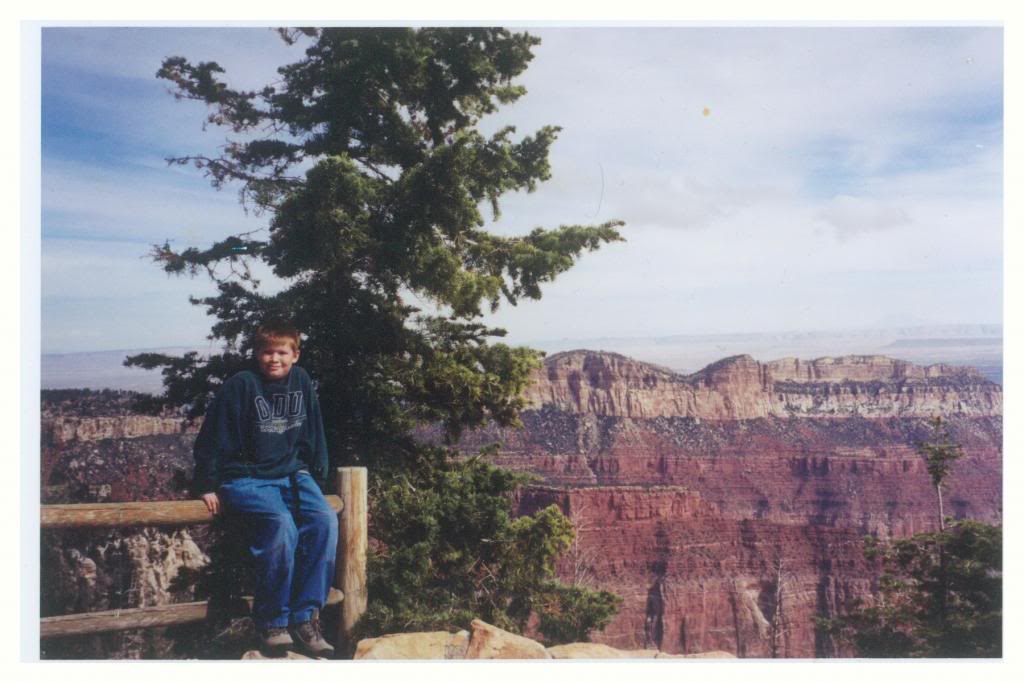
Here’s my baby on our first trip to the North Rim of the Grand Canyon, my favorite of the National Parks, wearing my college sweatshirt!SB -James at North Run Grand Canyon

Anyway, we had a very good time visiting gorgeous Denali and Kenai and Katmai and staring a glacier in the face; I couldn’t help but wonder if they would still be around in another fifty years. The scenery was gorgeous, but we didn’t see any wildlife. My only near miss with a bear was actually a hiker, sleeping in the grass, who popped up so suddenly I thought he was a bear and I nearly keeled over in shock. Also a flasher at the Grizzly Café outside Denali who looked like Santa, but I’m not sure if he was an intentional flasher, or if he just forgot both his underwear and zipper. Either way I classified him as wildlife.

One of the glaciers in Kenai Fjords:
SB Alaska Glacier 2
After Flasher-Santa, I said, screw it, let’s head to Canada. Almost as soon as we crossed the border, we found all the wildlife. I don’t know why the eagles and bears and wolves were in Canada- perhaps the IRS turned their eye on them and they sought asylum? Either way, we drove slowly, and the bears ambled across the road, babies bouncing behind, and my kid stared at them out the window and said, ‘they look just like they do in the pictures!’ And that was my exact thought as well.SB JamesGlacierNatnPark002_zps00698238

We crossed the border with the US at Glacier National Park in Montana, and immediately had a lecture about bear safety. I tried to tell the Ranger the bears were all up in Canada, but he doubted my theory about the wildlife moving north. My son adores Park Rangers and always has many questions for them.

He takes their rules, usually posted near the bathrooms, for gospel and we always follow the safety rules to the letter. Which is why we had our toothbrushes in plastic bags, and locked in the truck. Because bears can smell Crest. We ate our hotdogs and marshmallows and then lay in a very small tent, and SB Glacier Park with boatsI stayed awake all night, listening for the grunt and rasp of ursine breathing through very thin nylon. The bighorn sheep were crawling all over the mountains, the lakes and rivers were icy cold, and we experienced the terror and delight of Going to the Sun Road.

After all this fun, I told the kid we needed to head on to Boise, where I had received a job offer. Frankly I was exhausted by all the adventure.

So we started driving through Montana, heading to Idaho.

The Northern Rockies are like nothing I’d even seen before. Huge, stark, forbidding, but sort of protective, too. The valleys were encircled, and the mountains were big andSB Northern Rockies strong, and I was safe there, safe surrounded by these old grandfathers. It was a

strange feeling. I was used to being the tough one, strong myself, taking care of everyone, and in these mountains, I felt like they were watching out for me. I was astounded. Astounded and so relieved I felt like weeping.

The rivers are not like the rivers I’d grown up with back east. These rivers are noisy, muscular, tumbling and roaring. Idaho has a masculine spirit, the landscape strong and tough and silent as a cowboy. No wonder I fell in love! And the people are like the landscape—tough and still, very strong, but with hearts as big as the mountains.

SB Salmon River #6

These are the Grand Tetons. The French fur trappers in the mountains called them Les Tois Tetons, which means, of course, The Three Breasts. What did I say about the masculine spirit? Some historians suggest the mountains were named for the Teton Sioux. There were many Native tribes in this area, Bannock, Arapahoe, Cheyenne, Sioux, Blackfoot. I used the past tense just then, but small groups of Bannock and Arapahoe still live in these mountains. I’ve always been fond of the Blackfoot, since they were the only tribe to try and ambush Louis and Clark.

SB Grand Tetons
When I first moved out to Navajo country to work, I took my usual view of the world, and since I like to listen to people talk, found myself hearing really different perspectives on things. I worked at a tribal boarding school, and I heard a couple of the teachers talking about what they were going to do to teach Lewis and Clark’s trip west. One of the teachers just shook his head, said, “Those bastards.”SB Idaho Lewis and Clark Trail
I’ve always been a bit of a Corps of Discovery nerd. This was the first time I’d heard an opinion from the other side! This is just off of the Lewis and Clark Trail through the Northern Rockies.

Buy Link to Wild Onions:HERE IT IS!

Review of Wild Onions

Review: Wild Onions by Sarah Black

Rating: 5 stars out of 5

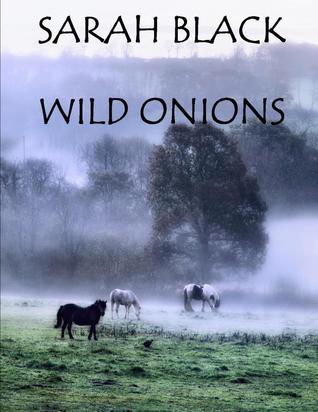
Wild Onions coverStill healing from his many injuries,  both physical and emotional, photographer Robert Mitchell has returned to the cabin he shared with his partner Val to grieve over Val’s death and determine whether he should sell it or hold onto the place full of memories and ghosts.  Just over a year ago, Robert’s life was happy and full.  He had his work, and his long time lover.  And then it was gone. With a mountain of debt looming over him from their hospital bills, Robert is unsure of his future but he still  can’t let go of his past, seeing and hearing Val’s ghost everywhere. Then Robert meets a young Blackfoot indian fly fishing in the Salmon River just outside the cabin and everything changes.

Cody Calling Eagle, a Physical Anthropologist halfway through his dissertation  and temporary wildlife official, wanders into Robert’s life during a day of  fly fishing.  The attraction between them is immediate and magnetic.  Cody’s good natured demeanor and open heart draws the lonely, grieving Robert in, providing the emotional nourishment he is so in need of.   Cody has crushed on Robert for years, and now follows his heart into a relationship he has longed for.

But the cabin and the land it sits on contains old buried secrets just waiting to emerge.  And when an accident lets them out to spread their evil once more, it threatens not only Robert and Cody’s new relationship but even their lives.  It will take everything Robert and Cody have to give and more to save themselves and the community around them from a dark history that has come alive once more.

Wild Onions is remarkable in so many ways.  It combines a variety of tropes so smoothly and effortlessly that the story flows from present day to the tumultuous era of the last of the Indian Wars, from the contemporary to the supernatural and back to the past without so much as a disruptive ripple.  Unless of course the author puts it there.  There are contemporary relationships and love affairs, a supernatural romance, several mysteries, an element of the terrifying and of course an historical background.  All of which are folded into the narrative to give the reader a compelling story set amongst one of the most beautiful landscapes the United States has to offer, western Idaho and the banks of the Salmon River.

I have long been a fan of Sarah Black and Wild Onions is a perfect example why I find her writing so captivating and addictive.  First there is her characters.  Robert Mitchell is a portrait of a man grounded in grief and memories, unable and perhaps unwilling to move beyond his past.  His grief is soft but tangible and its met by the quiet of the cabin and its surroundings.  Sarah Black matches the man to his environment, a monotone of emptiness and solitude that anyone who has lost someone will recognize.  Then she disturbs his static existence by the arrival of Cody Calling Eagle, a Blackfoot doctoral candidate fighting his own ambivalence over his future and passions for history and his people.  Cody is a wonderful character, his warm, open nature and bright shining intelligence warms the page and provides the story with such a charismatic presence that the reader  cannot help but be drawn to him, as is Robert.  It’s a meeting unexpected and yet so natural.  It feels as right to the reader as it does to the men.  And before we know it, we feel intimately connected to Robert and Cody and their relationship.

Here is a small excerpt (another is at the very end).  Robert has just stepped into the river for the first time in over a year, his stance and emotions unsteady:

Robert grinned at him. “Wonder how many times you hear that in the course of a week? We must be in Idaho! I’m Robert Mitchell.”

The man reached for his hand and they shook. “I’m Cody Calling Eagle. So,” he nodded toward the fishing pole in Robert’s hand, “what’s with this? You have a no-hook fishing technique? You’re not a vegetarian, are you? One of those guys who think it’s cruel to eat the poor fish?”

Robert shook his head. “I just don’t know how to do it. Good fishermen have tried to teach me, but it didn’t stick.”

Cody was looking at him with interest now, his warm, dark eyes moving over Robert’s face in a way that was almost unfamiliar, it had been so long. And Robert found himself wondering if this guy might be a friend. The possibility of a new friend, that was a good feeling.

“I knew Val. My grandfather, he was the silversmith.” Cody’s eyes were on the heavy silver and turquoise cuff on Robert’s wrist. “He made your cuff. I remember watching him when he set the turquoise. I sure was sorry to hear about the accident.” He cleared his throat. “You don’t know how to fish, but do you know what to do with a nice piece of speckled trout in a frying pan?”

That small excerpt of the first time Robert and Cody meet eases the reader into the story with the same fluidity of splash and movement of the Salmon River, so much a part of the setting and relationships.  The river is a deep part of  Cody’s nature and its importance is as powerful as the land itself. Sarah Black has lived in Idaho and now resides there again. She is familiar with the geographical landscape of Wild Onions and her love of the area and its native peoples are the bedrock upon which this story rests.

Intertwined with scenes of the growing relationship between Robert and Cody are historical facts and flashbacks to 1882, a time when the native tribes, including the Blackfoot, lost their land, their living and often most of their people to the wars against the U.S. that just concluded.  These scenes form both the basis and the springboard for the supernatural elements that start to appear and are such a hugely emotional and terrifying component in this story.

If history sounds a bit dry, trust me it’s not.  Its inclusion here is so well done, so enthralling and yes, shameful, that you might forget its an actual part of our history as Americans.   The time the author has spent among the various tribes in the United States shows in the in depth knowledge and respect that threads through the story of Wild Onions like the yarn in a tapestry, a part of the whole, subtle and necessary.

Black does justice to the supernatural aspect of her tale as well.  I won’t give anything away but there are some hair-raising, downright scary things going on here, enough to terrorize the reader into leaving the nightlight on at bedtime.  And it has its own grounding in Native American lore too.

All these ingredients combine to present the reader with a tale of romance, love  and terror that won’t allow you to put it down until its concluded and will leave  you thinking long past the last page.  I adored this story.  I loved the men, their relationship, as well as  the community which rallied to save them.  I think you will adore Wild Onions as much as I did.  Grab it up and prepare to fall in love.

Book Details:

ebook, 96 pages approximately
Buy Link: :HERE IT IS!
Published September 23rd 2013

ASIN B00FE5G7IK,

edition language English

Book Blurb and Excerpt:

THE YEAR was 1882, and the last of the native tribes had dropped to their knees and slipped on their yokes under the boots and guns of the US Cavalry. The Blackfoot were the last, and then the buffalo hunt failed. The vast plains were barren and empty, and the people began to starve. Desperation spread like poison across the land. Evil men, seeing their chance, fed on the hunger, ate the clean hearts of the people. The blood that was spilled in 1882 has not been avenged today. The ghosts are waiting for someone to set them free.

Excerpt:

Robert looked over to the corner of the porch. Their old fishing poles were leaning against the screen. He carried them back to his chair, started untangling the nylon fishing line. Val’s pole was for serious fishermen, a supple thin Orvis fly rod with a reel full of braided yellow nylon. His pole was cheap, from Wal-Mart, with a soft cork handle and a reel with a sticky thumb button. Val laughed when he saw it, said it was for little boys fishing at reservoirs.

He put Val’s pole back in the corner, carried his down the slope to the river bank. It took him a little while to find his balance again. He didn’t try to get into the water. That would probably be too much for his shaky leg. But after a few casts he got his rhythm again, let the weight fly out low over the water.

There was a splash a bit upriver, and a moment later a young man appeared, walking down the middle of the shallow river from rock to rock in green hip waders, dressed in the dark green uniform of Fish and Wildlife. He had a fishing pole over his shoulder and a woven oak creel. From the weight of it on his shoulder, Robert could see he’d had some luck. He was Indian, Blackfoot, maybe, and his long hair was tied back at his collar. He raised a hand in greeting.

Robert nodded back. “Evening.” He reeled in his line, and the man watched the red and white bobber bouncing across the water in front of him.
The man’s face was impassive, but he blinked a couple of times when he watched the line come out of the water, bobber, lead weight, no hook. No fish. “I guess I don’t need to ask you if you have a fishing license,” the man said. “Since you aren’t really fishing.”

Robert nodded to the creel over the man’s shoulder. “Looks like you’ve had some luck.”

The man eased the basket off his shoulder, dipped it down into the icy river water. “Yes, I sure did.” He slapped the Fish and Wildlife patch on his uniform shirt. “Course, I don’t need no stinkin’ license! Just another example of the generalized corruption of the Federal Government.”

Robert grinned at him. “Wonder how many times you hear that in the course of a week? We must be in Idaho! I’m Robert Mitchell.”

The man reached for his hand and they shook. “I’m Cody Calling Eagle.

Review: Home Team by Jameson Dash

Review: 4 stars out of 5

Home Team coverAaron Buckley has made hockey his primary focus for most of his life from the moment he first hit the ice to his fifteen years in the NHL.  Hockey was Aaron’s everything.  He gave up family, friends, a social life and most importantly, he gave up the only man he has ever loved…Zach.  Aaron knew that he wanted to play pro hockey and had to stay in the closet if he wanted to make it in the NHL.  Zach wouldn’t be his secret and walked away from Aaron rather than hide who he was.

Now one of the league’s older players Aaron knows he’s at the end of his career.  A huge screwup costs Aaron his spot on his team in LA.  They send him down to the minors in Manchester, NH, back to where he started all those years ago.  Home in Manchester, now on a team full of young rookies hoping to make it big, Aaron has time to think and reconnect with his past.  His sister makes her home and business there as does the man he left behind.

When Zach, now a sports reporter, shows up to cover his first game home, it is clear that Aaron and Zach can have a second chance at love.  But once again, Aaron must choose between hockey and love.  What will his answer be this second time around?

Home Team is a book that will grow on you.  The more you think about the characters, especially Aaron Buckley, the more they will grow on you.  I started out thinking that Aaron was pretty stunted emotionally.  It is his voice driving the narrative of this story.  But the author’s subtle maneuvering of Aaron’s character and viewpoint will have the reader changing their mind as the story continues.

Aaron is at the end of a long career in the NHL, he is steadily losing ground to the younger players and it’s a year since he scored a goal.  His is a voice weary, testy, and resigned.  I really commend Jameson Dash for making Aaron such an irascible, somewhat unlikeable personality at the beginning of the story.  At times Aaron’s voice seems flat, removed, and irritable.  Then Aaron makes his costly error in judgement and his voice flattens out even further until it almost flatlines like his career.

Once Dash brings Rosie, Aaron’s sister and Zach into the story and Aaron’s life, things start to change in Aaron’s outlook although the movement of emotions in Aaron is almost glacial.   I was puzzled over my inability to connect to this character because I love hockey players. But quite frankly, Aaron’s comes across as a jerk for the first part of this story, especially his attitude towards the “mistake” that cost him his spot in the major league.  But the more I thought about it, the better Jameson Dash’s characterization got.  This was a man who has shut down emotionally.  Aaron is beyond tired, and stressed to his limits.  He has lost his spot on his team, he lost his only friend who remains with that team, he lost his home and most likely his career.  And probably, most importantly of all, he is in denial,  Aaron doesn’t want to recognize that his career is over and that because of his own choices, he has left himself with nothing waiting for him.

The author’s characterization of Aaron is so good, so human that it took me a while to realize what he was trying to accomplish with keying us so intimately into the thoughts of a man like Aaron because it seems so counterproductive to our connecting with him.   But again, only at the beginning.  Then little by little as reality of his situation creeps into Aaron’s mindset, that along with the arrival of Rosie and Zach, propels Aaron and the reader out of his “funk” and into the warmth of possibilities and a redemptive love.

This is a spare form of narrative that works perfectly for the character and his story.  Its as free of embellishment as Aaron himself.  And the more I thought about this character and his growth throughout Home Team, the more Aaron and his story grew on me.   I have not read other stories by Jameson Dash, this was the first.  But if this story is a good indication of this author’s style and talent, then I can’t wait to see what they write next.  Consider this book and author highly recommended.

Here is an excerpt as Aaron lands back home in Manchester, NH:

He finds his hat and sunglasses in his backpack, but there isn’t much of a crowd in the airport. Nobody is looking for him. Wives greet their husbands in rumpled suits, a group of teenage boys tangle in a massive hug, and Aaron spots what looks like a college basketball team, home after a disappointing tournament. Aaron wants to give the girls a high five and tell them to keep being awesome. But he’s not feeling very awesome himself. Instead, he keeps his head down out of habit and heads for the baggage carousel.

It’s different traveling alone than with the team. He’s still wearing a shirt and tie; the jacket was folded and shoved into his backpack before the flight took off from LA. He’s representing his team, even if his team doesn’t want him.

But he has to pick up his own equipment. Once Aaron gets the mammoth hockey bag and his suitcase onto a cart, stick bag balanced on top and his own backpack over both shoulders, he looks around for a chauffeur holding up his name. There’s no one waiting for him. There’s no one looking for him.

Cover art by LC Chase is just ok.   It doesn’t pertain to this story, it could be any story about a hockey player.  It’s just too generic.

Book Details:

ebook, 82 pages
Published September 25th 2013 by Dreamspinner Press
ISBN 1627981594 (ISBN13: 9781627981590)
edition language English

Review: Burning Now by A.R. Moler

Rating: 3 stars out of 5

Burning Now coverFireman Gideon Sato is combing through the remains of a burning warehouse when he finds the body of a man buried under the  timbers and ashes of the building.  At first, Gideon believes the man is dead so he is stunned when the body moves, the man groaning in pain.  How could anyone survive such a blaze?

Vanya Stravinsky is leaving the restaurant where he works as a chef when he is mugged and knocked unconscious.  The next moment Vanya is waking up in the ashes of a burning warehouse with a fireman standing over top of him.  Shaking from the cold and naked, Vanya is rushed off to the hospital for treatment and questioning about the fire.  One thing all the investigators want to know….how did Vanya survive the blaze?  While the events of the evening are still foggy, Vanya is alert enough to hide his biggest secret and the reason why he was in a burning building making everyone suspicious.

A police detective is sure Vanya is an arsonist and working for the mob.  A panicked Vanya turns to Gideon for help and comfort.  It will take both men to clear Vanya’s name but will their love survive when Vanya reveals the secrets he has been hiding?

Burning Now is A.R. Moler’s take on the slavic folklore of “Zhar-ptitsa”also known as the firebird.  As the story opens, Vanya is a chef in a small Russian-Ukranian bistro, and is mugged leaving work.  The next instant we watch as Gideon, a fireman, finds Vanya under the debris in a still burning building and mistakes him for a dead body.  Moler does a nice job bringing the reader into the scene and action of those personnel involved in putting out a fire.

No fire was ever done until all the hot spots had been extinguished, and the chief declared it out. Gideon Sato poked through the rubble of the warehouse with his pike pole. The men of Station 18 had spent most of the night getting the blaze under control and out. Smoky steam still drifted up from numerous spots of semi-collapsed debris. Gideon hooked the end of the pike under one suspicious looking metal slab that had probably fallen from above and flipped it back.

He froze. A filthy soot covered pair of bare feet protruded from under smaller chunks of debris. Aw hell. There was a victim. Gideon shouted back over his shoulder at a colleague. “Hey Victa, got a crispy critter over here. Better tell Cap’ we’re going to need a body bag.”

As you can tell from that scene, Moler inserts dialog that would probably found at any arson site in the nation where firefighters might use callous sounding terms to gloss over the horrifying nature of finds like this one.  Unfortunately, the next bit of inner dialog and descriptions of Gideon pulling out Vanya from under the debris counters that effectiveness with some disastrous and confusing intermingling of thoughts and actual events.  This is an example:

Gideon began to shift some more of the debris. The feet and lower legs weren’t charred. Interesting. He pushed away chunks of burned boxes and there was an overlapping set of metals rods held off the floor by a toasted ex-washing machine. As Gideon shoved back the rods and a layer of burnt cardboard, there was a whole body beneath, lying face down. Wow. Whole as in filthy dirty but completely unburned. Also very, very naked. Mr. Dead-of-Smoke-Inhalation was one deliciously built guy. Ewww. Gideon gave himself a little shake. Skeevving on a dead body was just gross. Still, he did have to wonder why the guy was naked.

While I don’t fault the content, the format is confusing and hurts the overall cohesion of the story.  This is a pretty typical example of the style of narrative of Burning Now. Why not break out the dialog from the events that are happening?  As it is written, it strikes me as more confusing with the commentary buried within third person narrative.

There are some good ideas within this story.  I would have loved to have been given more plot to go along with the folklore.  From the sources I found ” In Slavic folklore, the Firebird (Russian: жар-пти́ца, zhar-ptitsa), is a magical glowing bird from a faraway land, which is both a blessing and a bringer of doom to its captor.”  But we never really get any background on Vanya or his family, except for the city in Russia where they came from.  This is a huge hole when you are basing your story around a mythical beast.  You need the background material in order to ground your story and that is missing here. Is Vanya a curse or a blessing? How does the reality of being a firebird relate to the folklore?  We never find out.

Equally absent is any sort of meaningful relationship between Vanya and Gideon.  When a main character reveals something as outrageous and mind boggling as the fact that they are a mythical being,  the relationship between the men should be solid and believable enough to make that scene emotional and dramatic as the reader would reasonably  expect it to be.   Unfortunately, I found it hard to invest myself in either man or their relationship.

The fact that Burning Now is only three chapters in length also hurts the story.  The author just did not have enough pages to round out their story and invest their characters with the necessary back histories to make the events and relationship seem realistic (even with the mythical element involved).

In the end, while I found parts of this story interesting, the main characters and plot fell short for me.  I would recommend this story only to those diehard fans of A.R. Moler’s or those who covet one more story involving the firebird legend.

Cover illustration by BS Clay is lovely and vibrant.

Book Details:

ebook, 89 pages
Published September 8th 2013 by Torquere Press
ISBN 1610405293 (ISBN13: 9781610405294)
edition language English

Last Day at GRL and the Week Ahead in Reviews

I am writing this in advance as today is my last day at GRL in Atlanta and my travel day home.  I hope I will have had time to post several pics and blogs of the event as it happened.  If, as I predict, not, then a followup blog will be coming shortly.

At any rate, it is going to be a great week here at Scattered Thoughts and Rogue Words.  Sarah Black is stopping by to discuss her latest release,, The General and the Elephant Clock of Al-Jazari, the sequel to The General and The Horse-Lord, a favorite of mine.  If you enjoy great military characters written realistically and grounded deeply in the Marine ethos, then these stories are for you.

Also reviewed this week is her outstanding supernatural story, Wild Onion.  Sarah Black donated the proceeds of this story to her local food bank, a wonderful endeavor and a much needed one.  Anne Tenino is back with more of her boys from Alpha Theta Gamma in Good Boy and I have new stories hee by A.R. Moler and Jameson Dash.  Really there is something for everyone.

Here is the schedule for the week ahead:

Monday, Oct. 21:       Burning Now by A.R. Moler

Tuesday, Oct. 22:       Home Team by Jameson Dash

Wed., Oct. 23:             Wild Onions by Sarah Black

Thurs., Oct. 24:          Good Boy by Anne Tenino

Friday, Oct. 25:          Sarah Black Guest Blog and Book Giveaway

Sat., Oct., 26:             The General and the Elephant Clock of Al-Jazari by Sarah Black

Review: Justice (Leopard’s Spots #10) by Bailey Bradford

Rating: 2. stars out of 5

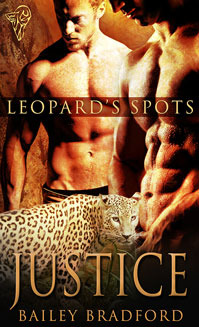
Justice Leopard Spots 10 coverAfter being rescued by his twin brother Preston and his brother’s mate, Nischal, Paul Hardy is suffering horribly from the aftermath of his capture and two years being tortured and sexually abused as a shifter’s “pet”.  Prior to his experience at the hands of a human trafficking ring, Paul had no idea that shifters even existed, now he can’t get their existence or his trauma out of his mind.  And with his brother mated to a  shifter, Paul can’t even escape from the day to day contact he dreads. Paul, Preston, Nischal and his brother Sabin are all headed to Colorado and the snow leopard family compound hoping to find sanctuary and therapy for Paul.

Snow leopard shifter Justice Chalmers and his sister Vivian are traveling to Grandma Marybeth’s place in Colorado.  Justice was working at his dream job of being a police officer in Phoenix, Arizona when the call went out from his family about a human with a connection to them needing help immediately.  That call irequired Viv with her new therapy license to travel to Colorado and she doesn’t drive.  So Justice is currently on leave to drive his sister to their family compound.  Justice knows that there is more to the story than they have been told and his experiences as a Marine and cop, tell him to be on his guard.

A chance meeting between Paul and Justice on the road to Colorado changes the lives of both men permanently as Paul turns out to be Justice’s mate.  But their future together is cloudy.  Paul is severely damaged from his years of abuse and his abusers want their pet back.  Can Justice and Paul fight their way to happiness or will Paul’s past bring them both down?

Well, here we are at book ten in the Leopard’s Spots series and I am just as conflicted about this series as I was at book one, perhaps even more so.  To reach the tenth book in a series is sort of a benchmark for an author, an occasion to bring various plot strands together and move the entire series forward with new vigor, purpose and cohesion.  And I wish I could report that sort of growth happened here with Justice but it didn’t. There are so many missed opportunities here, so much jumbled nonsense, and quite frankly irresponsible writing that it is hard to know where to start.

Just the title alone starts the book off in a misleading fashion.  The book is called Justice but it really should be called Paul as it revolves around Paul Hardy, twin brother to Preston Hardy, Nischal’s mate  in book nine.  Justice almost serves as a secondary character here and the book suffers from that element.

Then the trajectory of the book really goes askew with the character of Paul and the author’s treatment of his traumatized state.  Back history for a moment.  Paul was captured two years ago (Nischal, Leopard’s Spots #9) by human slave traders and sold to a pack of wolf shifters keeping humans as pets.  For two unrelenting years, Paul was tortured,in every way possible from being sexually abused included gang rapes, being raped by the shifters in wolf form. Paul was tortured mentally, emotionally, and physically until he was broken so throughly that he could not even look his brother in the eyes or raise his head when rescued.  The author supplies us with all these facts and much more, although thankfully no explicit scenes of torture.  No, the reader gets flashbacks, nightmares, and stories about his numerous scars to help cobble together a picture of his time with his torturers.  Bradford wants us to believe in Paul’s traumatized state and at the beginning we do.

When we first meet Paul, the character is having multiple, desperate sexual encounters while feeling nothing. He is acting without consideration of his own safety and physical well being, trying to see if he can get himself killed without actually having to do the job himself.  His actions are understandable and the compassion the reader feels for this character is well grounded in reality.  Then he meets Justice and Viv and all that flies out the door.  Why?  Because of mates and sex, the bandaid of bandaids.  Sigh.

Apparently with Justice, he wants to have sex with a shifter, lots of it (although to be fair, it is mentioned that Justice being a snow leopard shifter instead of a wolf makes some difference).  Not only that but Paul has five therapy sessions, yes only five, with Viv, who just graduated and got her license and he’s soooooo much better.  No mention is made of a new therapist having the experience to deal with someone as traumatized as Paul.  Nope, he just improves rapidly.  Not 100 percent, as he still has flashbacks and nightmares but nothing so substantial as to immobilize him.  Now balance that picture against the one that the author built up for Paul in captivity.  It just doesn’t match up.  If the author wants the reader to buy in on Paul’s past and the horrors he endured then there is a reasonable expectation on the reader’s part that his recovery would be just as slow, hard and realistic  to deal with all the things that were done to him and that he was forced to do.

But that doesn’t happen.  Instead Bradford uses the mating urge to slap a bandage over the pain and scars left by the experience.  It’s slapdash and insufficient, believe me.  Shortcuts rarely work in fiction, and this one certainly doesn’t. Instead the reader feels as shortchanged as they should by being denied the satisfaction of seeing Paul slowly work through the horrendous events and traumas of the past two years.  That just isn’t a missed step, that a whole Marianna Trench!

And this type of plot device and jumbled narrative happens over and over again.  A wolf shifter named Cliff pops up like some vengeful enforcer but does his thing “off stage” as it were.  Totally unsatisfying too.  His captors come after  Paul again and Justice acts with such unbelievable stupidity for someone whose character was portrayed as a Marine for 10 years and then a cop, that I almost thought that Bradford had shifted the story over to a parody.  Totally lacking in any authenticity, watching Justice in action was similar to watching those actors run into spooky houses on Scary Movie.

And after all this nonsense, the author ends it with a cryptic message and not much else.  Trust me when I say my head hurts from banging it against the wall in frustration over this story, series and author.  So much promise is thrown away so casually and repeatedly over a series of ten books that it boggles my mind.  And still I want to know where this series is going and how much worse is it going to get.  I expect that the answer is much, much, worse.

How to balance an author who gets the reader to commit to believing in a character’s degradation and two year ordeal only to see that author then negate that commitment by not treating it seriously? And all within a framework of ideas that remain compelling and new? I just don’t know.  As I said I am conflicted over this series and author and so I am not even going to say whether I will recommend this or not.  I will leave it up to you.  But if you continue on as I will, get yourself prepared to encounter all sorts of frustrations and puzzling events and characters.  This is a wild grab bag of story elements and I never know what will appear.  Consider yourself informed.

Book Details:

ebook, 145 pages
Expected publication: October 4th 2013 by Total-E-Bound Publishing

Cover art by Posh Gosh is gorgeous as always. Models are on target and perfectly represent the characters involved. Just beautiful.

Here are the books in the Leopard’s Spots series in the order they were written and should be read (mostly)

Levi (Leopard’s Spots, #1)
Oscar (Leopard’s Spots, #2)
Timothy (Leopard’s Spots, #3)
Isaiah (Leopard’s Spots #4)
Gilbert (Leopard’s Spots #5)
Esau (Leopard’s Spots #6)
Sullivan (Leopard’s Spots, #7)
Wesley (Leopard’s Spots, #8)
Nischal (Leopard’s Spots, #9)

Review: Fool For Love by Cassandra Gold

Rating: 3 stars out of 5

Fool For LoveCollege professor Vincent Norton is feeling every bit of his forty-five years of age.  Three years ago his partner of 20 years died in a car accident. Estranged from his family, now just his dad, Vince has used all his energy and time at his profession, teaching college kids and not much else,  Even his apartment of three years still looks empty of personality or his past.  His life is in on hold until he meets one of his neighbors from the apartment next door. One of a group of four college students, Vince finds the young man attractive and that is something he hasn’t felt for 3 years.

Rob Bridges is 21 and getting ready to graduate at a nearby college.  He has been secretly crushing on the older man in the apartment across from his.  That man is tall, gorgeous with just a little silver starting to show at the temple and Rob wants to date him.  But he doesn’t even know anything about him other than he is a professor at Washington University, let alone that he is gay?  What is a man to do?

An accident in the hallway brings the two men together and a date soon follows.  And while Rob is sure Vince is the one he wants, Vince is having second and even third thoughts.  The age gap between them is huge and surely Rob will tire of an older man, won’t he? Opposition to their dating mounts from all sides.  Will Rob succeed in making Vince  believe in their love or will Vince’s own doubts and outside influences push him away permanently?

In Fool For Love Cassandra Gold has written a very sweet love story.  Her May – December romance between Vince Norton and Rob Bridges has many lovely qualities, including two believable characters who talk and act their age.  Vince Norton is every bit the still grieving, stuck in stasis middle aged professor.  He cares about his students and mourns the loss of the man he thought he would spend the rest of his life with.  In an authentic touch, Gold has his apartment reflect this inability to move forward.  It’s not decorated, bare walls and barren of spirit, it states that it is more of a staging area than a home.  And I absolutely believed in Vince and his current situation.  Her characterization is of a man who finally realizes he might be ready to move on but how and with whom?

Then into the picture comes Rob Bridges, another likable persona.  He is intelligent, compassionate, and kind. He is also quite handsome.  And Rob likes older men and has been secretly crushing on Vince next door.  All well and good.  Rob has three roommates who are also his friends.  I liked their easy acceptance of his sexuality as well as the layers to their characterizations.  If one acts like a jerk, he is also capable of an apology that makes sense.  Again, I like the secondary characters involved in Vince and Rob’s story.  They are all quite human, funny and flawed. And their presence goes a long way in making this story more viable and lovely to read.

Another moving element is the scenes with Vince’s Dad.  I think Gold handled this aspect of taking care of older parents realistically and quite movingly. And unfortunately, I think it helped highlight what might be the one obstacle that will keep readers from connecting to this book and Vince and Rob’s relationship.  And that would be the huge gap in their ages.

We aren’t talking 5, 10 or even 15 years here.  No, the gap is that of 25 years and for many people that will be an insurmountable obstacle.  And I think I count myself among them.   Cassandra Gold did such a good job with her characters that Rob feels way too young for Vince.  And yes Vince is far too old for a young man of 21.  As the author has Vince point out, they are at two very different stages in their lives and that gets brushed over a little too quickly.   When Rob breaks down in tears because Vince had to cancel out on an important date,  while we might have had some empathy for him, it also highlighted just how young Gold had made him emotionally.  Vince gets mistaken for Rob’s father while out on dates (again I can see that). And as Vince cared for his dying father and thought about himself and Rob in the same position, I found myself agreeing with him that it was entirely plausible.  It’s not something you want to bring up in a love affair but 25 years is 25 years and Vince is turning 47 as the book ends.

And finally, because yes, my mind goes there.  There is the physical differences in physiology between a 21 year old man and a 46* year old man.   At 21 years old, the sexual drive can match up with the body’s ability.  Unfortunately, not so with middle-age.  And that wasn’t touched on at all.  Perhaps because it’s not a very sexy thing to think about. Athough I have read some books where the authors treated aspect realistically and still made the relationship sexy.  Certainly though it is a fact of life, not exactly dealt with here.   But that’s what I kept thinking about.    So yes, I just couldn’t make myself believe in this romantic relationship.   To be honest, I don’t think I would by it as a M/F romance either.  The difference is just too great.

There are a couple of odd phrasing here and some confusion about ages, all that is minor issues in an otherwise sweet narrative.  So again, how you feel about the age gap between these two realistically portrayed men will define how you feel towards Fool For Love.  It has many lovely elements but in the end I just couldn’t connect to the love affair.  You make up your own mind.

Cover art by Valerie Tibbs is far preferable to the original.  At least it shows two men of difference ages.  But the blue tone makes it all a little hard to see.

*It states that Vince is 45 at the beginning of the book, then 46 and at the epilogue which occurs one year later, Vince is turning 47.

Book Details:

Note:This book is a re-edited, revised version of one previously released by another publisher.
Published August 20th 2013 by Loose Id, LLC (first published April 9th 2009)
original title:  Fool For Love
ASINB00EOA5Q8I
edition language English
characters Vince Norton
setting United States

Review: Wireless by L.A. Witt

Rating: 3.5 stars out of 5

Wireless coverIn the future, skin to skin contact is forbidden.  People wear full body suits and gloves to insure that no bodily contact will be made with another human being.  Everything has been sanitized and all unions between man and woman are for procreation only with the matches made by the Government.   Human sexual release is prescribed medically and people are given appointments bi monthly at Sim Centers where  electrodes are attached at erogenous zones for use in virtual reality sex scenes.  Everyone is microchipped and everything they do is monitored, all by order of the Government.

Keith Borden is a sim tech and has been for years.  And in all that time Keith has never questioned the Government’s actions or his profession.  Keith has just accepted his isolation and his part in supporting its continuation as being for the good of all.  Then Aiden Maxwell becomes his patient and Keith’s world starts to change.  Aiden is gorgeous and flirtatious. And Aiden requests that his sim partner look exactly like Keith.  All too soon Keith’s own sims is not enough to satisfy him.

Keith has known about the perverted and depraved people who break the law and have skin to skin contact but never thought he would be one of them.   Aiden breaks down his barriers and takes Keith to a wireless lounge where people gather naked to have contact with each other and unprotected sex. Keith is hooked.

Keith’s world is shattered from the moment he experiences the sensual pleasures of skin to skin contact and sex with another human being, especially if that person is Aiden.  But the government is cracking down on the wireless lounges and breaking the law means much more than just jail time.  Keith can lose everything, including his life.  What will Keith risk not only to keep having human contact but to have Aiden in his life?

There is much to love about  Wireless by L.A Witt starting with the plot of the book.  Just imagining a world where human contact is outlawed is chilling.  No loving touches, no sympathetic embraces or hugs when you need them the most.   No more gentle kisses on the cheek or lips, all those gestures that connect us to others and telegraph so much emotion without saying a word.  All gone by government order.  I think most people are not even aware of how much touch is used daily to convey thoughts, needs, and direction.  So using the loss of that sense and personal isolation as a focus is a great idea. And L.A.. Witt does a terrific job in conveying the ramifications of such a policy on society in her story.

Character Keith Borden is our “everyman” at the beginning of Wireless.  He is unquestioning and complacent about his lifestyle and government proscribed sexless sex life.  When he and the other sim techs gather to discuss current happenings, all (well mostly all) look askance at those who would risk everything for sex in the wireless lounges.  They even agree when one tech says that those caught in raids should “have their balls cut off” calling them degenerates.  Then Witt brings in Aiden Maxwell to upset Keith’s bland life.  Here is a look at their encounter:

There were thirty million people in San Angeles, fully half of them in the quadrant where I lived. I’d seen so many of these suits on so many bodies, they were as novel as pollution and pavement.

But the way Aiden’s suit fit him did things to me I couldn’t explain. It was like the damn thing was made to accentuate his narrow hips or the fact that he had shoulders that wouldn’t quit.

Walking down the hall from the waiting area to Sim Room 8, it was all I could do not to sneak a few glances. It should have been a crime for a man to look this good. Especially since it practically was a crime for me to have the fantasies I’d had about him in and out of that suit. Living out those fantasies? A felony. Not worth entertaining even within the confines of my mind, but sometimes I just couldn’t help myself.

The skintight suit wasn’t the worst part. He was here for a sim session, which meant— just as it did for the hundreds of people who came through this simhouse without making me bat an eye— the suit was coming off. So were the boots, the gloves— everything. Every layer peeled away, revealing the exquisitely defined arms and shoulders that a decade of heavy construction work had chiseled to perfection.

It was all coming off, and since he always asked for me, I was the one who got to put the electrodes on him. On his neck. The insides of his elbows. His flat, flawless abs. Not to mention the equipment that went over his penis and testicles to provide the stimulation that would ultimately bring him to orgasm.

Good thing no one on staff had ever noticed— or questioned— that I always booked my own sim sessions for immediately after Aiden’s.

Forbidden thoughts have already entered Keith’s  mind and Aiden is going to stir them up even more.  I liked both their characters.  Of the two Keith is the most accessible simple because the story is told from his pov.  Aiden is more of a question mark simply because we don’t know anything about him. Aiden is the siren calling Keith to him and the pleasures he offers are dangerous indeed.

The sensuality and desperate nature of the wireless lounges comes across vividly due to Witt’s descriptions.  You can almost feel Keith being overwhelmed by the intoxication of it all, so much skin, the smell, the sounds, truly sensory overload.

 A crystalline bead of sweat slid from his temple and into the side of my hand, the coolness of the liquid contrasting sharply with the heat of his flesh. My mouth watered, and I wanted to know what his tasted like. I wanted to know what his skin tasted like. No, that would be going too far. If I kissed him, then we’d…

My gaze drifted to the others in the room. To the people undulating together, bodies pressed so close it was impossible to tell where some ended and others began. People danced. Kissed. Touched. Fucked. All out in the open, all with a kind of feverish abandon I couldn’t even begin to comprehend. One kiss, I was certain, and I’d understand that abandon. I’d embrace it and lose myself in it just like everyone else here.

It’s all there for us to see and understand, the need that deprivation has caused and how quickly Keith finds he needs the contact in order to live.  L.A. Witt makes Keith and Aiden intimate companions with the reader along for the ride and we love it.

So why not give Wireless a higher rating? That would be due to the confused, incomplete world building.  The beginning of Wireless opens with the words “Several decades from now…” but later on in the story it talks about it being 200 years in the future. There are more inconsistencies further along as to the timeline.  Why the world would have fallen into such a state in a few decades is never related. Plus this time frame is not feasible for the type of government and mechanical structures to have been created.   The reader is given a sentence or two about over population and disease but nothing about governments falling or the rise of new ruling institutions, all of which take time.  And this lack of back history or solid reasonable foundation makes the story almost exist inside a bubble.  It just floats along without being anchored to a world we can make sense of.   As the story itself states, that isolation is not only burdensome but unhealthy for the plot.

I am not a fan of this ending either.  Too much is left unsaid or unexplained, definitely an incomplete HFN.  I don’t mind HFN endings but this one left me with far too many questions about their future than could be answered by the story. Sigh.

I liked enough about Wireless to recommend it with reservations and definitely recommend other books by L.A. Witt, a very talented author.

Cover artist Valerie Tibbs does a great job with this dramatic cover.

Book Details:

ebook, 172 pages
Published July 30th 2013 by Loose Id LLC
ISBN13 9781623001605