Review: King of Dublin by Lisa Henry and Heidi Belleau

Ratings 3.75 stars out of 5 (rounded up to 4)
ARC fullcoverTwenty years ago a virus spread around the world, and the resulting deadly pandemic left all countries in ruin, its populations and governments destroyed in the aftermath.  Darragh Fergus Anluan and the other children of the Irish village Cuíl Aodha survived when their elders died but only just.  Hard winters and a disease which seems to return on a cycle has left the small group further decimated.  Desperate for medicine, Darragh is leaving his home against the pleas of the others to search for medicine to help them survive another winter in their small village.  Unsure of what has survived, Darragh is horrified to find that Dublin is nothing more than a ruin, ruled by a sadistic despot who has taken the name of King Boru.

King Boru rules by fear and force, accumulating an army of thieves, murderers and rapists eager to do his bidding.  Those who oppose him are killed or sold off as slaves.  And sitting at his feet is his Boy, a pretty sex slave, whose looks entrance Darragh even as the abuse and rape the Boy endures at the hands of the King and his soldiers draw out Darragh’s protective instincts.  If Darragh is to get his hands on any medicine, he must appear to join the ranks of the king’s men.

Ciaran Daly is the son of a high official in Belfast, a place of relative civility and safety. Ciaran wanted to help out Ireland, believing good deeds and good intentions would triumph over the problems and issues he thought he  would find in Dublin.  So Ciaran and his band of naive friends gathered together supplies and snuck away from their families and friends. But they were unprepared for their capture at the hands of the brutish soldiers of Boru as soon as they crossed the border.  All died except for Ciaran.

Ostensibly held as a hostage, Ciaran has been reduced to Boy, King Boru’s sex slave.  The continual abuse Ciaran suffers has torn away all hope but the arrival of Darragh in the King’s court sparks it back to life.  Darragh is different no matter how hard he tries to hide it.  And Darragh’s gentle attraction to the King’s pet is a dangerous one should anyone notice.  The madness that is King Boru is just the type, however, that incites treason instead of loyalty.  And soon Darragh and Ciaran realize that if their hopes are to become reality, then the King must fall.*

Heidi Belleau has a fondness for Ireland and its culture, all of which translates to her writing (see The Druid Stone).  Lisa Henry shares Belleau’s fascination with the Irish people and their culture.  So a dystopian society based in Ireland, where the characters bear Irish names that speak of the past and the lore of the people makes perfect sense. From the names to the places and mentions of Irish history, this story is steeped in the love of Ireland.  And no matter how bad it gets (and it gets very bad indeed), the moments of cultural recognition and love shine as in scenes at Newgrange, home of The Dagda, and the high kings of Tara.

If you are familiar at all with the novels of Heidi Belleau and Lisa Henry, than the shear scope of the universe and the enormous amount of attention to detail given to the world building here is to be expected from these remarkable authors.  So too is the level of darkness and brutality of existence in the dystopian society created they have created. As society and governments fell, so too did all laws and structure that would have protected the remaining populace.  Instead, it deteriorated into a deadly scramble for power and the acquisition of material wealth and modern vehicles such as cars and gasoline.  Dublin becomes a harsh and deadly world, ruled by gangs and petty despots of which King Boru is at the top of the corrupt pile.

Belleau and Henry are never ones to shy away from difficult material or subject matter. The descriptions of the ruined Dublin are vivid and intense.  Urine soaked courtyards and streets full of human misery, and waste, the authors bring their dystopian society alive.  Here is an excerpt as Darragh goes on his first patrol with King Boru’s soldiers:

People.

The warehouse was full of people, penned in like cattle. Worse somehow than the heads on posts, because they were still alive. Still full of fear and hope.

“Trader can get three hundred for one in good condition,” Hugh said. “That’s worth a few bags of supplies our way.”

“What happens to them then?” Darragh asked. His brain felt like it was stuffed with cotton. He couldn’t think.

Hugh shrugged. “Don’t much care.”

“Isn’t that the way of it though,” Seamus said, “Even in the old days, the only thing Ireland ever had of value for export was the Irish.”

But never like this.

“These traders. They are . . .” Darragh struggled for the word. It seemed so childish, a word from a fantasy like elves or wizards, but no, he knew it was real as well, even if it seemed absurd. “Pirates?”

Noel laughed, the sound terrible and twisted in this place of human suffering. “I think Viking’s the better word, considering, but sure, some are pirates. And some are pirates in the hire of governments, not that the ones paying them would ever admit it.”

Governments trading in human chattel, and the king turning a profit.

And now Darragh was aiding them in the effort.

Medicine. He needed medicine. Not wealth or power or boys dripping with gold.

Medicine, upon which the lives of his people depended.

He looked down at the pens below, at the people standing huddled together, shifting and hugging themselves in the cold. Men, women, and even children. The whole place stinking of desperation and human waste.

Their lives for the lives of Darragh’s kin.

A grim trade, to be sure.

As grim as any the king might make.

With its rank slave markets down by the docks, heads of Boru’s enemies on stakes lining the harbor, the grim reality of life in Dublin is made real to both Darragh and the reader.  Death and enslavement have been made common. So when abuse and rape arrive as part of the norm of this brutal regime than it follows that those details and sometimes hard to read scenes are included in the narrative as well.

The characters found here are as intense as the situations they find themselves in.  There are scenes of constant degradation and humiliation to go along with the continual rape and abuse.  Its overpowering and its meant to be.  Darragh is everything that King Boru and Dublin is not.  Darragh is the best that Ireland has to offer.  He is compassionate, unwaveringly loyal to those who deserve his loyalty, and he has a moral center that did not decay along with rise of disease.  The contrast of Darragh against the terror and horrific extremes of the court of Boru is frightening, heightening up the anxiety and suspense for Darragh safety and mission.

Ciaran’s character is far more complicated.  Ciaran’s naive idealogical crossing of borders without thinking of the possible consequences seems so unbelievably unworldly and gullible. Sheltered in Belfast, a northern city that remains healthy and relatively safe, Ciaran and his friends actions and belief that their ideological and righteous intentions would act like a shield to keep them safe seems idiotic. But one only has to look to current events and the media to find examples of just such behavior in like minded American youths today. Ones who expect their nationality and beliefs to raise them up over the problems they think they will face only to find it a chimera, no more solid than smoke and or able to keep the worst from happening. Which it did.  For them and for Ciaran.

Kept starved and in the dark in a state that mimics a deprivation tank, Ciaran’s isolation by Boru is such that the alternative however hellish is preferable.  That seems authentic as a state of mind.  Victimized, abused, raped, Ciaran struggles to hold onto remnants of who he was, fearing he will disappear into Boy for good.  However, later on in the story, that same naïveté and stubbornness that brought him to Dublin and into the clutches of Boru continues, surfacing and impacting his actions until I had problems with staying invested in this character. At what point does naivete turn into stupidity and stubbornness become a cover for self centered delusion?  Each reader will have to answer those questions for themselves.

Moments of shattering emotional impact are made more hurtful because these characterizations are so well done that it feels as though it is happening to people we have gotten to know. And  instead of being able to keep our distance as we could with one note personas we are trapped in the moment with Darragh, Ciaran and Rabbit (another wonderful character). When the authors put these people in danger, then scenes such as these demand a response from the reader equivalent in emotion to the ones the characters are experiencing. Trust me when I say it will double the impact of the events unfolding in front of you.

And just when the graphic abuse and the horrific intensity of Ciaren’s pain and humiliation get to be too much, then Belleau and Henry give their characters and the readers a much needed  break as the narrative takes a turn towards hope and freedom.  For me, it didn’t come too soon.  I was starting to have some issues with the major characters starting with Ciaran. He’s learned nothing apparently until its almost too late.  And in my opinion, that aspect of his character makes it a tougher sale in keeping the readers fully invested in Ciaran.

Darragh too has gone through some transformations, understandable given the events he survived. Part of that is that Darragh apparently forgets all about the medicine his people need in his obsession over Ciaran who continues to lie and manipulate him. We can relate to his actions  to some degree but still I am not sure that Henry and Belleau made that case here for Darragh completely dismissing his mission to the degree that he does so.

But other characters arrive to take hold of your affections, chief among them is Rabbit, a young boy of extreme resourcefulness and rough charm.  He actually became my favorite at the end.

King of Dublin has much to recommend it, great characters, intense storytelling, and a realistic dystopian Irish society.  If you find that the descriptions and scenes of graphic abuse are ones that you can adjust to, then I recommend this book to you.  If, on the other hand, sexual violence and scenes of non consent are outside your comfort zone, then I would look to many of these authors other stories. I am sure you will find one there to love.

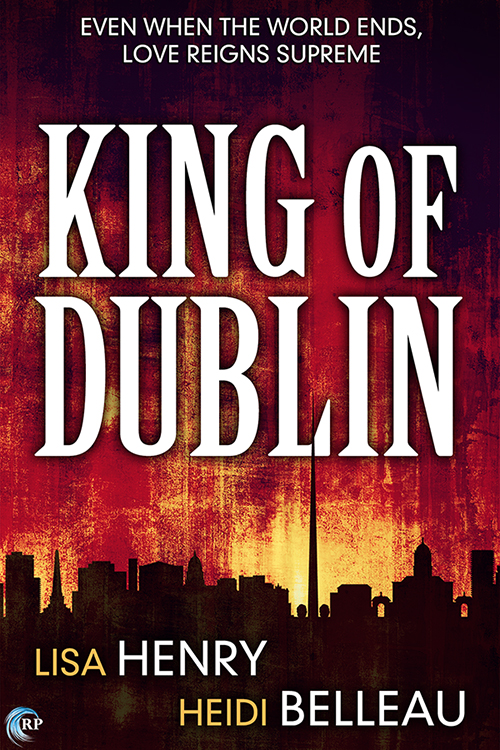
Cover Art by Vongue, http://vongue.deviantart.com.  This cover is well done in conveying the characters and the setting in Dublin.

Book Details:

ebook, 375 pages
Published February 24th 2014 by Riptide Publishing (first published February 22nd 2014)

Review: Strain by Amelia C. Gormley

Rating: 4 stars out of 5

Strain_500x750When a deadly virus is unleashed, it spreads and mutates quickly, wiping out most of the human race.  Rhys Cooper and his small family has escaped the virus and its consequences by living in a small compound under the rule of a puritanical preacher and his son.  But soon the zombie like plague victims discover them and all are killed except Rhys and Jacob, the preacher’s son.  They are rescued by a special militia corp, but not before Rhys and Jacob were exposed to the virus themselves.

Sergeant Darius Murrell  belongs to a group that used to be Army and nows roams the country looking for survivors.  They are also charged with finding and killing the people the virus has turned into cannibalistic murderers who spread the virus by various means including blood sprays.  When Darius and his unit find Rhys, he is covered in the blood of a revenant, their name for the infected.  Rhys and Jacob are surely infected themselves by their exposure to the revenants that killed the rest of their group.  When the militia’s medic comes up with a last ditch experiment that might save Rhys and Jacob’s lives, Rhys is begins to think that dying is preferable to the experiment the soldiers propose.

Xolani, the medic present, knows that her squad cannot return to base with the survivors in time to save them so Rhys and Jacob’s only hope is to be infected by another strain of the virus and that the combination might confer immunity. The problem? The virus needed is one that’s sexually transmitted, and the only means to obtain it is to sexually submit to the entire squad of soldiers as many times possible daily over a six-week time period.  At what cost is his survival, Rhys wonders.  Would he rather die than become the sexual plaything of a bunch of hardened soldiers?  And if Rhys chooses to try the experiment, will he be able to live with the memories and the humiliation afterwards?

Of all the thoughts that crowded into my mind after finishing this story, first and foremost is the one that said that Strain is a story people will either love or hate or even possibly hate to love.  The plot alone is one of such emotional impact that the blurb itself just might be a turn off that will leave some would be readers cold.  At its barest outline, you have a teenager who has just watched his family killed by revenants and is now forced to have sex with multiple partners and not yet once but as many times a day as his body can stand.  Throw in the fact that he is a virgin and I can almost see potential readers cringing in dismay, wanting to avoid any emotional involvement this story will demand.

This is not a story for the faint of heart or stomach.  It rears up and commands a reaction from its reader.  And gets it.  At almost 400 pages in length, the reader, once committed to the story, will find themselves on an emotional roller coaster that will include a range of responses, from disbelief to distain, hopefulness to despair, and even moments of hostility towards the author for putting Rhys through such torment for such a long duration.  But if you stick with this story, then it also had its own rewards.

Some of the issues that crop up at first glance are blatantly in your face huge. First, there is Rhys.  He is 19 and a virgin.  Raised in a religious sect environment, he has been abused, starved, and finally deprived of those he loves when they are killed by the revenants that infect him. And in order to live he must whore himself out to a group of unknown hardened soldiers, trusting that the experiment isn’t just a falsehood used to gain his services.  I defy any one out there to to deny the emotions that arise within themselves just by reading that description.

Secondly his rescuer, Darius, that Rhys comes to have feelings for, is 42 years of age.  Think of that difference in age, experience and outlook on sexuality and morals.  Once the reader adjusts and gets past those elements, more arrive to be dealt with.  Additional issues will depend upon how your tolerance and acceptance of the fact that the only method available to transmit the virus is near constant coitus, the more partners Rhys has the greater exposure to different variations of the strain he requires.  I will admit that I was skeptical of the science behind this experiment at the beginning.  Thoughts of injections, blood exchanges or other field methods that an army medic would have at their disposable, even on the go as this company is, rose up to make me question the plausibility that such extreme measures as they require of Rhys and Jacob.  But again, the author managed to answer all my questions, convincing me of the science behind it and the medic’s explanations as the story progresses.  All it takes is sticking with the story, even if you have to stumble past those sections that make you cringe.

Then there is the sexuality that prevails throughout the story.  It is crude, harsh, with elements of voyeurism, D/s, bdsm, and other kinks.  It is noncon, almost noncon, sprinkled with “boy”, dirty language, and the need for pain and humiliation.  That is most likely the biggest hurdle of them all.  Rhys and his initiation into sex by such a horrific requirement is the element that will give most people pause.  I think my take on the events and changes that occur within Rhys might vary from those found within.

Gormley takes Rhys from virgin to one who adjusts his morality to include casual sex among partners while still needing to have relations with someone who cares about him, all within a month’s time.  Towards the end he has adjusted his outlook to become more flexible in his thinking and morality.  Here is Darius’ take on Rhys somewhere in the middle of the story:

“Of course given the way that Rhys seemed to like a rough and dangerous edge to his sex, maybe it was time for that to change. Toby and Jie might be right up his alley.”

For me this is by far the largest issue here. My opinion is that if you take a 19-virgin who has been isolated from others and made to feel that sex is for procreation, including the idea that same sex feelings are a perversion, you have an almost fragile blank canvas in the person of Rhys. Then by  subjecting  him to constant near rape, you are practically hardwiring him to not only accept the role he has been made to play but also that casual rough sex and domination are the norm because he doesn’t have any other frame of reference.  It verges on Stockholm Syndrome in my opinion.  That odd lack of recognition that Darius and the group’s treatment of Rhys might have played a role in the formation of his sexual preferences makes this aspect of the story its biggest obstacle in my opinion.

So why stick with this story and why give it such a high rating?  Because for all those elements, and distasteful to some, storylines, Strain is a well written and absorbing novel.   The further into the novel the reader gets, the deeper the reader sinks emotionally. It grabs onto your heart or should I say Rhys does, and, refuses to let go.  Trust me when I say you will be sobbing at certain junctures within this story.  Rhys will break your heart over and over.  And not just because of his current situation either.

You will find yourself getting angry or disgusted at times during the narrative.  “Why should that happen to Rhys?  It’s all so unfair” you might find yourself saying, conveniently forgetting that Rhys and the injustice of his situation are the product of a fine imagination.  Truly despicable characters along with those that pull at your heartstrings come not from poorly layered constructs but from wonderful characterizations.  If at times you forget everything but the world the author has created, then that person, in this case, Amelia C. Gormley, has done their job and then some.

This is a HFN story.  Indeed given such a post apocalyptic world and constant peril, it is the only reasonable ending the author could apply.  For some people, Strain will be a difficult book to read, for others a complete joy and for still others, the wide array of strong elements pose just a mild discomfort, a small price to pay for such a complex and compelling tale.  Take a moment to think and make the decision for yourself.

This is how it all starts:

D eath smelled like old wooden pews whose varnish and cushions had become saturated with acrid layers of dust. It smelled like mildewing carpet rotting from rain that had leaked through a roof he’d never had the skill or resources to repair. The hymnals had long since been used for tinder, but the musty scent of old books—once so comforting but now vaguely nauseating—remained.

Cover Art by Kanaxa.  I think the cover fails to deliver any idea of the story or character within.  Rhys is rail thin, disheveled, a survivor.  The model here looks the very antithesis of Rhys Cooper.

Book Details:

ebook, 375 pages
Published February 17th 2014 by Riptide Publishing (first published February 15th 2014)
ISBN13 9781626490710
edition language English
 Book was received as an ARC through Net Galley in exchange for an honest review.

Review: Kept Tears by Jana Denardo

Rating: 4 stars out of 5

Kept Tears coverArmy vet Aaron Santori’s time in Afghanistan almost broke him.  An explosion on duty cost him his arm and killed many of his friends.  Now home, Aaron is trying to deal with his PTSD, his scars both  physical and emotional, adjust to his new trans-humeral prosthesis, all while studying physiology as a grad student at Pitt.  A full load, almost guaranteed to keep him so busy that dating or any relationships outside of friendship are a challenge at best.  Then one night at a steampunk event at a local bar, Aaron and friends run into  Rhys Edwards, a YA novelist from Wales and everything changes.  Rhys is not put off by Aaron’s prosthesis and he makes it very apparent that he finds Aaron absolutely attractive no matter what scars Aaron carries.  Soon, Aaron finds himself in a relationship that he never anticipated with a gorgeous man of his dreams.

But Rhys has many secrets, including the fact that he is not human.  As a prince of the Tylwyth Teg, Rhys is fae.  He is an immortal Seelie, with enemies and ex paramours that come with centuries of living.  One such ex lover, Morcant, is determined to have his revenge on Rhys for cutting him loose centuries ago.  Soon  the unwary Aaron becomes the target of Morcant’s plot against Rhys.  The truce between Seelie and Unseelie Courts may be broken, and lives lost, including Aaron’s if Rhys can’t stop Morcant from carrying out his revenge.  Can the mortal Aaron survive being in love with a Seelie Prince?

Kept Tears is a story that has me wavering in setting any ratings at all.  I loved so many parts of this story and yet can see where many readers will want to discard it almost immediately when it comes to Denardo’s idea of Fae morality including her Fae outlook on love and fidelity.  I will get to that later.

First, lets look at the excellent job she did in creating Aaron Santori, a wounded warrior, whose time in Afghanistan has cost him his arm, a horribly scarred leg and left him with PTSD.  Denardo’s descriptions of Aaron’s night terrors and flashbacks, seen from Aaron’s point of view, brings the reader intimately into the character’s mindset and emotional turmoil.  But we are eased into it slowly as we get to know the character better.  Our first introduction to Aaron (and Rhys) is the night of the steampunk event at a local bar.  The scenes let us know that while Aaron has shied away from intimate relations, he has not isolated himself from those that care about him.  We get to see a man involved with life, although on his terms, and it becomes easy to embrace his character.   Denardo has made Aaron  accessible by his interests,his appealing nature and of course, by his frailties.  Aaron’s transhumeral prosthesis is a fascinating element in this story. Aaron is studying myoelectics because of his arm.  I recently saw a piece on a hand prosthesis such as his on a cable science program and was as fascinated as Rhys.  Here is an excerpt as Aaron shows Rhys his arm for the first time:

 “Your turn.”

“Grad student at Pitt. I’m studying physiology. I wanted to be a doctor, went to the Army to pay for it, and ended up a medic. Things went sideways from there.”Aaron gestured with his prosthetic hand and Rhys’s blue eyes widened. “Ah, you didn’t expect it to move.” Aaron grinned.

Rhys studied the transhumeral prosthesis Aaron sported, obviously amazed, awe in every word. “No, I did not.”

“I’m in a program working with myoelectrics, and this arm is part of it.” Aaron moved his fingers.

“How does it work?” Rhys leaned closer.

Aaron didn’t mind bragging about his arm. “There are electrodes under my skin that talk to the arm. I think about moving the arm, and it moves. I’m still learning all the intricacies. I’m working on the physiology aspect as part of my doctoral work.” He couldn’t contain his excitement as he explained, his mechanical fingers clenching and unfurling as he showed off.

“That is the coolest thing I’ve ever seen.” Rhys reached over and touched the prosthetic hand.

Aaron wiggled his thumb. “Isn’t it?”

“Absolutely.” Rhys back, tossing his head. His wheat-gold hair flopped into his eyes. “What else do you like besides steampunk?”

Aaron was dressed for the event in a costume where “Aaron had designed his dress shirt to be short-sleeved on the side of his prosthesis so it could show off the gears and brass work he had sheathed the nonmoving parts in.”  Aaron has adjusted to  his arm in a healthy way but is wary of others reactions to the prothetic.  It’s a realistic and lovely moment, especially when Aaron realizes that Rhys has easily accepted it as part of Aaron and moved on.  For me, Aaron is the best, most moving part of Kept Tears and when his relationship with Rhys places him in unknown danger, I found the suspense to be almost unbearable.

Then there is Rhys Edwards aka Myrddin, prince of the Tylwyth Teg. Rhys is a Seelie fae, an immortal who has a Sidhe wife and children who he cares about deeply.  And therein lies the rub for many readers.  One half of the romantic couple is happily married to a female fae and has children.   He has no intention of leaving his wife or children nor would it be reasonable to assume he would do so as he is heir to the Seelie throne. This is not a spoiler as the reader learns about his marital status almost immediately in the story.

I will admit that this startled me at first.  But as Rhys (and Denardo) admonishes/informs us, that is a human outlook, not a Sidhe one.  In fae lore and Denardo’s construct, the Sidhe are immortal, and for them monogamy is unrealistic past the first 50 or 60 years with the same person.  Rhys is bisexual, and has had many partners (and relationships) over the hundreds of years.  Rhys has always found himself attracted to humans, with their mayfly (one day life span) existence.  He has had innumerable human lovers of which Aaron is just one more.  His admiration for humans is touching and real as is his sadness for our brief life span.  Think of Denardo’s Sidhe as beings for whom polyamory is something of a norm.  Rhys’ wife and children are aware and sometimes approving of his  paramours incorporating them, however, briefly into the family.

If you can let go of a need to see Denardo’s Sidhe as extensions of ourselves instead of inhuman immortal beings with their own societal norms then the romance between Rhys and Aaron becomes a lovely, wonderful love affair. I also feel that any author whose story, including one with a love between an immortal and a human mayfly, must contend with the readers imagination and need to “fill in” the emotional plot blanks.  I am talking about the need to extrapolate the relationships past plot and story endings. Think of all the fanfiction out there and you can see where I am going with this.  This will always be a HFN, with an overlay of bittersweetness that comes from the ephemeral nature of a Sidhe/mortal love affair.  Denardo recognizes that and addresses it as realistically as possible in a fantasy story.  This aspect of the author’s story did not bother me after a while as I adjusted my own expectations for Rhys and Aaron.  It helps greatly that Gwenllian, Rhys’ wife and all his children are engaging, wonderful creations in their own right as is their Sidhe world.

The narrative flips from various characters point of view, including the Unseelie villain, Morcant.  I liked this format here is it serves to let the reader in on Morcant’s maneuverings and dastardly plots, upping our anxiety over Aaron’s welfare and increasing the suspense overall.  My only quibble here is that after bringing the reader up to a high threshold of anticipation over the extent of Morcant’s deviousness, the resolution doesn’t measure up to the events that preceded it.  A bit of a let down, unfortunately.

For those readers who can’t get past a main character , even if they aren’t human, who is married and therefore “cheating” on his wife and children with another, this is not the book for you.  But if you can enlarge your view of relationships to include one where one half of the romance is actually a group of people, then Kept Tears will be a story you will want to pick up.  Aaron Santori is amazing, Rhys and the Sidhe universe he comes with are intriguing, and the villain Morcant as  unscrupulous, cruel and self serving as any you have met before.   Denardo’s prose is lively, the plot engrossing, and the ending one I could understand and enjoy.  Pick it up and decide for yourself.

Cover artist Paul Richmond’s cover is amazing, with the prosthetic arm of Aaron’s in clear view.

Book Details:

ebook, 210 pages
Published January 27th 2014 by Dreamspinner Press (first published January 26th 2014)
ISBN 1627983120 (ISBN13: 9781627983129)

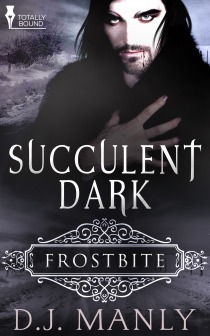
Review: Succulent Dark (Frostbite #3) by D.J. Manly

Rating: 4.25 stars out of 5

Succulent Dark Frostbite coverVampire hedonist Teak has finally gone too far with that last drunken orgy and seduction of that priest.  Now the council has given him two options.  Be entombed in a coffin for over a 100 years or be vanished to the wildnerness of Canada, forbidden to feed on the locals and ordered blend in by resuming his mortal profession, a physician, something he hasn’t done since 1923.

Teak has no intention of following orders in Canada until he meets pharmacist Marcus Kent who confounds him totally.  Attracted to Marcus, Teak tries his tricks but nothing works! Marcus seems immune.  Can a potential seducee become the seducer? Teak is about to find out.

I loved this story.  In Teak, Manly has created the total unrepentant vampire who also happens to be the local vampire bad boy.  Teak loves to party, love to drink blood and have sex and if he can do all three together, than he will do it to the extremes.  Manly’s Teak is over the top outrageous and absolutely charming, even when hanging from silver chains about to the sentenced by the Vampire Council.  Teak is the shameless bad boy of rock, without the band of course and the reader will fall for him immediately.

Banished to Canadian wilderness, Teak is a vampire out of water.  It’s city boy vampire meets Northern Exposure and it works as Teak encounters one unknown after another, from curling to an attractive mortal immune to vampire lures.  The other main character, Marcus Kent, is not as fully fleshed out a character as Teak but still he works as the tasty human morsel who turns into the first real love Teak has ever known.  Their romance was charming and a tad old fashioned, just a lovely change of pace for Teak and the reader.

If I had a quibble about the story, it would be that it (and the character of Teak) turned a little overly gushy towards the end.  With his love for Marcus hanging, Teak turns almost weepy, definitely not in keeping with the characterization Manly has established.  I would also have loved to have seen more of Teak in his doctor’s office interacting with his patients because other important part of the changeover for Teak is the reigniting of his love for his profession.  He loves being a doctor again.  It’s a wonderful element of the story and I would have enjoyed seeing Teak’s reaction to medical advancements.

Succulent Dark is a succulent little piece of supernatural fiction, highly enjoyable and leaving the reader wanting more of this couple and this universe.  I definitely recommend this story, it’s the best of the Frostbite collection.

Collection cover art by Posh Gosh, great cover.

Book Details:

ebook, 1st Edition, 54 pages
Published December 13th 2013 by Totally Bound
ISBN 178184867X (ISBN13: 9781781848678)
edition language English
series Frostbite #3

The Frostbite Collection includes:

Gravedigger (Frostbite #1) by Aurelia T. Evans m/f
Night Fall (Frostbite #2) by Jenna Byrnes  m/m
Succulent Dark (Frostbite #3) by D.J. Manly m/m
The Study of Blood in Winter (Frostbite #4) by Catalina Dudka m/f

Review: The Dreamer by M. King

Rating: 4 stars out of 5

TheDreamer_100dpi_cvr-210x330Horacio Valdez has been haunted by his dreams his entire life.  Brought up in a small town in California, his shy nature and determination not to disappoint his parents led him into a life of isolation and loneliness.  Every step he made out of his box of isolation was met by small social catastrophes, ones gotten over by other children but not by him.  By the age of 21, Horacio found himself consumed by his studies.  They were predictable and reassuring.  There was no magic, no upsetting surprises but neither contentment or joy was to be found.  Soon Horacio’s life was one of mundane routine and a few nice friends.  His days were full and his nights were dreamless.

Horacio’s childhood and adolescence were full of dreams, the only place growing up he felt alive and happy. Horacio left them behind as he got older until an accident suddenly brings them back.  Soon his dreams and the man inside them feel more real than life.  But is there something more to his dreams then Horacio realizes?

What a nifty little horror story M. King has created in The Dreamer.  In this short story King manages to capture all the loneliness and fragility of childhood along with the disappointments of adulthood in the personable young man, Horacio Valdez.  Unlike other stories, I appreciated the fact that King had Horacio surrounded by loving parents and sister.  The hollow spaces inside Horacio were created by his own nature.  Upset by the reality of the world outside his bedroom, child Horacio retreats to his bedroom, into his books and his dreams at night.  How many children find comfort in books and their bedrooms?  Quite a few I imagine, so King’s storyline has a realistic feel.

Inside Horacio’s dreams, he was happy, especially when his dream companion appeared to fulfill every emotional need and request child Horacio could make.  It’s only as those dreams turn erotic that the first inkling of something supernatural appears. As Horacio reaches the beginnings of his sexuality and realizes he prefers men, his companion starts to take a very masculine form.  Is it an answer to Horacio’s  burgeoning sexuality or it is something more? The answer to that all important question won’t come until close to the end of the story.

King’s narrative carries the reader slowly into Horacio’s thoughts and daily life.  Like Horacio we are not sure about what is happening to him once the dreams return.  That slow measure of awareness that starts to creep into Horacio’s consciousness is a delight, leaving the reader with just a touch of goose bumps along with a full measure of questions.

There is a certain amount of sexuality here, none of it explicit.  Nor is this a romance or a love story.  Those looking for either, should look elsewhere for a story.  But for lovers of the supernatural or short story fiction, The Dreamer just might be the story you are looking for.  Pick it up, for a truly delightful short journey into the supernatural and dreams.

Cover:  Artist not credited.  I found this cover to be misleading.  Nothing about it speaks to the story within,  It makes you think of love and romance.  Definitely not this story.

Book Details:

Release date: 20 November 2013
ISBN: 978-1-925031-66-9
Category: Gay Mainstream/Horror
Sub-Genre: Erotic, Fantasy/Paranormal, Short Story/Novella
Length: 11,000 words, approx. 24 pages
Formats available: e-book only

Review: Home for the Hollandaise by Julia Talbot and BA Tortuga

Rating: 4.5 stars out of 5

Home for the Hollandaise coverJack Shields has returned home for the holidays to the town he hates.  His dad is suffering from Alzheimer’s, his mother needs him and his cooking to make things  bearable, at least for Christmas.  The town Jack grew up in is full of bad memories, especially for a gay boy in Texas, including the cheating boyfriend he loved , left behind after a knockdown fight and has still never forgotten.

Kent Thibault has just returned to the town where he grew up in order to spend the holidays with his mother.  Now a musician, Kent has nothing but bad memories of this small Texas town, including the fact that it was where he lost the boy he grew up with and loved.  One night, one horrible misunderstanding, one fight and now 10 years later, Kent still thinks about Jack, the one that got away.

Now both have returned to town for the holidays and family.  A chance meeting at the local grocery brings up old memories, bad and good and reignites all the old feelings.  When two former lovers still very much in love meet again, is it too much for them to hope that a future together is still possible?

From the title to the characters within, I loved Home for the Hollandaise by Julia Talbot and BA Tortuga.  A Torquere Holiday short story, it brings up all the best and the worst of  Christmas with the family, especially families breaking apart under stress and illness.  For 49 pages, the reader is brought into the lives of Jack, his family and his former boyfriend, Kent.  Jack is home under the worst conditions as his father has Alzheimer’s and is only intermittently aware of who Jack is.  What Jack’s father does remember is Jack’s cooking.  Jack is a mini-celebrity chef in Austin and his food is a path back to his father.

I found this element, the relationship of Jack with his father and the scene as they connect over food, possibly for the last time, incredibly touching and real.  Its that touch of authenticity and warmth that illuminates the depth of family love over familial discord and brings pathos to the holidays as well as joy.

The characters here from Jack’s mother shaking under the stress and pain of the situation, Kent staying in the trailer his Mom has stashed in the backyard as a rental, and the old football bully from high school, all are created with a deft hand and painted with the realism and knowledge of small town Texas life.  I just loved this story and only wish that I could have lingered a tiny bit more with the men back in Austin, trying for that future once again that they thought they had lost.

Cover illustration by A Squires is ok, but with such a great title, wouldn’t you think hollandaise would be on the table as well?

Book Details:

, ebook, 49 pages
Published December 11th 2013 by Torquere Press

Review: Christmas Serendipity by Liam Livings

Rating: 4.25 stars out of 5

Christmas Serendipity coverIts December 23rd and things aren’t going well for David as the days head into Christsmas.  Only days before David had just been dumped by his philandering boyfriend, and now he has just been fired from his job at the pub.  Only his friends, Tony and Cathy save him from a lonely and despairing Christmas when they invite him to spend the holidays in the flat they share in a small town in England. Unbeknownst to David, he will not be the only guest invited.

Handyman Christian decided that now he had a boyfriend it was a good time to come out to his parents and bring the new boyfriend home for the holidays.  Unfortunately for Christian his parents weren’t overjoyed about the news that he was bringing home a significant other that was male and that Christian was gay, so they disinvited him to their Christmas.  Then Christian’s new boyfriend promptly dumped him saying he couldn’t take the drama.  Alone and unwelcome in his family home, Christian has no where to go until his friend Cathy invites him to share in the holidays with her flatmate and their friend, David.

As the good food is cooked and the beer flows, a connection is made between David and Christian that offers a chance of becoming something deeper and quite wonderful.  But their painful pasts lurk just outside the door, waiting to enter and ruin the tentative start on romance and love.  Can David and Christian find the strength to move into the future and leave their past behind or will they lose the chance at love this special Christmas has offered them both?

As we head into the holidays, another lovely way to add to the warmth of the season is the pleasure of reading stories set in this season of celebration and love.  Christmas Serendipity is just that delightful story that will warm your heart and leave a smile on your face.  I am unfamiliar with Liam Livings but based on this story alone, I will certainly be seeking out more of his stories in the future.

One of the most frequent issues I have with holiday stories is the saccharine quality that can overpower the best of them, leaving the romance and characters almost too sweet to be palatable.  But here nestled in a flat in a small village in England, the four characters of this story, David, Christian, Tony and Cathy, never fall into that trap.  Instead I found them to be engaging, funny, and very, very human.  It didn’t matter whether they were trying to organize Christmas dinner or locate that last tree to be hauled up into the flat, this group of friends  were people I enjoyed  spending time with, foibles and all.

At forty-five pages, Christmas Serendipity is just that, a serendipitous holiday short that offers a chance at love and family to four people, especially David and Christian who need it the most.  I would have loved a little more of Christian’s back story as well as David’s rocky relationship history.  Yes, Tony’s character ventures into cliche, but it’s a delightful cliche and I adored him as much as I did David and Christian.  And yes, there was that scramble to bed and sex, albeit a sofabed, but Livings explained that away nicely via drink and desperation of the holidays, a stressful event that has caused more than just a couple of out of character behaviors from people.  So I can say I definitely can recommend Christmas Serendipity as a story to put on your holiday reading list.  Grab this up and a hot toddy or two and enjoy the warmth of the  holiday season!

Book Details:

Expected publication: December 8th 2013 by JMS Books