Review: Shy by John Inman

Rating 4.25Shy cover stars out of 5

When Tom Morgan’s ex boyfriend calls up to invite Tom to a party being thrown by the ex and his new lover, the last thing Tom would expect to find at the party would be a new boyfriend and potential love of his life.  And that’s because Tom’s life is already full of obstacles and daily stressful situations.  Tom Morgan suffers from social anxiety disorder, a social phobia that makes his life almost unbearable.  Tom can function fine at his job as an assistant bank manager, but outside of his professional life?  Nothing but stress and the trauma of dealing with people at a social level.  It has already cost him his last boyfriend and even the thought of trying to date someone new makes him start to panic and hyperventilate. So far the only being to put up with Tom on a long term basis is his Chihuahua, Pedro and on some days that becomes iffy too.

Then Tom meets Frank Wells, the brother of his ex’s new boyfriend and the sparks fly to the amazement of both men.  It turns out that Frank Wells is a fellow sufferer of SAD as well.  Even a first meeting where neither man can bring himself to talk for over 10 minutes takes away from the instant attraction that they feel for each other.  Frank is fresh off of his family’s farm and came to the city expecting to stay with his brother.  When circumstances (and a nasty brother) make that impossible, then the improbable happens and he ends up at Tom’s house where attraction burgeons into friendship and finally into love.

When Frank’s father calls him back to the farm because of an emergency, Tom accompanies Frank and what follows is hilarious tale as a phobic city boy tries to adjust to life on the farm and murderous chickens to boot.  And there are further adjustments and complications that are pile up, one after the other.  Can two men with whopping cases of social anxiety, make their new love affair work when all around them seems to conspire against them, even the pig?   Only time and Pedro the Chihuahua will tell.

This is the second book I have read by John Inman and already I have learned several things about this author from his stories.  He loves hairy men, writes main characters with a unique, sometimes overpoweringly quirky point of view, and filters serious issues through a humorous lens. One of Loving Hector‘s main characters, Hector in fact, was a victim of domestic violence.  In Shy, both of the main characters suffer from social anxiety disorder, a social phobia that effects over 19 million Americans to date and is the third mosts common mental disorder in the US.  In Shy, John Inman gives the reader a first hand look, through the eyes of Tom and Frank, on how this phobia affects the sufferers daily lives, their outlook on the people around them, even the depression and OCD that is linked to this mental disorder.  But I will let Tom tell you in his words:

But then, out of nowhere, came a tingle of warning. Just a glimmer of trepidation at first, like a warning shot fired across the bow, followed by a distant spark of harsh light, growing brighter by the second. Then there it was, that old familiar lightning bolt. It smashed into my gut and quickly turned all those rosy hopes of having a good time at Jerry’s little get-together into a twisted pile of rubble smoldering at my feet. Mental thunder rumbled in the back of my head like an F5 tornado gathering on the horizon. A sudden fluttering in my upper colon made me blink. A sheen of perspiration gathered at my hairline. One right after the other, all the usual symptomatic suspects converged on me en masse. Nausea. Tingling fingertips. Cold toes. Knocking knees. Thumping heart.

Aw geez, I thought. Here we go again. And the party was still two days away!

Like a trumpeting elephant stomping through the apartment, tossing furniture and smashing everything in its path, the fear was impossible to ignore. In a matter of five seconds, I went from vague unease to sheer, unmitigated terror.

I couldn’t go to this party. I couldn’t. But how the hell was I going to get out of it? Jerry would be hurt. And even worse than that, his lover would be ecstatic. Of course, he would be even more ecstatic if I actually showed up, had a panic attack, went into convulsions in front of everybody, then threw up on the cat. God, I hate people.

Well, no I don’t. I hate me. No, that’s not right either. I just hate me and people thrown together. Yeah, that’s it.

That’s it exactly.

Yes, that is it exactly and John Inman gets it perfectly. You can almost feel Tom’s heartbeat start to race as just the thought of going to his ex boyfriend’s party becomes a destabilizing event.  Inman demonstrates his knowledge of the effects of social anxiety disorder on the person affected yet still manages to find the humor in the situation as well.  Inman’s treatment of this mental disease is sensitive, accurate, and also very funny. I kept waiting for him to take it over the top but Inman never did, at least with the anxiety disorder portion of the story.  I can’t quite say the same about other aspects, more on that later.

The author’s characterizations (and hilariously written situations) are the best reasons to read this story.  It’s not just the main characters who are beautifully written, but the surprising gems of secondary characters as well.  My favorites?  Joe Wells, Frank’s father and Simon Simmons, the undertaker.  Both men could have easily slid into caricatures but instead Inman created men of exceptional heart, bravery and depth.  Trust me when I say, Simon Simmons is really going to surprise the heck out of you. Everyone you will meet within this book comes across as a complete human being, some lovely, some nasty, and as I said some utterly remarkable.

However, for some readers it might be tough going for the first third of the book.  That’s because Tom is also preoccupied with poop.  Dog poop primarily as his Chihuahua, Pedro, is not house trained . Pedro urinates and defecates everywhere, and the reader is there for every pile deposited and cleanup required.  And that gets tiresome very quickly.  There is only so much 9 year old boy humor that I can take and the author almost pushes it too far at the beginning of the story.  That is a shame because I am sure some readers put the book down too soon because of this issue.  But wade through this section and the reward will be waiting for you.  There are some hilarious moments while Tom and Frank are still in the city but the charm really sets in as does the emotional heart of the story once the location switches to the farm and the events that happen thereafter.  Yes, there are aspects where high hilarity reign, but more often, it’s the growth of a special relationship, the deep bond between a father and son, and the adjustments that you make when you find the one person to spend the rest of your life with.  This is where the book and the author shine.  This is part of Shy that will stay with you after you have finished the last sentence and said your goodbyes to Tom, Frank, and Pedro.  I really loved this book and thought that the characters of Tom and Frank gave me insight into the lives of those affected with social anxiety disorder.

So pick this book up.  If potty humor is not your thing, wade through the beginning sections to the rest of the story.  If potty humor is your thing, you are going to love the opening chapters of Shy and then adore the rest.  Either way, it’s a wonderful journey.  You won’t want to miss out.  Go get the book! Go on, and then let me know what you thought.

Cover art by Paul Richmond is hilarious and perfect for the characters and story within.

Book Details:

Paperback, eBook 256 pages
Published November 30th 2012 by Dreamspinner Press
ISBN13
978162380148
edition language
English

Review: Fire Horse by Mickie B. Ashling

Rating: 3.75 stars

Fire Horse coverWith a British mother and a hard as the ground Texas father, Preston Hawks finds himself at 10 years old scrambling to find some middle ground between his parents and a place to fit in, something that is not happening for him in Texas.  Then Pres meets fifteen-year-old Konrad Schnell at the San Antonio Polo Club.  Instantly smitten with both Konrad and the sport of polo,  Pres finds himself spending every moment possible in the company of the older boy, learning how to play and idolizing Konrad.  As the years progress, Pres’ hero worship turns into friendship and then into love.  But being gay during the 70’s is perilous to their health, especially so in Texas.  So the boys love for each other stays hidden, much to Pres’ consternation until they part when Pres is sent off to boarding school in England.

With Konrad playing professional polo and Pres in school, their relationship faces many obstacles, including the formidable presence of Preston’s father, a man who enforces his rules with his fists.  Swearing to love each other forever, only Konrad seems aware that they face a tough road to be together, as Pres blindly pleads for them to be out together as a couple.  Their divergent views start to drive a wedge between them and when a traumatic event occurs it threatens to separate them for good.

Pres knows he is a Fire Horse, born in the year 1966, and that he is either going to be incredibly unlucky or lucky in love.  And even though it may take him years, Pres knows his passion and strength will see him through to the goal that has always been his destination, a happily ever after.

Fire Horse is an extremely well written book by Mickie B. Ashling that engenders strong emotions from the very beginning.  This is a book you are either going to love or hate depending upon your reaction to the main character, the narrator of his story and your tolerance for the game of polo.  I am divided over this book, but not in the way you might predict.

I love the sections on polo horses and the game of polo itself.  I am a fan of the sport, luckily living in an area where polo is huge and games readily available to watch.  Happily for me, Mickie B. Ashling did a wonderful job of researching the game and her descriptions of the riveting play, the athleticism of man and horse, are close to perfection.  Here is an example:

Konrad treated his ponies like precious children. Later, I’d come to find out why. A polo player was only as good as his mount. The deep connection between rider and steed was never as apparent as it was in this fast and dangerous sport. They became extensions of each other, and a subtle press of knee or inadvertent pull on reins could mean the difference between making a goal and flubbing the entire match. The horses had to be as fearless as their riders, galloping headlong toward goal posts, while all around them players pushed and shoved them out of the way, screaming invectives, and doing everything in their power to prevent the opposing team from reaching the other side. Without the element of trust between horse and rider, there was no hope of excelling on the field.

“The only way you can connect with your pony is through respect.”

“What do you mean?”

“Love them with all your heart but always be their master.”

“I’m not sure I understand you, Kon.”

“Feed them when they’re hungry, soothe them when they hurt, make sure they’re always warm and dry at night, but when you’re out on the playing field, whip them if necessary. By feeling your strength and positive energy, they’ll respond with equal enthusiasm. If you show fear or weakness, they’ll get skittish and back off.”

“Do I have to do anything special to show them I’m master?”

“Love them above anything else.”

And most do feel that way and treat their ponies accordingly, as a partner. Which is a good thing for the horses considering the expense of a skilled animal and the price of a stable full of them, I find them to be treated far better than the typical racing Thoroughbred.  Ashling captures the partnership and the special bond between rider and animal that starts from the first moment they lay eyes on each other:

Konrad whistled suddenly and we stopped. “Now, that is a beauty,” he said, walking toward a frisky young mare that pranced as he approached. She was dark gray with a snowy white mane and tail. Her oval eyes sparkled with intelligence, and she bobbed her head as Kon got closer, acknowledging his presence with a flick of her tail and a flutter of long lashes.

“She’s flirting with him,” I said, astounded.

“Es una coqueta, a teaser,” Miguel said.

“She’s a sweetheart,” Kon said, stroking her gently. “What’s her name?”

“Dulce,” Miguel said. “It means ‘sweet’.”

And so the dance between man and animal starts, and Ashling gets it exactly right.  Unfortunately, I wish I could say I felt the same about Preston “Flea” Fawkes. our narrator and the main character.

As I said before, you are either going to love Preston or dislike him intensely.  I ended up somewhere in the middle, finding myself mostly exasperated with his actions, tired by his self centeredness, and most ready to deliver, ala Cher in Moonstruck, the “snap out of it” slap across that  well taken care of face.  It doesn’t help that he is the narrator of his story.  It might have given us a different perspective, and some distance from his constant musings if,  for instance, let’s say the narrator had been Ned Temple, his best friend from Pres’ days at Eton.  I felt that I needed to see him as others did because listening to his viewpoint for the entire book made me wonder why everyone else put up with him.  Instead of a brooding, handsome bisexual extrovert, I found myself categorizing him as a self involved, overly impulsive, thoughtless boy who grew into a self centered, hedonistic albeit gorgeous polo player.  From a gay boy to a man who beds everything in his path indiscriminately, I never saw him as a bisexual man because of his bed partners, perhaps because he doesn’t seem to like women.  His two marriages and subsequent children both came from drunken binges and impulsive encounters.  In fact, other than Ned and Konrad, no one really seems to like Pres at all.  So why is the reader supposed to feel any different?

When the book opens up, it is 2011 and Preston Fawkes is forty-five years old and living in the United Kingdom.  He has had a traumatic spill from his polo pony and is laying in a hospital bed.  In Chapter 6, we move from the present to 1976 in San Antonio, Texas and meet 10 year old Preston just as his life is about to change forever.  He enters the San Antonio Polo Club and finds the two passions that will haunt him the rest of his life, Konrad and polo. Both man and sport are intimately intwined in Preston’s mind and heart.  Here is their meeting where Pres is speaking of Konrad:

The kids had dubbed him Big Foot because his size-fifteen riding boots had to be custom made by a specialty shop in Dallas. He was graceless on the ground but fluid and masterful on horseback. I’d met him the day he spied me losing my balance on the wooden practice pony and then tumbling headlong onto the dirt-packed floor. The sound of his throaty laugh had reverberated in the barn, and my first reaction had been to retaliate, but his size was so intimidating I didn’t think I stood a chance. Amazingly, Konrad stopped laughing as soon as he saw my flushed face and clenched fists. What he did instead was stick his big hands under my armpits and lift me back up on the pony as if I were weightless.

Who wouldn’t fall in love with someone like that?  I got that totally. I just wish that was the Pres that continued through the story. I liked the characters of Konrad and Ned, among the few others we get to know.  Ashling’s characterizations are fully complete human beings, they have their faults, their positive aspects of their personalities and just like the people around you, you either will connect with them or wish them speedily on their way.  I think, however, that it is how you view Preston that will tell how you feel about this story of his life.

The plot of Fire Horse extends through a 35 year time period from the present back to 1976 which is a rather large timeframe.  I am not sure that Ashling did the 70’s justice, but she did pull in the beginnings of AIDS as a mystery disease and the homophobic atmosphere of the times. I liked that aspect of the story but I am just not sure that two teenage boys would have taken that first rumblings of a gay disease as serious and used condoms.  True, that was due to Konrad, a much more serious young man, still I had my misgivings.

There are some other sections of the story that had me puzzled as well.  While I can’t name specifics without giving away plot spoilers, I found some glaring holes in the plot, especially late in the story that pulled me up in disbelief.  That combined with  the dramatic “aha” moment that occurs when the book is almost 90 percent complete, then a denouement that is less than satisfying, well, let’s just say that I expected more of a payout after 33 chapters and didn’t feel that I got it.

The title refers to the Chinese Astrological Guide.  Pres was born in the year of the Fire Horse, 1966, and uses the Chinese Astrological description as a reference throughout his life.  Here is one horoscope defining the Fire Horse:

THE FIRE HORSE 1906 AND 1966

The Fire Horse is animated and sociable. He has a wild side that leads him to a life on the edge. Fire Horses are generally either incredibly lucky or ridiculously unlucky. They love the excitement of action and the change it brings. The Fire element makes them passionate about their feelings and they always take a stand in a situation. Fire Horses are never on the fence about anything and have definitive opinions about the world. Their tempers can be overbearing

As someone born under the sign of the Horse, I can understand being fascinated to a degree by the spot on characteristics ( I won’t mention which specific Horse symbol I was born under), and enjoyed the fact that Mickie B. Ashling used the characteristics of the Chinese horoscope when creating Preston.  I did not know that the Chinese had subcategories to each animal used.  There are the Metal Horse (1930 and 1990) , the Water Horse (1942 and 2002), the Wood Horse (1954 and 2014), the Fire Horse (1906 and 1966), and the Earth Horse (1918 and 1978).   I love it when a book sends me off to research new topics.  Fire Horse did that for me and perhaps, if you aren’t familiar with polo, it will do that for you too.  Look for some links for the Chinese Horoscope and Polo infomration at the end.

I really did like parts of this book, and parts of the character of Preston as well.  I will leave you with one of my favorite passages from Fire Horse.  It concerns polo, of course:

I was too young to handle the horses, but I watched the grooms with great interest. The animals were switched after each chukker to give them a chance to rest. Some ponies dealt with the grueling pace better than others, but the upshot was that a player was only as good as his mount. I finally understood what Kon meant when he’d rhapsodized about their worth. The difference between a seasoned pony and one that was still learning the ropes was obvious, even to my untrained eyes. The older animals only showed signs of fatigue when the riders dismounted. The babies had a look of sheer terror in their eyes. They had to be rubbed and talked down from their hyperactive state in time for the next round. Each chukker was seven minutes long, with only a three-minute break in between. A polo match usually lasted an hour and a half and was divided into six chukkers with a five-minute halftime. There was hardly a chance for the horses to recoup. Having three or four ponies made absolute sense when one considered the wear and tear on the animals’ nerves, let alone their bodies.

The wooden mallets were swung with forceful strokes on either side of them, and it wasn’t out of the norm to miss a swing and hit a pony inadvertently. They had to deal with that possibility, along with the constant need to keep up their speed as competitive riders urged them on unmercifully. It was no wonder the ponies were skittish and temperamental in the beginning. I was a wreck myself, filled with anxiety about my lack of skill, but blooming with hope for a future as a professional polo player. I was captivated by the sport and the men who played it.

I remain captivated by this sport, the man and the horses that play it.  I remain captivated by aspects of Fire Horse as well.  I really wavered between a 4 star and 3.75 star rating but ultimately it was Pres that drove the rating downward for me. Pick this book up and decide for yourself.

Cover art by Anne Cain. This cover is just spectacular.  Absolutely one of the Best Covers of 2013.  I would love to own the original.

Book Details:

ebook, 256 pages
Published April 12th 2013 by Dreamspinner Press
ISBN
1623805783 (ISBN13: 9781623805784)
edition language
English

Links: Chinese Fire Horse Horoscope, also Chinese Horoscopes, the Horse

Polo Links:  Maryland Polo Club, and The Polo Center, the link for all things polo in Maryland,  Or find the nearest Polo match near you and watch a game, truly a remarkable game.

Review: Chateau d’Eternite by Ariel Tachna

Rating: 3.75 stars

Chateau 2nd editionRuss Peterson receives a mysterious invitation in the mail for a vacation at a chateau in the south of France and his curiosity compels him to accept. Once there, Russ is astonished to find out that his last physical exam showed a genetic marker that identifies him as a time traveler, and therefore a member of an exclusive society located at Chateau d’Eternite.  As a historian, it is a dream come true for Russ, but being a time traveler has its rule and risks along with the gift of being able to visit any era on any geographical place in the world.

When Russ travels back in time to Roman Gaul, he is almost killed by a wild boar when he is rescued by Quentus Maximus, second in command to the Legate of Nemausus.  Before he knows what is happening, Russ is traveling back to Quentus’ estate as his lover and companion.  Russ finds that the more time he spends with Quentus Maximus in Rome, the more he feels at home and alive than ever before.  Soon Russ must return to his time as the end of his vacation draws near and he must make a decision, should he stay or should he go?  Which will win, his heart and lover of Rome or his head and his future life?

I love Ariel Tachna’s stories and was looking forward to her take on time travel so I am surprised to find myself as conflicted as Russ over his story.  First let’s address the elements I loved.  I think the idea of a chateau filled with time travelers makes a wonderful basis for a series.  Any number of people are appearing and disappearing at any given time, so the potential for a variety of characters and stories is unlimited as the eras they can visit.  Great idea, and the caretaker of the Chateau is a real enigma whose story should be told as well.

Secondly, I liked the characters and settings in ancient Roman Gaul.  Quentus and his close circle of friends are both interesting and nicely layered.  Tachna has done her homework on the time period and it shows in her details from their clothing to the designs of their households. When Russ, called Rastus, and Quentus visit the baths or alone in the estate, her descriptions enable the reader to visualize the setting with ease. All these elements contributed to a story I enjoyed reading,

However, I did have some issues with sections of the story that blunted my enjoyment with Chateau d’Eternite.  First off, I found it hard to believe that historian Russ would accept with equanimity the fact that he carried (or even that there was such a thing) a genetic abnormality that made it possible for him and a small percentage of other humans to travel in time.    Russ doesn’t even break stride as he goes from one revelation to the next, each more outrageous and unrealistic based on his current knowledge.  The caretaker has Russ’ personal information, ie, results of his last physical and Russ doesn’t throw a fit?  Russ is told that he can time travel and is taken on a short trip to prove it.  Does he think he is hallucinating? Not really, again, he is affable and almost nonchalant in his reactions to seeing Versailles being built.  I just didn’t get that at all, nor did I believe it.   Russ reacts in the same way when visiting ancient Rome and meeting Quentus.  They move almost immediately into a sexual relationship with overtones of D/s, and later, Russ argues with his Roman lover over the modern concept of equality within their partnership that would not have been possible during that time period.  I just had a hard time suspending my doubts about their relationship and the character of Russ in particular.  As a historian, I think he would have been scrabbling around looking at everything, picking things up, making drawings, in awe of his situation. I mean, here is his passion for the past in front of him, where is the giddiness I would expect from someone who has made historian the focal point of his life? But I never got that feeling from Russ’ character, and I was disappointed in that aspect of his character.  I would have loved to have seen this from the viewpoint of someone truly amazed to find himself in these circumstances.

One thing that might bother some readers is that the ending is somewhat “bittersweet”.  We find out exactly how long Russ and Quentus have together in the past while missing out on the details of their life together.  I thought it very realistic but others may have a problem with it depending upon how they define HEA.

Pick it up if you like time travel stories, ancient Rome, and the works of Ariel Tachna. This is an expanded version of a short story published earlier.

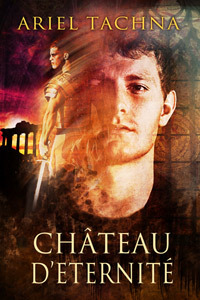
Cover art by Anne Cain.  Just a gorgeous cover, I loved the model and thought him a perfect representation of Russ.

Book Details:

ebook, 2nd edition, 200 pages
Published March 29th 2013 by Dreamspinner Press (first published June 1st 2012)
ISBN 1623806070 (ISBN13: 9781623806071)
edition languageEnglish
urlhttp://www.dreamspinnerpress.com/store/product_info.php?products_id=3761

Review: Unearthing Cole by AM Arthur

Rating: 4.25 stars

Unearthing Cole coverFleeing an abusive relationship, Cole Alston returns home after the death of his estranged mother to settle her estate and sell off the house and all her possessions. Cole has been dreading such a day as both his parents were hoarders and the property more resembles a junk yard then home, the same as it was when he lived there growing up.  As full of painful memories as it is, Cole feels he has no choice.  He needs the money to relocate to Canada as his ex continues to stalk him but the task before him seems overwhelming and he doesn’t know where to begin.

Jeremy Collins owns the local antiques business in town.  For years he has been trying to get Cole’s parents to sell some of the things they have accumulated on their farm to no avail.  When Cole returns to town, Jeremy gets in touch with him, first to buy some of the things at the farm. Then Jeremy gets to know Cole and it is Cole’s vulnerability and pain that draws Jeremy to help him get rid of years of hoarding while helping him uncover his past.  Slowly as the men clear away years of clutter and trash, they start to build a relationship of affection and trust, amazing given Cole’s background.  But there is still so much in their path to happiness, including Cole’s anxiety, and his past in the form of his ex boyfriend.  Will Cole be able to clear away his pain and emotional baggage before he can move forward to a new life.

Unearthing Cole tackles some very serious topics within its plot and does it very well.  It is the first book by A. M. Arthur that I have read and I am really impressed by the way Arthur handles this difficult subject matter while maintaining our connection to a very wounded young man, Cole, and his potential love interest, Jeremy.  Cole Alston has had a traumatic upbringing as both his parents were hoarders during a time where very little was known of what is now diagnosed as a mental illness.  All Cole knew was that he had no parental support and his parents seemed to love their “things” more than himself.  Arthur correctly imagines what the life of a child raised under those circumstances must have been like in heartbreaking detail as well as the consequences of their development into adulthood.  Cole is insecure and low self esteem, wanting a home and someone to belong to above all else.  This outlook and lack of stability has dire consequences when Cole picks one person to hook up with in college.

If you have ever, however fleetingly, seen parts of that Hoarders program on cable, then you have seen the pain and anger of the families of the hoarder almost burst from the screen, years of abuse pouring forth from children, partners, relatives and friends who have failed to stop the hoarder from accumulating things without regard to what is happening around them.  Horrific on all accounts, including the puzzled, blank expressions of the hoarders themselves who can’t begin to fathom what they have done, including the filth they are living in.  And Arthur gets it all right, from the descriptions of Cole’s house to the pain and anger he carries within him.

Added to that almost unimaginable background, Arthur extrapolates what that upbringing would have done to a child and gives us a Cole who ends up in an abusive relationship that takes him years to escape.  Arthur makes it all seem so logical and realistic and perhaps that is the worst part of it all, the ease with which the abuser was able to take over Cole’s life.   And throughout the story, the reader is there, inside Cole’s tormented mind as he struggles to reclaim himself but to do so he must face his past, strewn out before him across the outbuildings, yards, and crammed full house of his youth.

Jeremy Collins has his own unique layers, he is bisexual, a widower, and now lives in a small town  not always accepting of alternate lifestyles.  He is familiar with loss and pain, and is uniquely positioned to help Cole uncover his past, helping the real Cole to emerge along the way.  I like him as well.  There aren’t many other characters introduced here, the main story revolves around these two men, their past histories, and the situation before them.  Again, I think that Arthur handles their delicate dance towards a relationship with care and authenticity with regard to all of the obstacles presented by Cole’s background.

And that brings me down to the issues I did have with the story.  I felt that the ending and denouement was rushed, especially considering the buildup and emotional impact of seeing his abuser once more.  That was frustrating and over far too quickly given their past, and the damage that had been inflicted.  I did like that this ended in a HFN as opposed to a HEA which would have felt out of place given the characters and background.  Had this story been lengthened just enough to flesh out the ending that the rest of the story deserved than the rating would have been much higher.  As it remains, I still recommend this author and Unearthing Cole, it’s memorable, and the characters haunting in their pain.  Don’t pass this one by.

Cover art by LC Chase is as haunting and memorable as the book.

Book Details:

ebook, 170 pages
Published March 20th 2013 by Dreamspinner Press
ISBN13
9781623804343
edition language
English

Review: Into This River I Drown by TJ Klune

Rating: 4.5 out of 5 stars

Into This River I DrownBenji Green is still trying to cope with the loss of his father, Big Eddie Green.  Big Eddie was not only Benji’s father, “the best Father in the whole wide world”, but Big Eddie was also his best friend, his confidant, the person who kept Benji centered, made him feel loved and safe.  It’s been five years since his death by drowning when his truck overturned in a river but to his son it feels like yesterday. Benji tried leaving to go to college but it didn’t work out. Now back in Roseland, Oregon, Benji runs Big Eddie’s Gas and Convenience, just as his father had before dying when Benji was 16.

Benji lives with his mother and her two sisters in the house he grew up.  He is surrounded by places and things that constantly remind him of Big Eddie and he often feels as though his life stopped when his father’s did.  Benji’s nights have always been haunted by nightmares of the river in which his father drowned, mile marker 77 and images of blue feathers swirling around as the waters raged higher.  Benji’s days are haunted too. Fleeting touches of a hand pressed to his neck and grasping his shoulder, a feeling as though someone is there beside him yet when he  turns there is nothing.  But lately, the nightmares have grown worse, more intense until Benji’s feels like he is drowning just like his father.  Sometimes the images come to him during the day, leaving Benji uncertain as to what is real and what  is not.

The whole of Roseland is beginning to feel as though it is waiting, waiting for something to happen.  And when it does, when improbably a man falls from the sky, leaving an impression of wings on the ground, then everything changes for Benji and everyone around him.   This is that story.

It has taken me several weeks before I thought I could make an attempt to write a somewhat rational, less impassioned review of this book.  Trust me this is not the one that would have been written after I completed reading Into This River I Drown for the first time, or even the second time.  I love books and rarely react to them in a dispassionate manner.  I like some, love some, feel disappointed by others and on some occasions, feel so disconnected to the stories, that I feel nothing, a deadly reaction to be sure. Authors never set down to write a story where the reaction by a reader is “huh, I could have been doing my laundry” but I have come across some of those in my time as well.  Into This River I Drown has certainly engendered a multitude of strong feelings in me, because rarely am I absolutely furious with some authors and their stories.  And I will say right now that this book absolutely infuriated me, it had me bawling my eyes out as it pulled feelings about my father and my relationship to him, and had me nodding my head in acknowledgement if not agreement on some issues of faith and religion.  I feel in some parts this is a milestone work for T.J. Klune and a book that undercut itself at the end.  Does this sound like an emotional rollercoaster of a ride?  It should because that is exactly what this book is about.

After having read all of Mr. Klune’s previous works, from BOATK to Burn, and including Tell Me It’s Real, I was not prepared for the tone and narrative that I found within Into This River I Drown (ITRID).  All the characters of the BOATK universe have singular voices that identify them immediately.  The same goes for the scattered, funny and somewhat frazzled outlook of Paul Auster and his friend, Helena Handbasket, from Tell Me It’s Real.  And while Burn is my least favorite story this author has written, I could still tell that it was one of TJ Klune’s by the characters involved and their dialog.  But in ITRID, TJ Klune takes his writing to another higher level.

I found his characters to be richer, with more depth and dimension than anything he has given us to date.  Whether it is Benji, his aunt Nina who is so special in so many ways or his friend Abe, these people will speak to your heart as well as your mind. Now don’t get me wrong I love Bear and the Kid, they are outstanding. But the people of Roseland are something different indeed.  You will find yourself involved in their lives, connected to the town in ways you could never imagine.  There are only a few imperfections that I could see, one that jumps quickly to mind is the character Gabriel who seems far too contemporary rather than unworldly,  Same goes for the Strange Men as they are called. But more than that I cannot say which is very frustrating for a reviewer who does not want to give away spoilers.  This entire book is a spoiler, something I have never really run into before.  Almost any detail I could refer to might be the one spoiler that reveals a significant plot point to the reader.  And I won’t do that.

Into This River I Drown also brings an intense, emotionally laden group of topics at its subject matter.  First and foremost is that of the father and son dynamics, something that has been the focus of many memorable books, poems and movies, whether you are talking about Field of Dreams or the New Testament.  At times I felt as though my heart was being pulled out of my throat, some passages hurt so bad.  Here is an example:

EDWARD BENJAMIN GREEN “BIG EDDIE”

BELOVED HUSBAND AND FATHER

MAY 27 1960—MAY 31 2007

Fifteen words. Fifteen words is all there is to describe the man who was my father. Fifteen words are all that is left of him. Fifteen words that do nothing. They do nothing to show what kind of man he was. They do nothing to show how when he was happy, his green eyes lit up like fireworks. They do nothing to show how heavy his arm felt when he’d drop it on my shoulder as we walked. They do nothing to show the lines that would form on his forehead when he concentrated. They do nothing to show the immensity of his heart. The vastness that was his soul. Those fifteen words say nothing.

The only time my mother and I ever really quarreled in our lives, with any heat behind it, was deciding what his marker would say. She wanted it to be simple, to the point, like the man himself. He wouldn’t want the superfluous, she told me. He didn’t need more.

I railed against her for this, anger consuming me like fire. How dare you! I shouted. How dare she keep it so short? How could she not make it go on and on and on until those who made such markers would have to harvest an entire mountain for there to be enough room to say what he was, what my father had stood for in his life, all that he had accomplished? How could anyone understand the measure of a man when those fifteen words said nothing about him?

Into this treatise on father and son relationships TJ Klune adds the issues of faith, family and religion. Through Benji and the townspeople of Roseland the author expounds on God, religion and faith, especially their effects on those who have lost their belief in all three.  Even if you are a non-religious person like myself, you will still find yourself lost in thought as one element after another is presented for examination and discussion.  I found this element to be as strong in feeling and discourse as the central focus of fathers and sons.  For me, there were some minor missteps when the plot turns to the heavenly aspects of the story but otherwise its inclusion was just as well done as the rest of the story.

So why was I furious? One reason and one reaon only.  Towards the end of the book, TJ Klune ties ITRID into his Burn series, making this almost a prequel of sorts.  I was beyond flabbergasted when certain Burn elements were remarked upon by characters in this book, features such as the character Seven, a child who burns and sentences such as “The Split One has crossed into Metatron’s field.”  Really?  Why was it necessary to take this book and make it part of Burn?  Other readers won’t find this objectionable but as I was less than enthralled with his world building and characters within that budding series, to find it pulled in at the last minute to this story, well I found it appalling, almost negating the importance of the father son relationship so the author could set the stage for actions to follow in the Burn series.  Infuriating actually as I said before.  Still do.

However jarring I found this aspect of the book to be, the rest of the story still contains so much beauty, heartache and spellbinding storytelling, that if I were you, I would overlook that element and take Into This River I Drown for the remarkable work of fiction it is.   Here is Benji remembering the last time he saw his father:

 He lifted his hand from my shoulder and ruffled my hair. I didn’t know it then, but that touch, those fingers in my hair, would be the last time I would feel my father alive. I would see him again, but he’d be cold under my hand, life long since departed.

Had I known then what I know now, I would have clung to him. I would have looked him in the eyes to see that spark of mischief, that undying intelligence that belied his gruff exterior. If I’d known the inevitable, I would have said everything I felt in my heart and soul. I would have told him thank you for being my father. I would have said that if I’m ever going to be a good man, it’s going to be because of the way he’d raised me. I would have said that building Little House together and fixing up that old Ford until it was so cherry were the best times of my life. I would have said that I didn’t think I’d be able to go on without him.

I would have told him I loved him.

But I didn’t. I didn’t because I didn’t know. I didn’t even say good night. Or good-bye.

How can that not leave you in tears?  Writing like that is the reason I love books.  Writing like that is the reason I will tell you to pick this one up and read it more than once.  Into This River I Drown is a remarkable story, full of life’s greatest joys and greatest sorrows.  Don’t pass this book by. Let it make you furious or sad or happy or any of the  other emotions it will pull out of you.  Because it will be worth it.

Cover Photo by Kyle Thompson, Cover Design by Paul Richmond.  This emotionally charged cover is perfection.  One of the best of the year that I have seen so far in marrying composition to story to great impact.

ebook, 400 pages
Published March 25th 2013 by Dreamspinner Press
ISBN 1623804094 (ISBN13: 9781623804091)
url http://www.dreamspinnerpress.com/store/product_info.php?products_id=3665

A Cluttered Sunday and the Week Ahead In Reviews

Somehow I’ve done it again.  It  creeps up on me with all the discretion of a whispering wind, but its effects can feel more like a nor’easter by the time I realize it’s occurred once more.  It starts with one project, maybe overhauling one small section of a garden, then spreads to cleaning out the library, and then, like some  giant amoeba, slides gelatinously over every aspect of my life, sinking me in projects, expanded plans and , oh yes, clutter.  Clutter of the gardens, house, Kindle, and mind, making me plant my butt in my favorite chair, mouth dropped to the floor as I stare in horror at the chaos I have created.

I have ferns, hostas, primroses and toadlilys amassed by the backdoor, the library looks like  the yarn fairy and the book gnome had a brawl, throwing their wares willy nilly around the room, cook books are spread open in the kitchen to various receipes needed to cook for Mothers Day (have to try them out first you know, another thing on my list to do), and Kirby has found the mole holes, gleefully rolling about in the muck.  Dogs to wash, add to list.  My Kindle is loaded with books to read and review.  And I promised one author to beta his book immediately.  So many promises and things waiting for my attention. Then the tsunami arrives.  My father becomes seriously ill due to the effects of new medication.  Things come to a complete standstill until he is home once more.  Then the reality of Dad getting sick (this man never gets sick) hits my Mother, she gets ill, and things remain in status.

Now both parents are back at home and doing well.  But the effects are still reverberating through my life.  As I sit amongst the clutter of my life, I can only think, my parents were seriously ill and I am stunned.  At their age and mine, this should not surprise me, but it does, hitting me with an emotional wallop I was in no way prepared for.

So I need to move forward and start to clear away the chaos that life, generously helped along by moi, has created.  The plants will start to go in the ground  on Wednesday when they say it will be warmer, the books I will tackle one at a time, the library will see its books reshelved and the yarn organized starting tomorrow (ever so slowly), I will apologize to Brandon once more about his novel and get to it, and slowly, ever so slowly order will be restored.  Sigh.  Even without my parents getting ill, I can see that things were getting a little out of control.

How does that happen again?  Oh yeah, life.  I know there are people out there this never happens to.  Organized, compartmentalized gems of folks.  I just don’t know them.  I often wonder what their lives must be like, with uncluttered surfaces that gleam and spotless floors with nary a dog toy in sight.  I do know that will never happen here.  Welcome to my world, lowered expectations!

Now I had a thought at the beginning of this post……I just don’t know where I put it.  It’s somewhere under the yarn or maybe out in the garden.  It’s time to go look for it.  In the meantime while I am gathering up my scattered thoughts, here is the week ahead in reviews:

Monday, April 22:              Into This River I Drown by TJ Klune (yes really)

Tuesday, April 23:              On A Lee Shore by Elin Gregory

Wed., April 24:                   Masked Riders by Lucius Parhelion

Thursday, April 25:           Unearthing Cole by AM Arthur

Friday, April 26:                 Astral Mage by Hurri Cosmo

Saturday, April 27:             Scattered Thoughts On World Building in Fiction

Review: Loving Hector by John Inman

Rating: 4.25 stars out of 5

Loving HectorDillard “Dill” Brown is not sure what to say about his life.  Dill is tall, gay and writes m/m romance novels.  He has published 3 books, none very successful. At the age of 30, he has a closet full of fast food uniforms due to the fact that his writing barely pays his rent, and a mother in denial that her son is gay.  Then everything changes.  He gets drunk, meets a man he swears he won’t forget but does in his stupor, finds a dog he will call Chester, and puts his feet firmly on the path to true love and happily ever after.

Hector Pena is also on that road with Dill, but he just didn’t realize it at first.  There are a couple of misunderstandings to  get over before they really start to connect but the biggest obstacle?  That would be Hector’s exboyfriend, Valdemaro.  Valdemaro is not ready to let Hector go, to the point of beating and physically restraining him.  Only one thing is keeping Hector from calling the cops.  And that would be the fact that Valdemaro is a cop.  Dill  will  do whatever it takes to keep Hector safe, put Valdemaro in his place and make sure Dill, Hector, and Chester the dog reach their HEA, including gathering together some of the craziest, zaniest group of people to do it.

Loving Hector is the first book I have read by John Inman and it has me reaching for the rest of his titles immediately.  Dill, Hector, and the crazy group of characters that enrich, support and drive them batty had me laughing for hours.  John Inman rests the story in the somewhat capable hands of Dill Brown, 30 year old gay m/m romance novelist and collector of fast food jobs.  It is told from Dill’s off kilter and very funny rambling POV.  Now I am aware that this type of stream of consciousness, scattered narrative is not everyone’s cup of tea and that it can depend on exactly who and what type of character’s thoughts are constantly flowing over the page.  But I happened to find Dill hysterical, his view of the world compassionate and openhearted, so I enjoyed spending time  inside his very creative and observant mind (thank you, John Inman).

For an example, here is Dill eyeing his Gramps, a crazy old coot who just happens to love his gay grandson:

When Dill was finally able to step out onto the sidewalk, the two men eyed each other up and down like a couple of Sumo wrestlers getting ready to rumble.

The top of Gramps’s work pants were tucked up under his armpits so that his belt buckle was directly under his chin. Dill could see several inches of pale, shiny shinbone gleaming between the man’s pant legs and the top of his socks. One of the socks was white with little red and blue stripes around the top, and the other was white with little yellow and green stripes around the top. The second sock drooped down around the ankle because the elastic was shot. The first sock looked like it was three sizes too small and by the way it was strangling his grandpa’s leg, Dill figured it would probably create an embolism sometime in the next seven or eight minutes that would kill the old man dead. The shoes were brown-and-white saddle shoes, the sort you usually see in old pictures poking out from under a poodle skirt. The laces were missing. The trousers were brown and shiny, and the lumberjack shirt the man wore was a horrendous green and orange plaid and big enough to hold three grandfathers. It was without a doubt the ugliest plaid Dill had ever seen in his life. If it was a tartan emblem for a particular clan of Scottish Highlanders, then they must have been a clan of color-blind, troglodytic morons.

There was a fat pocket watch in one of the shirt pockets which dragged the left side of the shirt down lopsided from the way it was supposed to hang, making his grandfather look as if half of him was doubly affected by gravity, and the other half wasn’t affected by gravity at all. He wore a woman’s wristwatch on one arm and a man’s wristwatch on the other. Even with three clocks, Dill would have bet his life if you asked Grandpa what time it was, he wouldn’t know. To top it all off, the man’s fly was wide open. Dill kept expecting a moth to fly out. Better that than a hundred-and-fifty-year-old dick.

Wrap a feather boa around Gramps’s neck and slap a derby on his head and he would look like the poster boy for cognitive dysfunction. Dementia’s Hunk of the Month.

Ignoring the persistent throbbing of his poor hung-over head, Dill scooped his grandfather, or what was left of him, into his arms. “Hey, Gramps. It’s great to see you.”

That gives you a very good taste of the sort of thing you can expect from Loving Hector.  Over the top descriptions that leave you with a very clear picture of who and what is going on with Dill at any given moment.  I love the characters John Inman has created for this story.  Yes, some come very close to stock characters or caricatures we have seen before, the horny grandpa, the loony mom, the overly patient dad, etc. But the author puts his own spin on them, endows them with plenty of heart and soul, bringing them to life on each page they inhabit.  This goes for two of my personal favorites, Miss Lily  the Vietnamese owner of Yum Yum Donuts and her German baker husband, Thorolf.  I loved these two immensely, and not just because of their interaction with Gramps.  Here is Dill’s description of Miss Lily’s hair:

She had hair enough for six Vietnamese immigrants, and she wore it piled high on top of her head in a celestial arrangement of blue-black curls and swirls and flips and dips and interwoven ribbons and fluttering metal butterflies and a chop stick or two, and what looked like a windshield wiper from a ’53 Buick sticking out the back. Dill figured the blueprint for that hairdo was so intricately complex that Stephen Hawking and Carl Sagan, working in tandem with fourteen Cray computers at their disposal, couldn’t have figured it out. Hell, I. M. Pei must have been her hairdresser. Maybe he just designed weirdass buildings on the side. This was his true masterpiece.

No, Miss Lily is a masterpiece, and so is Thorolf, and the rest of the gang.  Inman manages to make this gang zany while still keeping them human, a lovely feat.  But at the heart of this story is Dill and his love for Hector. Hector has his own story to tell and his recent past is not pretty.

And this is where we arrive at my one real qualm with these story.  Hector is a victim of domestic violence, a very real and underreported crime in the gay community.  His ex boyfriend is not only physically abusive but a police officer which is every victim’s worst nightmare, no matter their sexuality or gender.  To see how real and combustive a threat this combination is, just pick up any current headline.  I can think of two offhand in The Washington Post over the last several weeks and neither of them involved comedy or ended well for the victim.  I really wish that Inman had chosen another avenue to demonstrate Valdemaro’s unsuitability as an ex boyfriend.  He could have chewed tobacco, smacked mimes or hated dogs, anything but be someone who doled out beatings in the same manner he gave out parking tickets.  It makes me uneasy to see such a real problem a part of a story with a comedic romantic bent.  Had that element been missing, this rating would have been substantially higher, as it was it almost pushed this rating into 3 stars.

Still I loved Dill and his gang.  How can you not love someone who looks at all the fast food uniforms in his closet and calls them The Closet of Humble Beginnings, not looking at them as a line up of failure but as a means to make money and still have the energy left over to write.  I like that man, and his family (related and otherwise).  I liked his lover too.  So off I go to see what else I can find that Inman has written.  Pick this one up, there is a scene where flying donuts come to the rescue….you won’t want to miss that or any of the other hijinks that ensue.

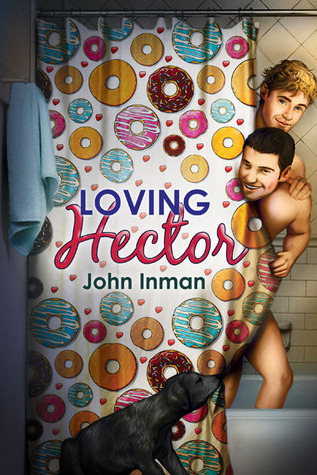
Cover art by Paul Richmond is perfect for the story and the couple within.

Review: The Good Fight by Andrew Grey

Rating: 4.75 stars

The Good FightJerry Lincoln moved back to Sioux Falls, SD to take care of his grandfather and stayed on after his death.  It seemed the perfect place to live and work, especially since Jerry’s small IT consulting business is run out of his home.  As Jerry’s business grew, his friend talked him into hiring additional help in the form of  IT students from the local college. Of the two men Jerry hired, John Black Raven made Jerry’s thoughts turn to things other than computer code, something that hadn’t happened in a long time.

John Black Raven needs this job and for two very specific reasons, his nephew and niece currently caught up in the SD Child Services Agency and placed with a foster family.  John has been trying to get them back since his sister died with little luck.  Now that he has a good job, John is hoping to prevail in his fight to bring his nephew and niece home for good.

As John and Jerry get to know one another, they start to realize that the relationship being formed is one that will last the rest of their lives and John starts to accept that Jerry will stand by his  side in his fight with Child Services.  Jerry is shocked to find out that Native American children are seen as a source of income by SD Child Services , the agency caught up in politics, greed, and bigotry.  It will take everything the men have got and more to fight the system and bring the children home.

I know I can always count on a well written story with characters of substance from Andrew Grey, but this book surpassed my expectations and then some.  The serious subject matter at the heart of this story was one I was unaware of just as Jerry Lincoln is at the beginning of the book.  I have to admit it sent me on a search for more information, and I was horrified to find out that the situation explored by  Andrew Grey in this story was actually far worse in detail.  It is a heartbreaking case and one that Andrew Grey brings to life realistically and poignantly in The Good Fight. I won’t go into additional details here but will say that you should look up the situation on your own.  It will shock and appall you that things of this nature are still able to occur now with the government’s casual oversight and approval.  When reading this book, I thought surely Grey is overstating the issue, and I should have known better.  If anything he used Jerry (as the mouthpiece for the reader) to voice the amazement and horror we would feel over discovering such a misplacement of judgement and child abuse at the hands of government officials.  Any channel that helps to make people aware of the plight of South Dakota’s Native Americans fight to reclaim their youth should be applauded.  And The Good Fight brings this issue to the reader with heart, immediacy, and a well researched story.  Kudos to Andrew Grey for every aspect of this remarkable story.

Now normally i would talk about characters first, but the subject matter just begged to be put first.  The characters of Jerry Lincoln and John Black Raven are well crafted, full of the flaws and layers I have come to expect from this author.  I liked Jerry, a person still caught up in his grief over the loss of his grandfather, the family member who understood and supported him throughout his life.  Jerry is caught up in his IT world, leaving his house only at his friend’s invitation or to shop for personal needs, like food.  Only the growth of his business forces Jerry to interact with others, this time his employees to a wonderful result.  I loved not only Jerry, but his friends, Peter and Leonard, a couple who have taken Jerry into their hearts.  Through their interactions with Jerry, we actually learn more about Jerry’s past, his grandfather and his current situation.

John Black Raven, a terrific character on his  own, is also used to inform the reader about the plight of Native Americans, not only with regard to the deplorable situation with their children and Child Services, but with the bigotry and racism that is evident not only in South Dakota but elsewhere in the United States.  That is a heavy weight to put on one character but John Black Raven, as written by Andrew Grey, is certainly up to the task.

Finally, there is Bryce Morgan, the other man Jerry employes.  Bryce is a character easy to connect with, so I was thrilled to hear that the sequel to The Good Fight, moves Bryce up from a secondary character to a main one. It is a position he deserves.

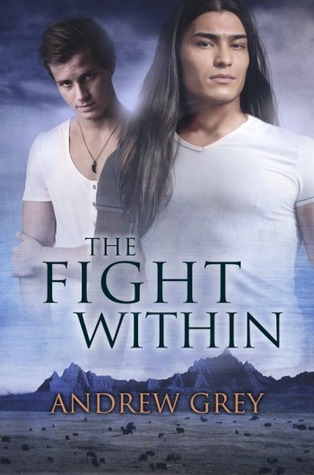
If I have any issues with this book, it is that I wished for more resolution for the problems with SD Child Services than what occurs at the end of the book.  I am just not sure I should lay that at Andrew Grey’s doorstep.  While he did resolve the case of John’s niece and nephew, the problems of  disappearing children, well over 700, have yet to be put to rights in almost every way.  So that frustration lingered after the book was over and maybe that is as it should be.  Like a burr too close to the skin, a little irritation can move people to action, even if only to sign a petition. So pick up The Good Fight, you get a wonderful, heartwarming story along with a shocking tale of modern injustice that needs to move into the media mainstream.  And there is a sequel to be read next, The Fight Within.  I can’t wait.  But start here first and check  back with me on the latter.  Again kudos to Andrew Grey, for a remarkable story that is big enough to encompass a love affair while shedding light on the ongoing plight of Native Americans out west.  It does justice to both.

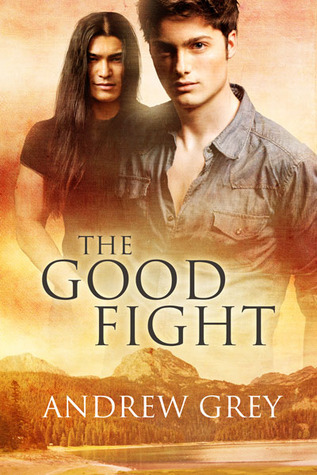
Cover art by Anne Cain.  While I loved that Native American man in the background, the character in front is not my idea of Jerry Lincoln, a misstep in an otherwise gorgeous cover.

Sunday, Glorious Sunday and the Week Ahead in Reviews

Finally, our weather seems to have evened out into a semblance of spring and the day is truly glorious.  The sun is shining, the day is warming up and a slight breeze is ruffling the remaining cherry blossom petals on the trees that line the streets of my neighborhood.  My hostas are now at least 4 inches above the ground, my early azaleas are starting to bloom, and the trees all around are raising almost single handedly the pollen count for the entire Metropolitan area.  In fact all my gardens are shaking off their winter doldrums, waking up to the warm spring sunlight and recent nourishing rains.

I love this time of year, the season of rebirth and new growth.  For me, spring is something I also internalize, a time for changes inside as well as out.  I look at the house and think “time to spruce up a bit, hmmmm, new paint job for the living room?” or maybe just the time to start donating or throwing away those unused or rarely used things around the shed, in the basement or in my closet, definitely my closet.  Time to buck up and get rid of those size 8 jeans that have not seen the light of day since my late twenties or those gaucho pants I so dearly loved in my 30’s.  And what do you know? Jumpsuits are back, but maybe not in that military green and Pointer Sisters style.  I know all trends come back around in time, but really, I doubt I will ever see that size again no matter what Weight Watchers tells me!  Why have I kept a bike helmet when I don’t ride a bike?  And what did I think I was going to do with that broken hand turned coffee grinder?  Wait until it was an antique?  In that case, my basement is full of antiques to be, just waiting for their time in the sun.  Kind of like me. I do admit to looking in the mirror and thinking that perhaps a swath of purple would look amazing in my hair and that maybe a visit to the new tattoo parlor that just opened up might just be the thing to add to my calendar.

Hey, its spring and the possibilities are endless, promise of new growth, any type of growth,  is everywhere.  Why not just go with the flow and see what’s new around you?  New places to explore, new people to meet and  always new authors and new books to take along with you on your journey.  Here are some books you might want to consider:

This is what our week ahead in reviews looks like:

Monday, April 15:                 Fire for Effect by Kendall McKenna

Tuesday, April 16:               The Good Fight by Andrew Grey

Wed., April 17:                       The Fight Within by Andrew Grey

Thursday, April 18:               Highland Vampire Vengeance by J.P. Bowie

Friday< April 19:                    Loving Hector by John Inman

Sat, April 20:                           Into This River I Drown by T.J. Klune

That’s the plan at any rate.  I think I have gotten over my snit fit with Into This River I Drown, at least enough to offer a reasonably objective review.  We will see on  that one, rarely does a book make me want to cheer and smash things as that one did.  And thanks, Lynn, for the recommendation of the John Inman book, that was great.  If any one out there has a book they think I have missed out on, please send me the titles, authors and publishing house.  I make no promises but I am always looking for something new to read.

So, that’s it.  There are gardens calling and color samples waiting to be pondered over.  The terriers are gazing longingly out the windows, telling me its time to head outside.  I totally agree with them.   See you all later.